
Resurrection: Director Bi Gan’s Latest a Fantastical Trip for (and About) the Senses
By Alice Shih
Rating: A-
Have you ever wondered what Picasso was trying to express in his Cubist paintings? Those acclaimed works of art evoked great emotions, but no one could confidently nail down their definitive meaning.
In traditional Chinese paintings, “leave blank” is a technique where an ink painter intentionally leaves some blank space on the scroll for the viewers to use their own imagination to complete the composition. Bi Gan’s third feature Resurrection, which garnered a Special Award at this year’s Cannes Film Festival, is just as abstract and ambiguous.
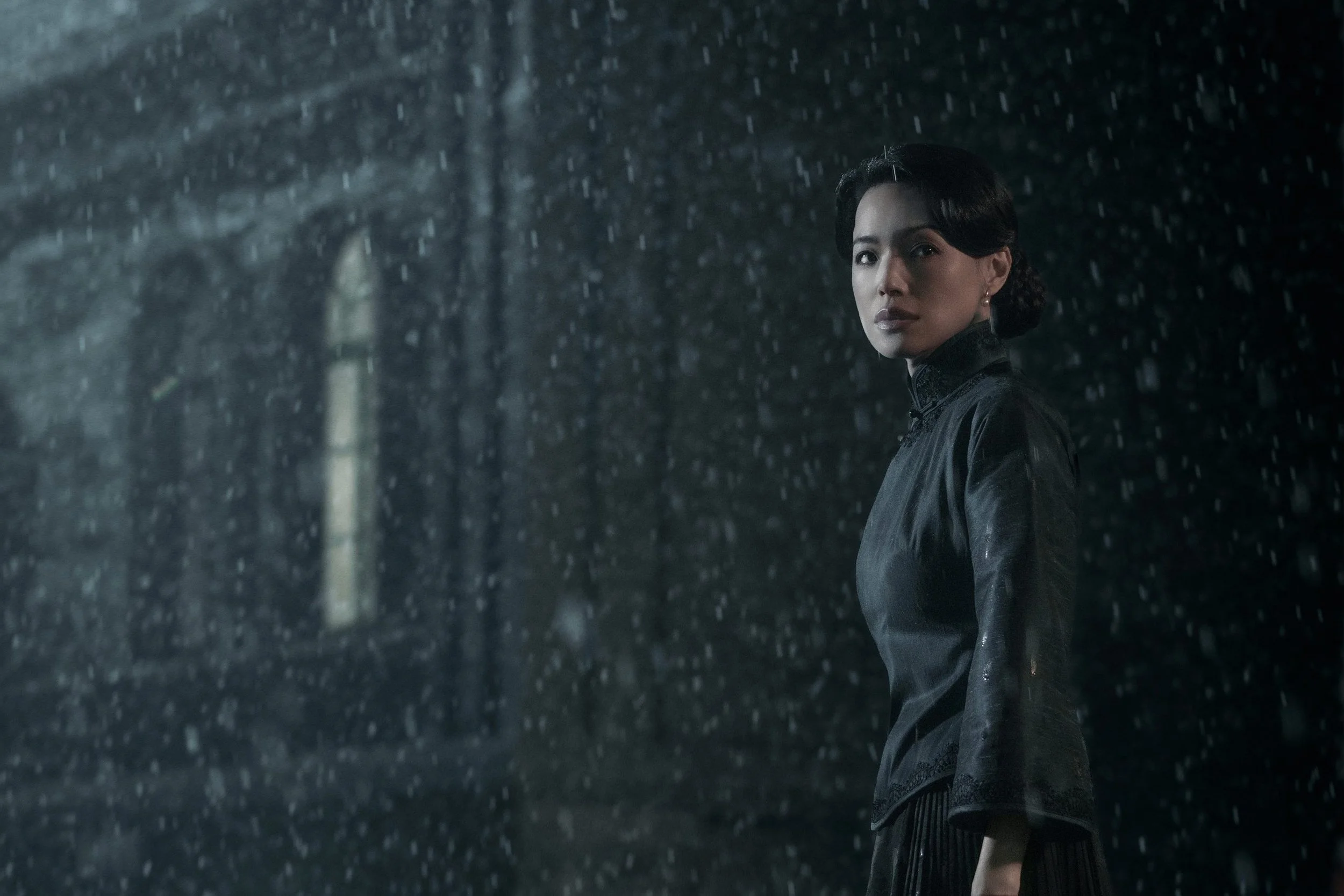
Spanning the turn of the 19th century to the present day, this 35-year-old director's latest feature is divided into five time periods in six chapters, paying homage to their corresponding cinematic styles. The story leads us into a world where humans no longer dream. To dream would be like burning a candle short, until it completely burnt out, signifying death. The narrative is constantly shifting, continually evolving, beckoning the audience to a new cinematic experience with each progression.
The throughline of this fantastical narrative centres on the Deliriant/Monster, played by Jackson Yee, who still chooses to dream by way of cinema, considering Hollywood has always been described as a dream factory. Yee sensually portrays five characters from different eras, performing credibly in different accents and dialects. The magnificent Shu Qi plays The Great Other, his pursuer who chooses to dissect his body to examine his dreams.
The six chapters explore the five senses of sight, sound, taste, smell, and touch as well as intellect; all deeply rooted in Buddhist teaching as the six roots of human awareness. They must interrelate to elicit feelings. If this correlation failed or is limited, Buddhism would consider this living creature short of being human.
Each chapter is punctuated by a burning candle, and as each chapter unfolds, director Bi takes on one sense at a time until at the end when the Deliriant’s senses are all eliminated, he must return to its original form, a Monster.

Early cinema is “silent,” relying only on “sight.” This is where Bi begins his story. He pays tribute to pioneer silents like L’Arrosseur Arrosé (1895) and German expressionism classics like Nosferatu (1922), the perfect way to introduce us to the monster character. He was captured by The Great Other, who manages to understand that he is clinging onto his illusion of colourful dreams.
Up next is the film noir period with Mark Chao playing a commander who is keen on listening pleasure. He is investigating a murder involving Yee, the monster in human form. A “mirror labyrinth” scene mirroring The Lady from Shanghai (1947) demonstrates Bi’s interpretation of sound through reflective visuals. “Sound” is being sacrificed due to selective hearing, as unwanted sound is just noise to the ears.
The Cultural Revolution in China ended in the mid-1970s. Some survivors turned these bitter experiences into so-called scar literature. Some are later being made into films to reflect the livelihood of the common people in this period. This is where Bi’s “taste” chapter lands.
The discourse of the ex-monk, now worker (our Deliriant), and the Bitter Spirit (Chen Yongzhong) takes place in the temple grounds, paying tribute to the earthly look of the Chinese fifth generation directors’ works. Their discussion on bitterness is haunting as well as enlightening. Savouring the Bitter Spirit’s calligraphy of “sweet” and “bitter” on the water is mesmerizing and paradoxical.
The year 1989 marks the rising genre of gambler films in Hong Kong. Using magic tricks and quick hands, cheaters fake supernatural powers to swindle their way into winning money, and trust. This accessible storyline takes place in a small city where a rich old man who “smells” of formaldehyde, calls for people with superpowers to enter a contest.
Our Deliriant’s strategy is to team up with a presumably innocent orphan, who pretends she has special perception through her smell. We later find out the reason why this old man spends so much of his wealth to hold this contest, and what he is hoping to find out in return. His smell of formaldehyde is a metaphor of his living state without knowing the answer.
The year 1999 is the eve of Y2K, when the tech world’s fear of global computer collapse might trigger a catastrophe like the end of the world. This is the golden era of Hong Kong youth gangster films like the Young and Dangerous series, depicting street toughs living like there is no tomorrow.
Using the experience with super-long takes he gathered in his second feature Long Day’s Journey Into Night (2018), Bi masterly executed a seamless take close to 40 minutes long in this chapter exploring “touch.”
Cinematographer Dong Jingsong smoothly flows his camera to touch everything along its path with our Deliriant, now street smart, who is falling in love with a beautiful vampire played by Li Gengxi, who said her name is Tai Zhaomei, a Taiwanese singer-songwriter.
He gets into an altercation at a karaoke bar with Mr. Luo (played by Huang Jue, the same protagonist of Long Day’s Journey Into Night). Despite the rumble, Mr. Luo insists on finishing singing “Legend of Dagger Lee” in Cantonese, which is the title song of a popular Hong Kong TV series of the same name, possibly using the lyrics to grieve the fate of these impossible lovers.
Li, putting down the record of Tai Zhaomei in her hand, picks up the microphone and pierces our heart singing “Magnolia,” expressing the dichotomy of a vampire yearning for the morning light.
The audience could only pray that our Deliriant and the vampire girl could find the getaway boat at 7 am the next morning, otherwise this will be their last night on Earth. The one-shot approach in this chapter is brilliantly executed, disclosing the characters’ troubled emotions with stunning visuals enhanced by the pop songs they sing.
The last chapter brings us back to The Great Other performing funeral rites for the Deliriant who has lost all his senses and his “intellect.” She puts makeup on the human corpse of the Deliriant, step by step, his look of the monster gradually resumed. She wants to connect with him for the last time through his beloved format: cinema. His death is being celebrated in a theatre, which ultimately melted in a fire.
Death is integral before Resurrection. Is it cinema dying, in Bi’s view, that needs to be resurrected? The title in Chinese translates to Wild Era. I supposed Bi sees his film exploring both concurrently?
This is an artistic film best enjoyed in a theatre on a big screen, when the different shades of darkness juxtaposing against the shifting colours take you on a magical ride.
To keep guessing what’s going on would spoil your viewing pleasure. Bi doesn’t want to impose upon you with his story. He is hoping you could join him and fill in the blanks with your own imagination, like a “leave blank” painting come to cinematic life, immersing us into the universe he has created. Just be enthused by this delirious journey.
Resurrection. Directed by Bi Gan. Starring Shu Qi, Jackson Yee, Mark Chao and Chen Yongzhong. Playing Toronto's TIFF Lightbox December 12 (8:15 pm), December 13 (7 pm) and December 17 (3:50 pm).