5 Questions and Answers from Jodie Foster about A Private Life (the Film, Not Her Own)
By Kim Hughes
If the measure of a movie star is their ability to turn a gathering of overcaffeinated, seen-it-all film writers from around the globe into a bunch of giddy fanboys and girls with just an entrance and a smile, then Jodie Foster is the real deal.
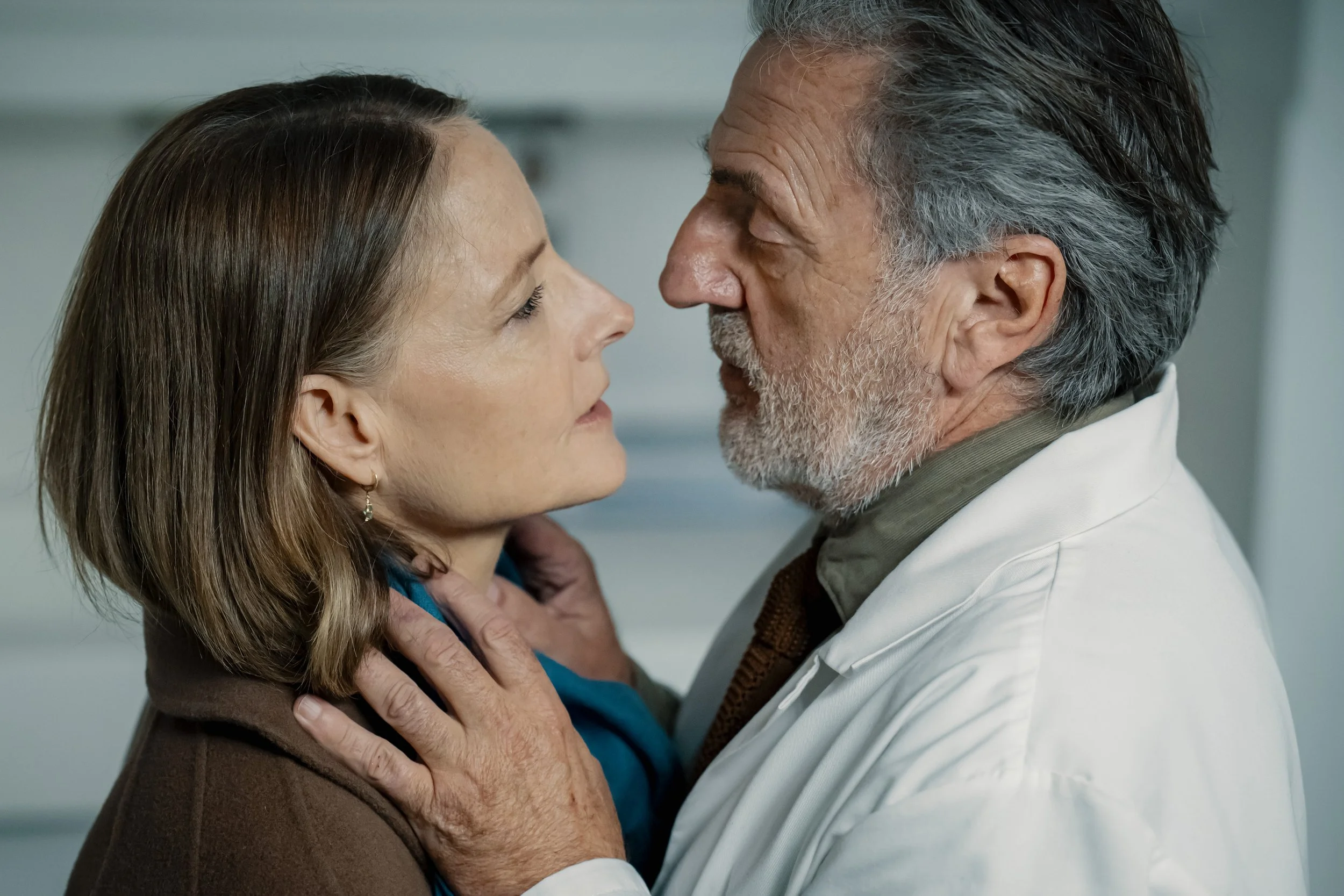
Foster and Auteuil in a scene from A Private Life
During a press conference for her latest film A Private Life held last September during the Toronto International Film Festival, the acclaimed veteran actor-director-star, 63, gracefully strode into a featureless conference room at the Fairmont Royal York and electrified with her warmth, candour, and humility.
A Private Life, which debuted at Cannes last year, is arguably most notable for Foster’s flawless, fluent French, a point corroborated during the press conference by several native speakers and by reviewers worldwide. The film itself has been less ecstatically received, blending as it does drama, comedy, and fantasy in a sometimes-confusing, sometimes-jarring mix. (Read our review).
But Foster, who plays an American psychoanalyst living in Paris and dealing with the fallout from a patient who dies mysteriously, is très magnifique. And during an hour-long presser alongside her director Rebecca Zlotowski, Foster — ever the consummate professional — volleyed questions and answers with disarming grace and humour. Herewith, some edited highlights from that presser.
A Private Life opens January 23 in Toronto (TIFF Lightbox, Varsity) and Vancouver (Fifth Avenue); January 30 in Montreal and Ottawa; and throughout the winter in other cities.
Q: You play a therapist in the film. Is that something you think you’d be adept at in real life?
JF: Like [my character] Lilian Steiner, I think I would not be so good at it. She’s not a good listener and, as Rebecca points out and what is the joke of the movie, what if your therapist couldn’t stop crying every time you came to talk? I think I’d be terrible. I like to create stories while I am listening to people, then visualize and create my own story about what they’re telling me. I don’t think you’re supposed to do that as a therapist (laughs).
Q: You play, specifically, a psychoanalyst and not a psychiatrist.
JF: America discarded psychoanalysis a long time ago because Freud’s misogyny cancelled him. But in Europe, it’s still happening. What I think is rich about Freud is, when you apply it to movies and literature — which I did a lot of in college and found very interesting — it’s also fun. When you look through a Freudian lens, there’s symbolism everywhere. The staircase! The lighter! You can’t stop seeing the references. And if you’re interested in psychology which most actors are, you’re going to be interested in a movie about analysis and the human psyche.
Q: You’re so versatile, starring and co-starring in movies as well as television like, most recently, True Detective while also directing. What motivates you?
JF: Always the script, which is the blueprint for anything, and of course the director. But I have to say I have really been enjoying this later arc of my career which I hadn’t anticipated. My 50s were hard, which I think is true for everyone, especially women. The culture doesn’t have good references for who you’re supposed to be. I didn’t act a lot, did more directing, and I couldn’t seem to decide about who to be and I felt like I was being asked to compete with my younger self.
Once I crossed into my 60s — and maybe there was a hormone that was secreted — I suddenly didn’t care. I was able to rediscover being an actor in a new way. I didn’t have to shoulder a story myself, and I could support other, newer actors. I was able to apply my experience to help other voices that haven’t been heard before. That was liberating. Also, I like the opportunity to learn about something I don’t know anything about. In this case, although I’ve done movies in French, I’ve never had to talk this much. So I went to France, didn’t speak to anyone in English, and immersed myself.
Q: Although you have been speaking French since childhood, it’s not your mother tongue. And yet native French speakers agree your accent is perfect in this film. How hard was that to nail?
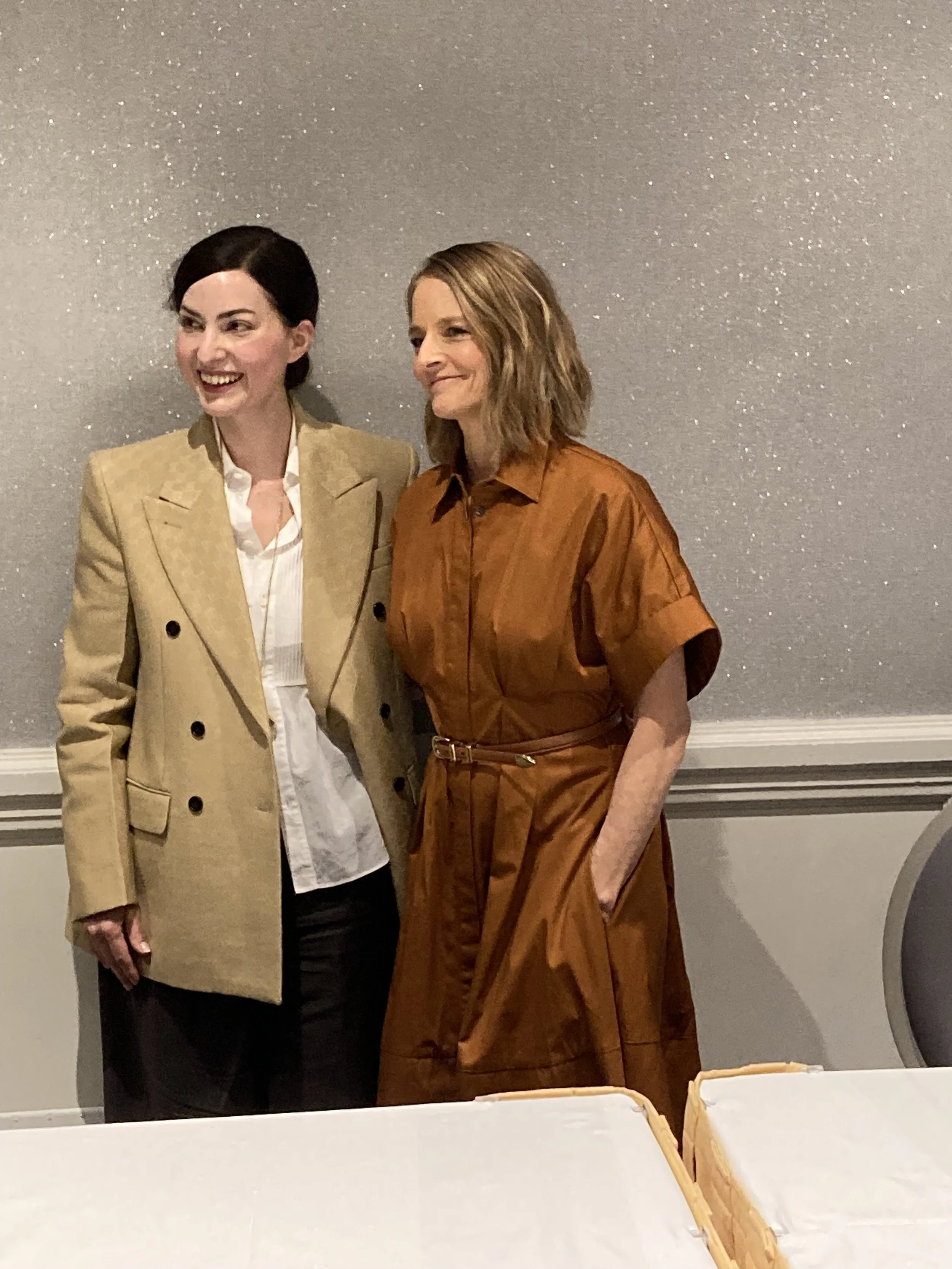
Zlotowski and Foster at their TIFF press conference.
JF: Very. I went to a French school, have studied for years, but I have a totally different personality in French than in English. My voice is higher, I’m less confident and so more hesitant. In some ways it was easier for me to fall into a brand-new character because I don’t sound like — or feel like — the grounded person I am in English. And it was such an honour to work with these French actors because I am such a fan of French cinema. Especially Daniel Auteuil because I have been watching him for years. This was a gift Rebecca brought to me.
Q: This is not your first time at TIFF. What does it mean to you?
JF: Oh! I’ve been many times. It’s a huge festival so everybody’s here. I grew up with film festivals. My mom never travelled before she was 50 but she read books and magazines and was completely invested in the idea of moving to France. It was the 1970s with Nixon and she was like, ‘We need to get out of here!’ She’d take me to foreign film festivals, and we would sit for hours watching French and German and Italian movies so that she could dream another life. She gave me this love of foreign films. And festivals were my film school, which I never actually attended. They were essential.