
The Sandbox: Surveillance Doc Shows Eyes in the Sky and Bodies on the Ground
By Liam Lacey
Rating: B
The thesis of The Sandbox, a documentary by Canadian lawyer and first-time filmmaker, Kenya-Jade Pinto, is that giant tech companies and government agencies are testing or “sandboxing” their systems of surveillance and social control on migrants.
The two main testing grounds explored in the film, are the US-Mexico border and Europe’s Mediterranean coast, where government agencies, aided by satellites, drones, cameras, and data algorithms, make life or death decisions with little accountability for their actions. As such, the film follows an important Canadian documentary tradition, of not just holding up a mirror to ourselves, but opening a window to the larger world.
Rather than a straight-forward film essay, The Sandbox, made over six years, takes a montage approach. It offers an intermittently compelling patchwork of linked ideas about contemporary governments’ embrace of military surveillance technology to respond to humanitarian crises.
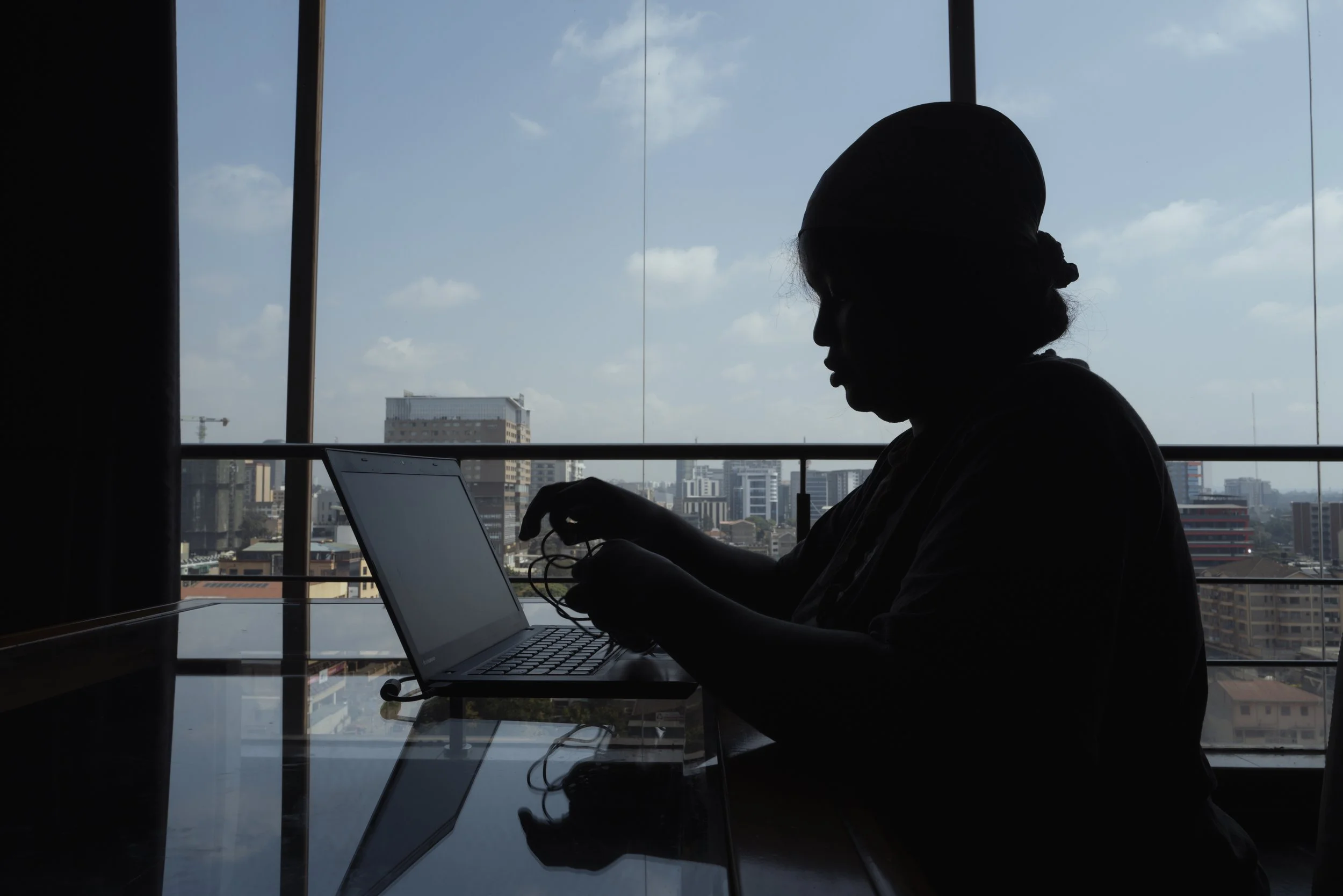
A few of the elements here include a recurrent voice-over commentary from a Libyan refugee and sunken boat survivor identified as Ramón; spooky infrared images of human outlines on surveillance screens, an aerial journey with Sea-Watch; accompanying a German-based non-governmental agency dedicated to rescuing refugees in the Mediterranean. There’s a side trip digression to Kenya, where refugees exchange biometric information for food and medicine, and an anonymous data worker describes her work modern slavery, helping driverless cars run in California.
We begin on the Arizona-Mexican border, among volunteers helping rescue migrants, or recover their remains, in the desert. We hear how the U.S. border control has invested billions in tech contracts for satellites, drones, planes and cameras.

At the same time, Mexican cartels are involved in their own sophisticated surveillance to thwart the system. We jump to El Paso and an expo of military technology (robot dogs, surveillance kites). The scene is accompanied by voice-over commentary from author journalist, Todd Miller, on the convergence of profit companies, lobbyists and government contracts, the current iteration of what US president, Dwight D Eisenhower, in his famous 1961 farewell address, called the “military-industrial complex.”
In Europe, the film focuses on Europe’s border and coast guard agency, Frontex, which, as anti-immigrant animus has grown in Europe over the past few years, has been accused of illegally pushing back refugees, including unaccompanied children, leading to thousands of deaths.
At one point, in the film we find ourselves trailing freelance journalist, Lydia Emmanouilidou, who works between the United States and Greece on border issues. An extended scene shows her confrontational interview with the director of Greece’s Ministry of Migration and Asylum, in a facility with walls full of surveillance screens of refugee camps.
The official, caught off guard by the political and ethical questions, stumbles over his answers. He’s not “monitoring” the refugees, he insists, just making sure “bad things” don’t happen.
At times, The Sandbox’s montage structure makes it resemble a 90-minute trailer for a wide-ranging television series, with each episode focusing on a different face of the military data monster.
Preferably, such a series would use less of the film’s oppressive musical score which never lets you forget the word “drone.”
The Sandbox. Directed by Kenya-Jade Pinto. The Sandbox can be seen in VIFF Centre, Vancouver (Oct. 16, 21), Cinema Beaumont, Quebec City (Oct. 15), Hot Docs Ted Rogers Cinema, Toronto (Oct. 16), Cinématèque québecoise, Montreal (starting Oct. 19) and Windsor International Film Festival, Windsor (Nov.4)