
Clayface: A DC Comics Cult Villain Takes Shape in 'Body Horror' Cinematic Debut
By John Kirk
Rating: A-
The interesting thing about the Batman Rogues’ Gallery villain Clayface, is that there is an abundance of TV material – in both animated and live-action series - to draw upon for the cinematic debut of this iconic character.
Screenwriter, Mike Flanagan clearly decided to mould his own character, and for the most part, it works.
Sadly, the script for Mike Flanagan’s original story had to be re-written by Hossein Amini when Flanagan left the project in May, 2025. He is reported to have said that he hoped that it would hold true to the spirit of what he wanted it to be.
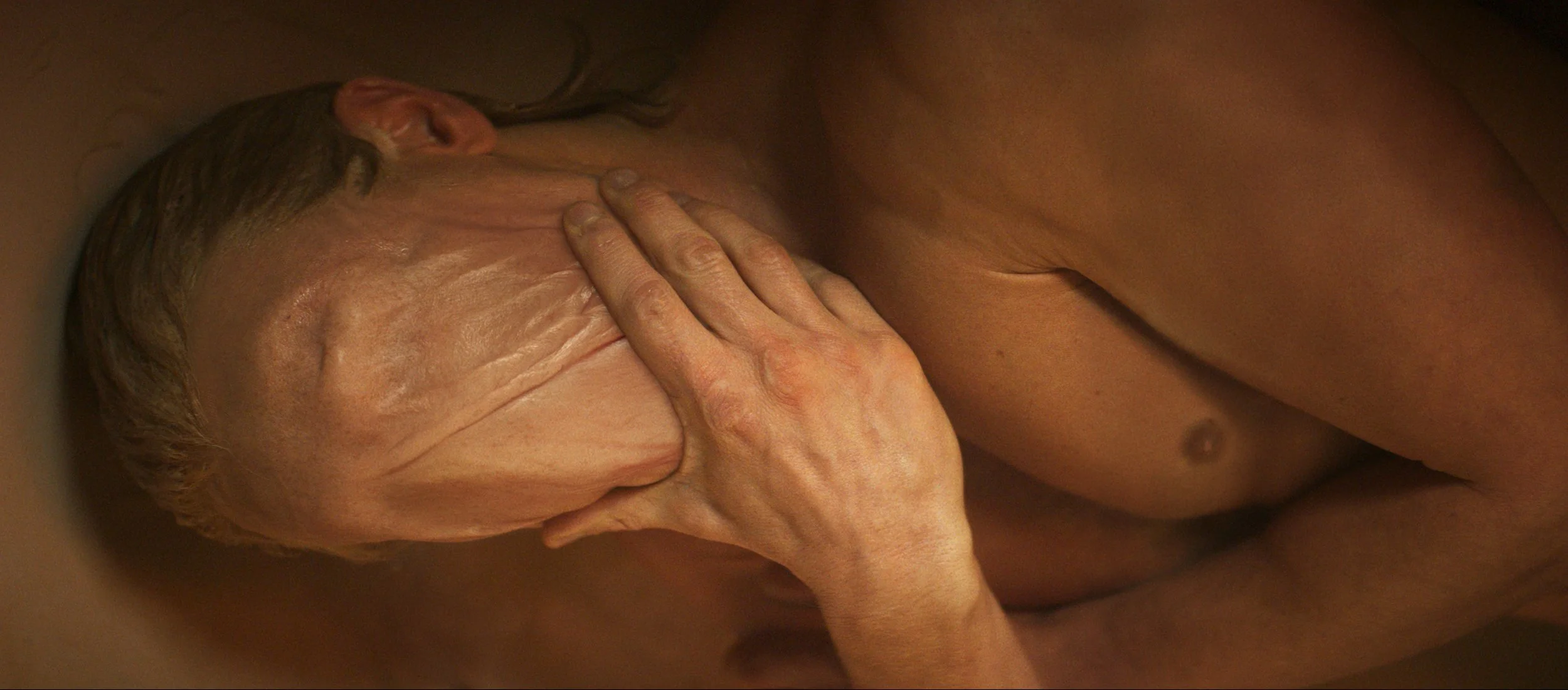
Clayface does hold true to the original essence of the hapless villain. Played by Tom Rhys Harries, Matt Hagen, a kid who grew up in the rough streets of Gotham City has become a Hollywood leading man. Looks, charm and talent, he has it all. Of course, when a vicious Gotham mob boss leaves him terribly mutilated, he loses it all.
His origin story lies in an experimental medical procedure developed by scientist, Caitlin Corr (Naomi Ackie) that not only allows him to warp his body into different shapes and people, but also warps his mind.
The departure from the original character lies in the description of the story as a horror rather than a four-colour comic one. However, despite the body transmogrificative aspects of Clayface’s abilities and the occasional jump scare, there’s really very little that would make it a horror. It’s better described as a supervillain’s dark origin story in my humble opinion. I think many comic readers would agree with me.
However, in a surprise appearance at Toronto’s Cineplex Varsity premiere of the film, director, James Watkins employed the term “body horror” to describe the transmogrification of Matt Hagan’s body change. While there is that, again, comic readers would simply regard it as superpowers.
Aside from this minute disconnect from the comic readers in the audience, and the slight amount of melodrama that slows the pace of the story a little, Clayface captures the tragic essence of the various Clayfaces in the DC comic universe. The original 1940 villain, Basil Karlo, was a former Hollywood leading man who sought revenge, yet the Matt Hagen who was introduced in 1961 was an explorer who gained his powers otherwise. Yet revenge was strong in both of these characters.
Revenge is a major motivation that features prominently in the film, and so does the trope of the ‘Beauty and the Beast’. We can genuinely feel sorry for Hagan, and are meant to, driven to extremes to restore his mutilated face but then suffering the mind-altering effects of the treatment that gives him his abilities. It’s a simple formula but it’s a crowd-pleasing one and easy to accept.

In his remarks after the Toronto premiere, Watkins acknowledges this process as well as praising Mike Flanagan and his script, calling him “brilliant” and that the script “was such a gift”. Watkins couldn’t understand, “why it hadn’t been done before.” To be fair, James, it HAD been done before: on animated television and in the live-action series Gotham, Birds of Prey and Pennyworth, just NOT cinematically.
Despite Matt Hagan’s movie star background, what happens to him is a relatable experience. We actually do root for the character in the beginning, living his successes and his humility in accepting them. Then, it becomes easy to understand how he can be driven to such desperate measures.
That can be a multiple nod to the success of Matt Hagan’s performance, James Watkins’ choice of casting and Mike Flanagan’s development of the character. Whichever one wants to take the credit, he has to also acknowledge the work of the other two because Clayface is a villain who the audience totally understands.
That probably is a major factor that accounts for the success of the film. The understanding of the essence of Clayface makes this a story very easy to accept. Simple motivations make for an accurate character portrayal.
What’s also admirable about this film is that it relies on performances rather than big-name stars to make it successful. Not to say that the talent is without excellent resumes, with the likes of Eddie Marsan (who I love from the adaptation of Susanna Clarke’s Jonathan Strange & Mr Norrell) The talent is excellent and performances can not be faulted. Naomi Ackie truly stands out as both a love interest and an icon of compassion.
Tom Rhys Harries is a wonderful anti-hero rather than a villain. Though he does perform villainous activities, we easily like him and forgive him. Watch for the car impact – it will definitely affect you. Fun fact: he performed in this film with a torn ACL.
This is a simple film. But it works for both comic readers and others. With its placement in Gotham (though filmed in Liverpool), there’s room for future encounters with Batman.
Obviously, this is a film that can be easily shaped – like clay – for future stories. A popular story, excellent performances, and an engaging anti-hero main character is a recipe for entertainment.
Way to go, Mike Flanagan.
Clayface. Directed by James Watkins. Written by Mike Flanagan and Hossein Amini Cast: Tom Rhys Harries, Naomi Ackle, David Dencik, Max Minghella, Eddie Marsan, Nancy Caroll, Joshua James. Clayface is in theatres Oct. 23.