
Fatherland: Cannes Winner About Post-WWII Germany an Eerie Mirror of Today
By Karen Gordon
Rating: A+
Quiet and restrained, Oscar-winner Pawel Pawlikowski’s new film Fatherland, which had its world debut at the Cannes Film festival last spring, is deep, complex, and affecting. Not surprisingly, the film, which is loosely based on actual events, won Pawlikowski the best director at Cannes, tied with the directors of La Bola Negra.
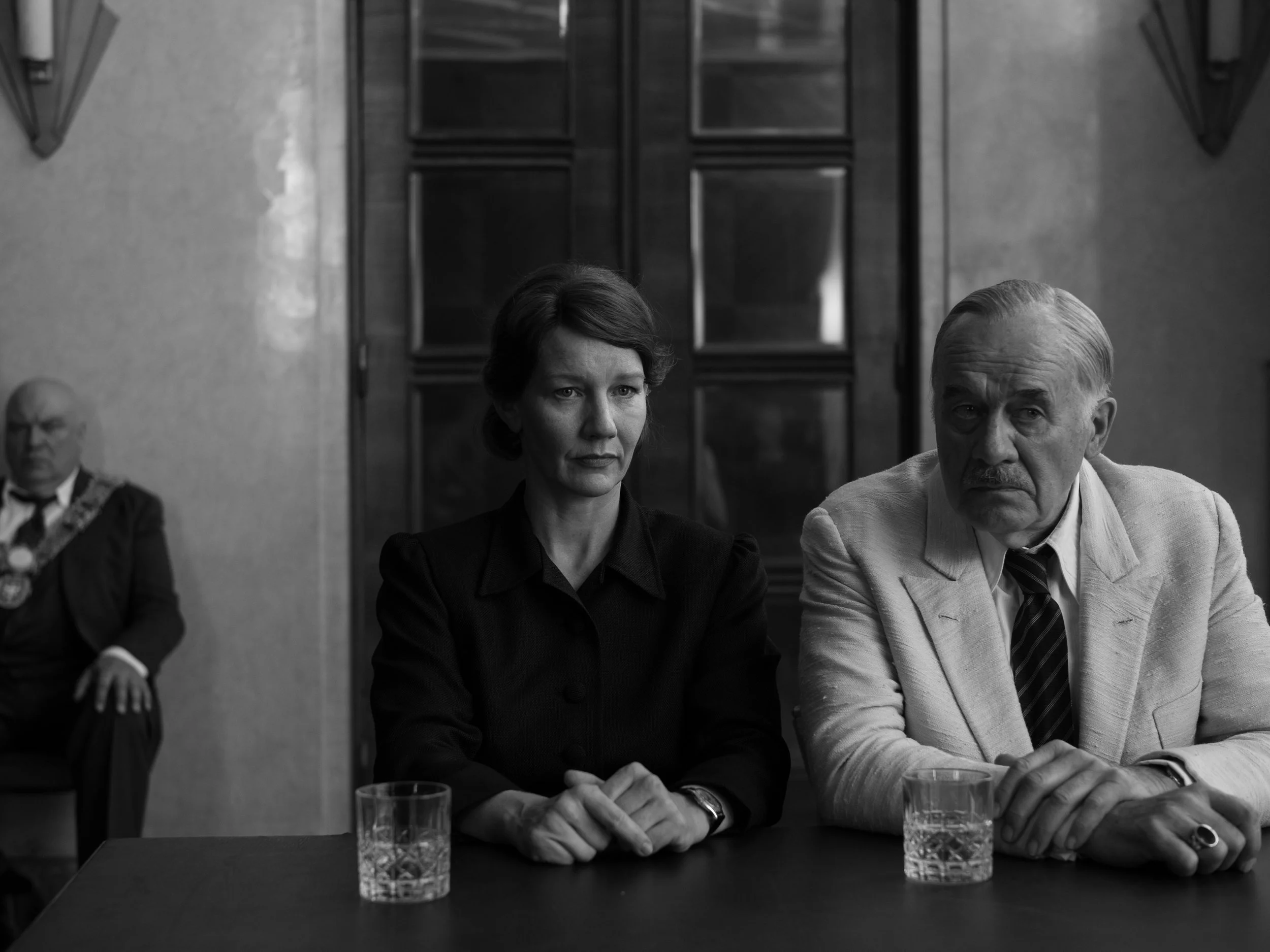
Set in 1949, Fatherland is based around the Nobel Prize–winning novelist Thomas Mann’s return to his native Germany after 16 years in exile to accept the Goethe prize. Mann left his home country when Hitler took power.
Instead of being accompanied by his wife as he was in reality, Pawlikowski has put Mann’s daughter Erika (Sandra Hüller) in the car, working as his assistant and his driver. Erika was, by this time, a very accomplished woman in her own right, a writer, journalist and actor, among other things, and someone who could keep up with her father on all accounts.
Fatherland is first, then, a father-daughter road trip, an exploration of emotional territory from a complicated family relationship. But Mann’s returning to post-World War II Germany adds more layers to a film that speaks both to the post-war era and, eerily, to ours.
That setting adds more layers in its quiet way, taking us deeper into the collective psyche of people in a country trying to find their bearings, particularly their cultural bearings, after a descent into fascism, war and defeat. Although it's not implicit, there’s a feeling of whiplash: well-dressed people sipping cocktails in one part of the city, destroyed buildings in another.

Mann is making his speech twice: once in Frankfurt, controlled by the Americans, and then to Weimar, in the hands of the Russians.
The film starts with a long-distance phone conversation between Erika and her novelist brother Klaus (August Diehl), with whom she’s very close. He’s been living in Cannes, which is where she reaches him, in his hotel room. She’s hoping he'll come meet them in Germany, so they can spend time together, and be with their father while he accepts his award.
Klaus wants to see her but is noncommittal. During their conversation, he expresses thoughts that underline some of the internal dilemmas that play out in the film: an ennui, his dislike of Germany, pre- and post-war confusion about what he wants to do next, and as a writer even which language he wants to write in.
Erika assumes her brother will meet them in Frankfurt, but Klaus doesn't come.
The reasons for him not showing up will ultimately fold into the relationship between father and daughter. But in the meantime, Mann stays focused and keeps his obligations. These include answering questions at a press conference in Frankfurt attended by international media at a time of clashing political points of view; attending cocktail parties where former Nazi collaborators are in the mix; and of course, the public ceremonies where he’s given his Goethe award and can make his speeches.
There are a variety of opinions and political points of view. But Mann is stoic and aims to use those acceptance speeches to talk about what he feels are important things to say at this point in history: human things, German values as exemplified by Goethe, to a country in need of healing.
Rebuilding in Fatherland is to some extent but a reality for the people in the film and a metaphor. Peace time means life can return to something approaching normal on the outside, but what do people believe in?
And can you rebuild or is it more about finding a thread connecting you, individually and as a society, to specific values of a past that was free of fascism and violence? Mann is seen by some as a figure who can help rebuild, but in one brief exchange we see that he’s not willing to be used as a figurehead and let the past be the past. He’s a man of few words in conversation.
Everything in the film seems to echo that restraint. Nothing screams at us.
Pawlikowski’s frequent collaborator, Oscar-nominated cinematographer Łukasz Żal, shoots in black and white, with some scenes looking like a film noir, and keeps the camera still.
The feeling is intimate and mostly naturalistic. But then there are shots that in contrast are deliberately static and feel slightly surreal. Pawlikowski seems to be pointing at a certain kind of unsettling conformity in the audiences that come to greet or hear Mann. Perhaps the idea of people looking for optimism and future vision in another hero or thought leader. The themes, the personal and the societal, intertwine and go deeper.
What makes it so affecting is the restraint of the filmmaking, the intelligence of the script with Pawlikowski co-wrote with Hendrik Handloegten, and the superb cast who embody the characters and give the film it's emotional ballast.
There are layers and themes in Fatherland. It's potentially a new era, but fascism hovers just off-screen, having already affected the lives, the trajectories of everyone we’ve met. Individual choices, loss, grief, love, what the world will and won’t allow.
Although clearly made before the current problems in Europe, it's hard not to draw connections between the film and what we’re seeing unfold right now. Although perhaps not meant that way, it's worth seeing as a cautionary tale.
Pawlikowski’s slender film goes deep and carries a lot of weight. One of the year’s best.
Fatherland. Written and directed by Pawel Pawlikowski. Starring Sandra Hüller, Hanns Zischler, and August Diehl. In theatres, October 30.