
Once Upon a Time in the Middle East: An Uncommonly Balanced War Movie
By Alice Shih
Rating: A-
War films always depict cruelty and injustice. Who is portrayed as the perpetrator or victim will depend on which side is telling the story. But what if the story is being told by an outsider? Will there be a more balanced view? Once Upon a Time in the Middle East does just that.
Director Muye Wen has always been interested in difficult humanity issues. His acclaimed debut feature Dying to Survive (2018) focused on smuggling of affordable drugs to save lives. This time, he gathers the real-life experiences of Chinese migrant workers caught in the Iraqi War in 2003.
Working from a remarkable script, he follows a chef who lands in an unnamed Middle Eastern country to work before war breaks out and is held captive first by Americans and then Muslims as the war spirals downward.
Chinese chef Xu (Teng Shen) just wants to earn quick money to provide for his family and repay debts. He meets restaurant manger Ma (Qiming Jiang) and is introduced and hired by his boss (Sherif Sabby), who was bullied and blackmailed by an American soldier into shady dealings to keep the restaurant operating during the beginning of the war.

The restaurant flourishes as they welcome both locals and Americans. A Chinese American soldier (Aarif Lee) passionate about his country’s involvement often comes to dine; he and Xu became friends. The audience get to see the U.S. point of view through his actions on and off duty.
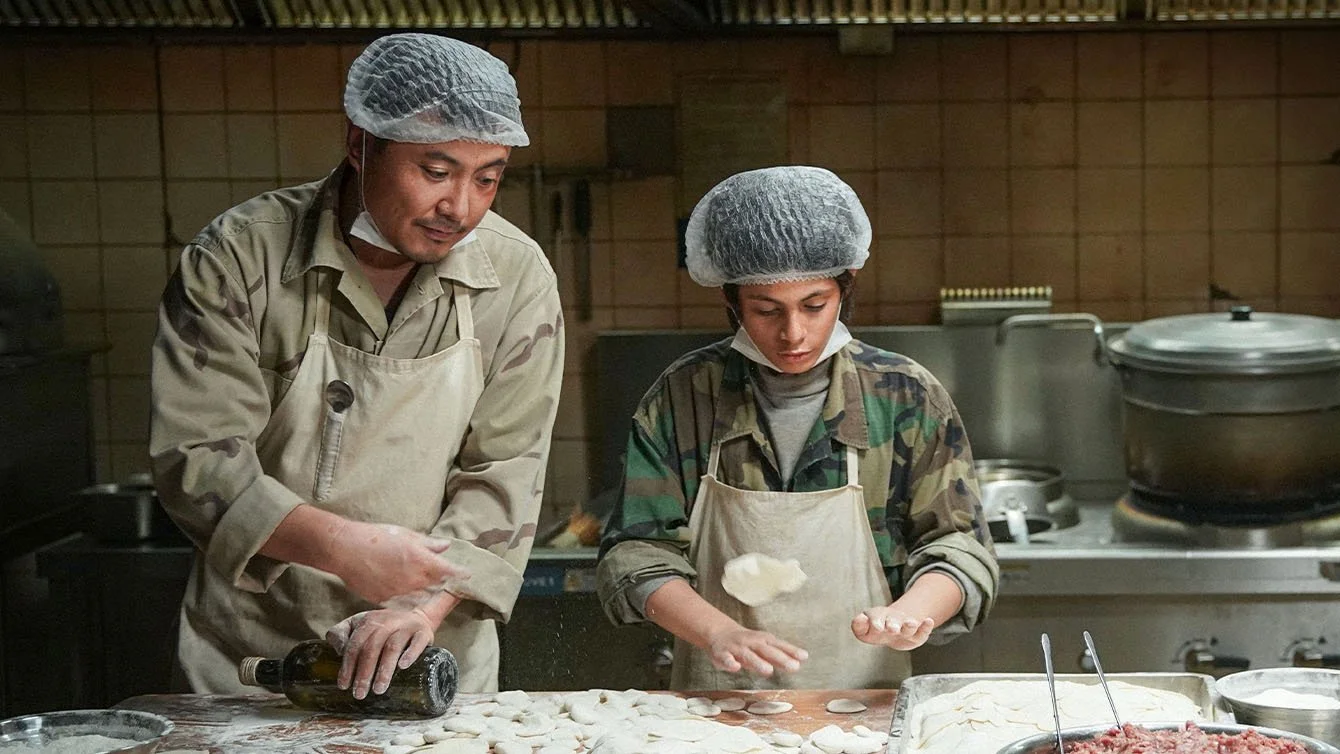
Business as usual for the eatery and more hands are needed, so they hire local orphans to keep them off the street. Hardships of these unfortunates are seen as their country is being invaded, and how sinister influences lurk on top of the daily jeopardy of crossfire. Chef discovers a boy (Omar Sharif) who has cooking talent and shows him the ropes.
As the war intensifies, the boss’ house is bombed. His family dies and he is unaccounted for. Xu, Ma and the kids are forced to cook for the U.S. soldiers in captivity. They are ill-treated and not granted the right to call home. Their families think they have died or at least are missing.
When the U.S. eventually clears them of wrongdoing, Islamic troops seize the U.S. base and takes them prisoners, stripping them of their long-awaited freedom to return home.
Xu and Ma get the kitchen responsibility as usual but this time the kids are in grave danger. They witness how an iron-fisted religious teacher puts orphans through systemic jihad training, propagating hate and violence.
The duo knows these kids won’t stand a chance in the hands of extremists and will eventually become radicalized. They can’t bear to see their orphan friends dropping their kitchen utensils to pick up arms. Children of all races should be nurtured and protected, so they scheme to save them, risking their own lives.
Teng Shen, an actor great in both drama and comedy, excels as Xu. His vulnerability facing threats and his courage battling danger is palpable; his is a three-dimensional character we root for.
The film, without prejudice, shows us the lose-lose situation of war on both sides, with civilian children the most susceptible to manipulations and abuse. It’s very different from conventional war films with one side exhibiting good and the other evil, a propaganda tool used to evoke patriotism and heroism.
Not surprisingly, the film has been selected to represent mainland China in the Best International Feature Film category at the 99th Academy Awards handed out next March.
Director Wen addresses humanity in time of war with precision, compassion, and hope. The audience can’t turn away from seeing how the war impacts children. Each generation has a responsibility to nurture positive growth of future generations, to uphold a bottom line of humanity instead of exploitation under an inhumane political or religious banner.
Once Upon a Time in the Middle East. Directed by Muye Wen. Written by Muye Wen, Qunli Lang and Wei Zhong. Starring Teng Shen, Qiming Jiang, Omar Sharif, Aarif Lee, Sherif Sabby. In theatres October 9.