
Original-Cin Q&A: Comedian Dane Cook on How to Document a Backstabbing
By Bonnie Laufer
Comedy superstar Dane Cook has spent decades making millions of people laugh, selling out stadiums and topping the charts. Yet behind the scenes, he was navigating one of the most harrowing personal betrayals imaginable: discovering his business manager brother had embezzled millions from his career.
In his raw and deeply personal new documentary, Funny Money: The Dane Cook Story, Cook pulls back the curtain on the ordeal. Original-Cin had a candid conversation about the tipping point that made Cook bring this story to the screen, how he processed the fallout, and what it took to reclaim his narrative.
Funny Money: The Dane Cook Story is now available on Super Channel and Super Channel+
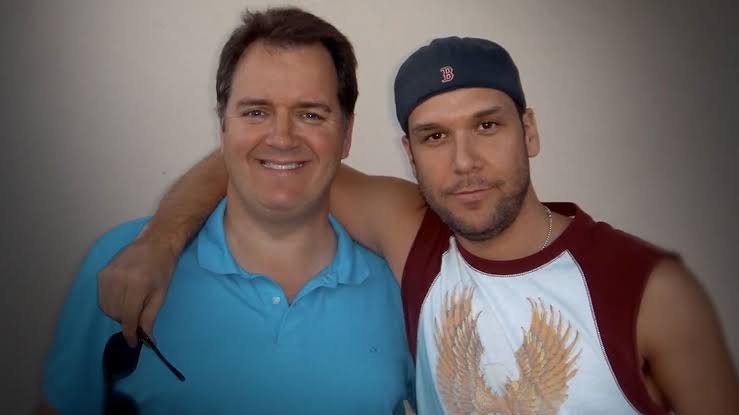
ORIGINAL-CIN: Dane, what a harrowing ordeal you endured. What was the tipping point when you were able to calm down and think, ‘Maybe I should tell this story on-screen?’
DANE COOK: Months before, I was already starting to think that I had cemented quite a legacy for myself in this generational run. I've now done what I promised myself I would do, which was to grow up with a generation of comedy fans over that decade and change. So, I was already able to—not in an arrogant way, but in an understanding way—one day tell my story saying, ‘This is how I hit the high highs and pioneered this Internet age and wrangled my fans when the industry thrust me out and said, 'No, not interested, kid.'’
After this all happened with my brother that is chronicled in the documentary some years later, I woke up with a very different vantage point. I now have this real harrowing, gnarly, biblical-type story with two brothers. And I say biblical because the great Robby Hoffman—who's a comedian that I really love right now—said to me backstage at the Comedy Store the other day, ‘This is biblical.’
O-C: It's definitely Cain and Abel.
DC: Exactly. When it comes to everything I do in life, including my comedy, I aim for heart and humour. I want to move you and feel something, and I want you to laugh. The fact that both of those came together, I knew I was ready to tell the story because there was a story to tell.
O-C: You talk a lot about your childhood and growing up as a very introverted kid. You were scared to walk out the door and really didn't have any confidence. Fast forward, you become an extremely successful stand-up comic. Clearly, your humour gets you through, and then you trust the one person who you think that you can trust—your older half-brother is Darryl McCauley—and he backstabs you and steals all your money. How did you not revert to your insecurities at that point?
DC: Well, the first thing that you do, especially in comedy, is keep going. I like finding humour in tricky situations. As a kid, I watched that famous episode of The Mary Tyler Moore Show where they went to the wake [and couldn’t stop laughing], and I understood the value of the escape hatch from trauma and despair and pain is laughter.
The second feeling when it all went down was everything that I thought fame and success healed was just sitting on top of what I suppressed, which was a lot of unresolved sadness. With great therapy and great fundamentals, and sort of sweeping my side of the street and owning my BS, I gradually healed a lot of voids. Darryl and this crime forced everything. I needed a sump pump emotionally to get at the amount of stuff that was coming up to the surface. I knew it was going to be a long journey. That's why it took a long time before I could tell this.

O-C: The minute your ex-sister-in-law Erika comes on screen, I immediately thought, ‘There is something really wrong here.’ I don't want to say you're all-forgiving, because you're not, but there's stuff that we do find out in the documentary that you allowed Darryl and Erika to get away with. I honestly don’t know how you got through it.
DC: Although cathartic, it was hard to watch back, but I think there's something that kept me calm. My mom was a person who had to push through an intense amount of pain to be very jovial and happy; she had some hardcore phobias. So, having an athletic, winning father who always wanted to put a win in the win column, and that kind of situation with my mom impacted my outlook on life.
I'm going to use a weird example here, but I hope it resonates. Bill Belichick is one of the greatest coaches in football history, and one thing that he would do from time is let the other team score. He'd let the other team in, and he would do that because he had such faith in his quarterback and his schemes that he knew that the time on the clock was to his advantage. But if he tried to stop the other team, he was putting himself at a disadvantage. In other words, ‘I'm going to win with my forward motion offense and not try to defend against the loss.’ That's the way I move in life, which is like nothing's ever falling apart; it's only ever falling together. But that's by way of you creating it and moving forward with it. That's what I did with the doc.
O-C: The documentary opens with a voice message left to you from your brother Darryl when he knew the jig was up, making himself sound like the victim. This documentary isn’t just a way for you to have dealt with everything, but it’s clearly a lesson to us all. It really makes you wonder, who can you trust?
DC: It is impacting people, and I'm getting beautiful notes and letters of what resiliency means. Everybody has a betrayal in their life. It's as important to you what has happened, because when someone abandons you in any form—financially or anything like that—and you trusted and loved them, it's the rug-pull. Some people can't get up from that; it really is crippling when that happens.
With me, when I heard the answering machine message that's in the film—when I heard it the first day, three days after he went missing with my life savings—I went to the gym. My friend Richard, who's in the film, took me to the gym just to get me out of the apartment. And when I came back, Darryl had left that message. And even though it was only a few days, I still was really in a terrible way. At the end of the message—and I played it a couple of times—I remember feeling like, ‘I need to save this message.’ And I knew already that the side of me that always wanted to protect myself at all costs was already looking and saying, ‘This is a piece of a story that I need to save,’ not just for the police, but for me.
O-C: Take me back to the first time you watched the film fully, because I know that you didn't have anything to do with the editing process.
DC: I watched it with [my little sister] Courtney—she's the heart of the film—with my wife Kelsey and her family, so maybe about eight of us. We thought we were watching what's called a rough assembly, like a hodgepodge version where you sit with a notepad to jot down notes on what you like, what you don't like, and what should be included or cut. I hadn't seen it at all. Brett Harvey, the director, took the film and for seven or eight months, he just vanished. I was like, ‘Did he disappear with my movie? Where is he?’ So no, I wasn't in the editing bay making those critical decisions; it was all him putting it together. But when he delivered the rough cut, we thought we were going to watch something in pieces, and instead it was a finished film minus the score.
O-C: It must have been quite an emotional experience.
DC: Courtney and I are laughing and crying, holding hands, along with my wife—who is my champion and really the reason the movie got made. And by the end of it, I started to believe that the intermission my career had been in—being sort of on the bench, but loving life, falling in love, and experiencing all these good things—was missing one thing: the momentum of my career. And I knew I could only have that back if people really knew me. They've got to know you before they want to come to your show or buy a ticket to anything. They buy you first. And I thought, ‘If this has legs, I might have another shot at getting the machine fired up.’
O-C: You recently watched it with an audience, and your buddy Jeff Ross did something pretty hilarious at the screening…
DC: When you're watching Erika at a certain point, I want you to realize that the great Jeff Ross was sitting maybe five people over from me in an audience of 500 people. There was a very quiet moment after Erika went on a little tirade. The whole audience had been laughing, scoffing, and cheering, but now they are completely silent during this monologue where she stares right into the camera. At the absolute quietest moment after she unleashes this verbal tirade, Jeff Ross calls out from the darkness of that corner, ‘Team Erika!’ You'll definitely think about that when you watch it.
O-C: I understand that there's more to come—you found a few hard drives with some pretty incriminating evidence from Darryl and Erika that you never looked at. That's insane.
DC: Here's one right here [holding it up]. I wrote right on the hard drive in 2009 when I left the courtroom: "D&E Emails"—Darryl and Erika's emails. Oh my god, that's a whole documentary in itself. There is a story beyond all these things, and what's come out of the woodwork recently... Well, there's been a lot in the last few months that has come to fruition. Listen, we're having this beautiful moment of success. I'm so proud that Super Channel believed in me, and I'm so proud that Netflix believed in us. If it has legs, if people want more, then there will be more story to tell. But we're just enjoying where we're at right now.