
The Mad Dog of Europe: When Hollywood Cowered Over a Film About Adolph Hitler
By Liam Lacey
Rating: B
The documentary The Mad Dog of Europe, which is rolling out slowly over the next couple of months across Canada, recounts an infamous episode in Hollywood history, when screenwriter Howard Mankiewicz — the famous co-writer of Orson Welles’ Citizen Kane — tried and failed to make the first anti-Nazi movie.
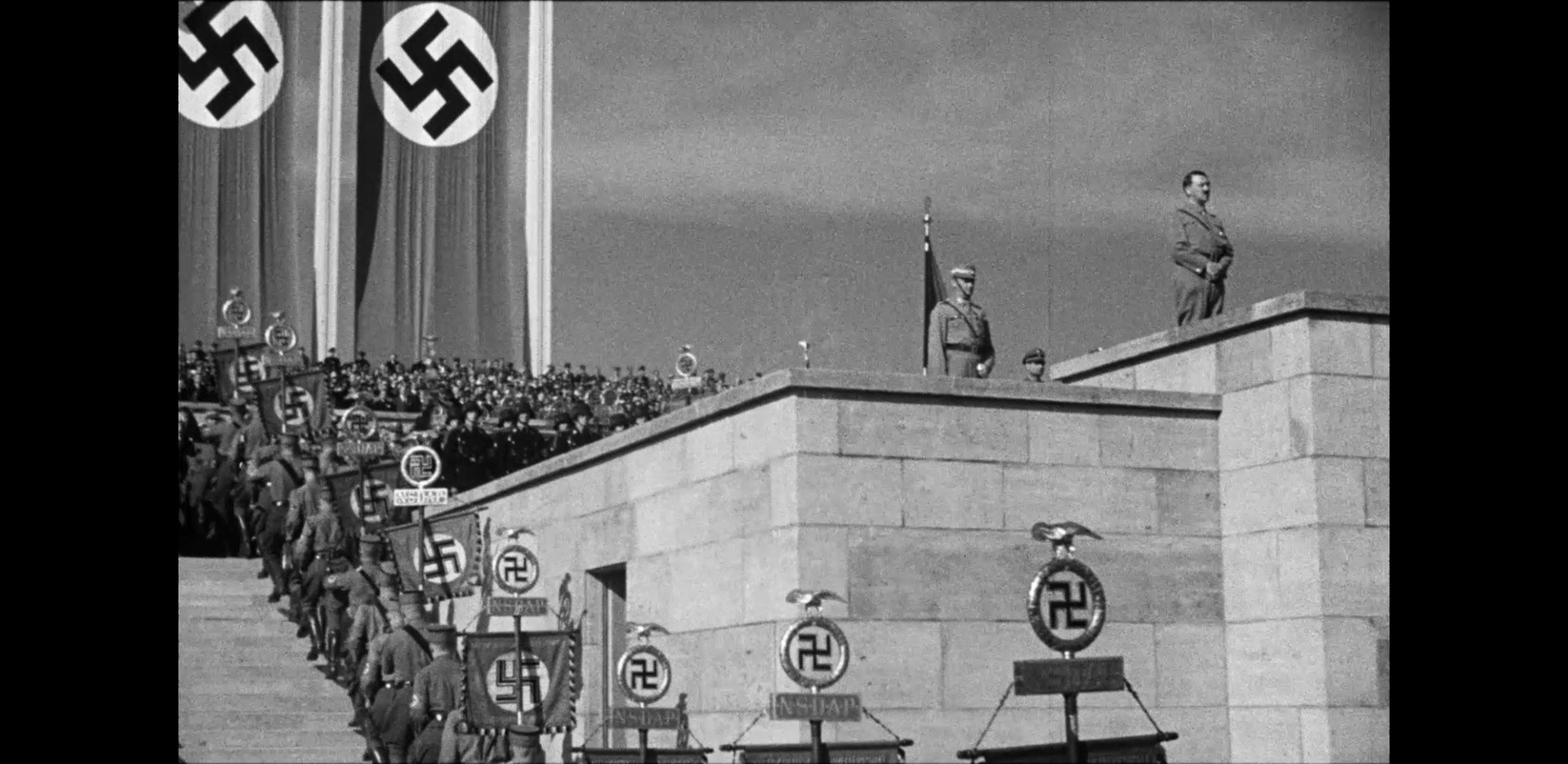
While the story is an old one, it has a provocative relevance these days with the rise of right-wing nationalism, antisemitism, and media companies' capitulation to political threats.
Two of the legendary screenwriter’s grandsons — Turner Classics Movies’ Ben Mankiewicz and director-author Nick Davies (You Had to Be There) — serve as our guides in London-based director Rubika Shah’s compact 83-minute film.
The film, which mixes voiceover narration, talking-head interviews, archival sound and flurried montages in what sometimes feels like a fast-paced TV news special, is more functional that artistic.
Mankiewicz was born three years before the turn of the century to immigrant parents and became a bon vivant New York journalist and a member of the famed Algonquin Round Table. In 1926, still in his late twenties, he was lured to Hollywood by Paramount to write screenplays.
He soon was in charge of writer recruitment for the studio. He wrote or doctored many scripts, produced hit comedies, and helped shape the sardonic, streetwise style of the early talkies.
But desperate to impress his demanding high-school teacher father, he wanted to do serious work. In 1933, the year Adolph Hitler became Chancellor of Germany, Mankiewicz took a leave from MGM, where he was now working, to develop The Mad Dog of Europe, a film he had written the year before.

The film was a warning against the rise of Nazism, depicting the persecution of a Jewish family through the 1920s and 1930s and the rise of a dictator, not-so-subtly named “Adolph Mitler.”
Though most of the major studio heads were Jewish, no one would touch it. Film historians see their motives were tangled, involving economic interest (they didn’t want to lose the German market), and a reluctance to antagonize anti-Hollywood and antisemitic forces at home.
Film approval was subject to the Production Code, a set of agreed-upon moral guidelines designed to avoid local or national censorship or mass boycotts by religious groups. The official censor, Joseph Breen — a prominent Catholic layman and journalist — vetoed anything that criticized the Nazi regime, threatening studios that they would inflame antisemitic sentiments by promoting “Jewish propaganda.” He was abetted by German consul George Gyssling, who demanded cuts to any film that depicted Germany in a negative light.
At a time when antisemitism was mainstream in American life, Jews were also cautious about drawing attention to themselves. The Anti-Defamation League, for example, was concerned a film like The Mad Dog of Europe would lead to accusations of Jewish warmongering.
Talent agent and producer Sam Jaffe, who tried to get Mankiewicz’s film, backed out after his rabbi advised against it. Another talent agent, Al Rosen, campaigned for several more years to get it made without success.
No one knows exactly what the studio heads, mostly former Eastern European immigrant peddlers and tradesmen, were thinking. But as Neal Gabler describes in his 1988 history, An Empire of Their Own, as a group, they were determined tosell an image of an idealized and assimilated version of the Americans, and to avoid any undue political attention toward their powerful but new empire.
As Shah’s film chronicles, the studio heads were, privately, not so passive about the dangers of antisemitism. While the FBI and police were focused on the threat from the communism, Nazi groups established themselves in California.
Historian Stephen Ross recounts a parallel story, about attorney Leon Lewis, who created a spy ring to infiltrate Nazi sympathetic groups in California. In early 1934, he invited 40 of Hollywood’s most powerful players to a private meeting, where he informed them that American-based Nazi groups were plotting to kidnap and hang many of them in hopes of inspiring a nation-wide pogrom. By that evening he had raised the equivalent of $450,000 in contemporary funds to continue his covert work.
In 1939, Mankiewicz was at a low point, unemployed and hospitalized from a car accident, when 24-year-old Orson Welles visited him. He hired him to write a script for what became Citizen Kane. (The story of that script-writing process is told in David Fincher’s 2020 film Mank, which takes a lot of historical liberties).
The Mankiewiczes, both knowledgeable film historians, do not make excessive claims for their grandfather’s authorship of the film, though they do draw attention to the film’s Nazi references and use of newsreel footage, features of their grandfather’s anti-Nazi script. They applaud his work sponsoring post-war refugees to the United States and how he welcomed his sons back from the war.
Understandably, because this is a kind of family film, there’s scant mention of Mankiewicz’s self-destructive gambling and drinking that led to his death at 56, well before either of his grandsons were born.
Left hypothetical is the question of whether it would have made a difference if Hollywood, nearly a century ago, had taken the moral high road, made anti-Nazi films earlier, and swayed public opinion for the U.S. government to enter the war earlier and perhaps save millions of lives.
What is certain is that Hollywood was, and always will be, a massive political megaphone, in what it chooses to say and what it avoids.
The Mad Dog of Europe. Directed by Rubika Shaw. Written by Rubika Shaw and Ed Gibbs. With Nick Davies, Ben Mankowiezc, Stephen Ross and Thomas Doherty. Screening in Toronto November 4 at the Leah Posluns Theatre through the Toronto Jewish Film Festival and in Vancouver at the VIFF Centre; November 12 in Victoria at the Cinecenta; and November 21 and December 21 at Toronto’s Ted Rogers Hot Docs Cinema.