
Harmony Gardens: Veteran Comic Pros Find a New Home on New Media
By John Kirk
I confess, I didn’t expect to like the new web series, Harmony Gardens as much as I did.
Not to say I don’t appreciate the medium. I mean Felicia Day’s The Guild still ranks as one of my favourite viewing pleasures. Oh, and don’t forget Battlestar Galactica’s Blood & Chrome. The web is still a viable forum for television, testing ground that isn’t fully utilized.
But usually, you don’t see a retirement village being the setting for a series, let alone in a medium typically targeted to a younger demographic.
Original-Cin very comfortably sat down with the Canadian comedy power couple Colin Mochrie and Debra McGrath, and fellow cast members Ann Pornel and Al Mukadam, to see what sort of comedy Harmony Gardens offers and questions it brings up.
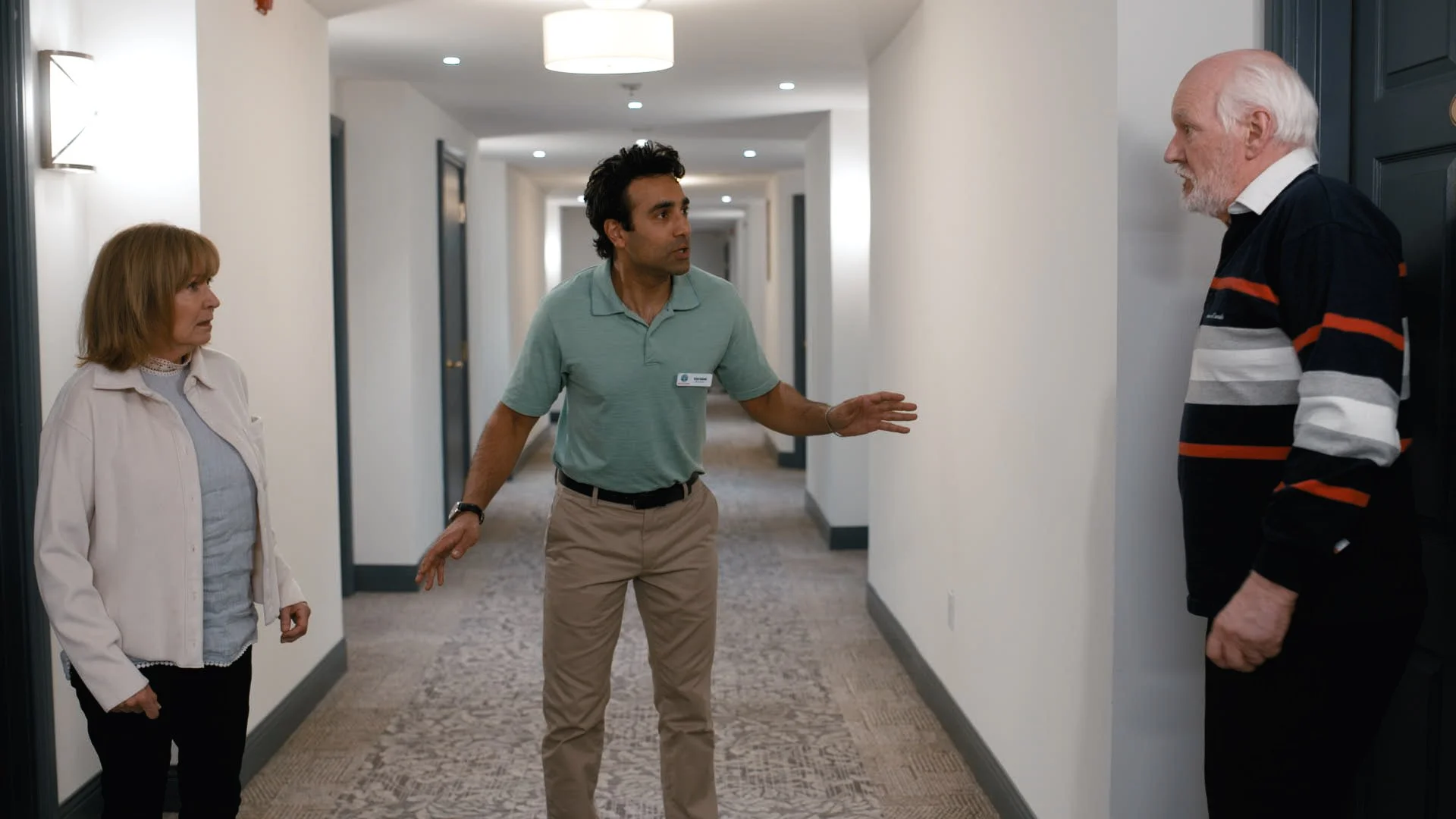
Debra McGrath, Al Mukadam and Colin Mochrie face the latest retirement village crisis
“I was doing a movie that (Harmony Gardens creator) Macaulee (Cassaday) was working on,” Mochrie said. “She had a sizzle reel for a show she was working on and she asked if I would like to be a part of it. I said sure, and then after reading the script, I was like: absolutely! They weren’t sure about Deb though. She might want to tell this part.”
McGrath chided Mochrie before she began.
“Why do you make this seem like I’m bragging?” She laughed. “They said they weren’t too sure about me because they thought I looked too young to play the character. I remember saying the character is the age you tell the audience they are!”
The series is comprised of about seven 10-to-15 minute-long episodes in which we first meet Evelyn (McGrath), who has been relocated from living with her family to living at the retirement community, Harmony Gardens. She is reluctant at first but then meets an assembly of residents and staff who provide for distraction and diversions.
We asked about the choice of the show’s format.
“Yeah, I think that they’re hoping for someone to see that this is a viable series. It’s a great way to get it out there, for people to see.” Colin says.
Mukadam had some insights to offer.
“I think the official term is ‘short form digital series’. There are a lot of pros to it. It gets to live on its own forever. It’s a different vibe and flavour than a 22-minute comedy series. It gets to the punchline faster. There’s a cool parameter and challenge in telling a story faster and for cool characters to tell a story with a beginning, middle and an end in a truncated format. Maybe this will become a usual format?”
Pornel added: “I think short form content is the way the industry is trending for a variety of reasons – budget reasons, to be very frank. Our media landscape is changing from these legacy formats to new form vertical formats, this is just a new playground for creatives to play in and we have more freedom in that we aren’t dictated by a network or specific guidelines to follow.”

It’s a unique format and even watching seven episodes averaging around 8 minutes each, I was surprised and intrigued to see character growth, particularly with Pornel and Mukadam’s characters.
“I think it’s enough time to be intrigued by them.” McGrath says. “You’re serving many masters there with a big cast who you have to cover in the residence, but I think that my character’s backstory is out there because it comes with the character. The husband who has passed, the son who wants to put her in there. But I think everyone would be intrigued to see why Mr. Davis is there. The staff? Why they’re there? There are a lot of questions we want answered.”
That’s a completely valid point. There are episodes of other series that last for about 45 minutes and more that sacrifice plot development for characters. How many times have folks heard the caveat: “It builds … just wait.”?
What was the appeal? What was loved about this series?
“I loved that old people are people.” Mochrie tells us. “It shows that they go through difficulties because of where they are, what the institution is going through, budget cuts, and all that.
“But it also shows that they are people in a different time of their lives. It may be where they’re at their most vulnerable but it’s still going on. They aren’t caricatures. They are real people, playing illicit poker games, putting on illicit, inappropriate plays for seniors, but just finding that joy in building that community. And I really enjoyed that. I really – I mean, Deb really enjoys people.”
McGrath laughed. “Seniors’ voices are important. They aren’t submissive. They are people. My character is entering at the moment of entry - where we see her son pushing her to do it. But the others have clearly made their peace with it and I like that it’s positive and they are doing what they want to do.
“I would have liked to see Mr. Davis more stoned,” she added, referring to Colin’s character.
Stories about getting older have a bittersweet aspect to them because a mixed audience can either appreciate the associated issues of growing older or can relate to them on an emotional basis. We all age and we all have loved ones in this stage of life. We want to see them live, love and be loved.
That’s the timelessness of the series. The episodes are extremely short and the YouTube audience is capricious, but the message of this series has an appeal that works as well as some of the mainstream TV series out there.
Harmony Gardens is an unexpected laugh, and a chance to see a short but sweet gem of Canadian comedy.
Harmony Gardens can be seen on YouTube and Convos TV.