
Everest Dark: Sherpas on a Corpse Hunt Add to the Bittersweet Beauty of Everest
By Jim Slotek
Rating: B+
While watching Everest Dark – Jereme Watt’s intimate look at the work of Nepalese Sherpas extricating corpses on Mount Everest – I wondered whether there has ever been a Sherpa who’s afraid of heights.
Need to get across a thousand-foot-deep crevice while traversing a five mile mountain of ice? Slap a ladder across it - fastened at the ends, of course, but they’d need to fasten it with hardened concrete before I’d even consider it (and then I’d probably still back out).
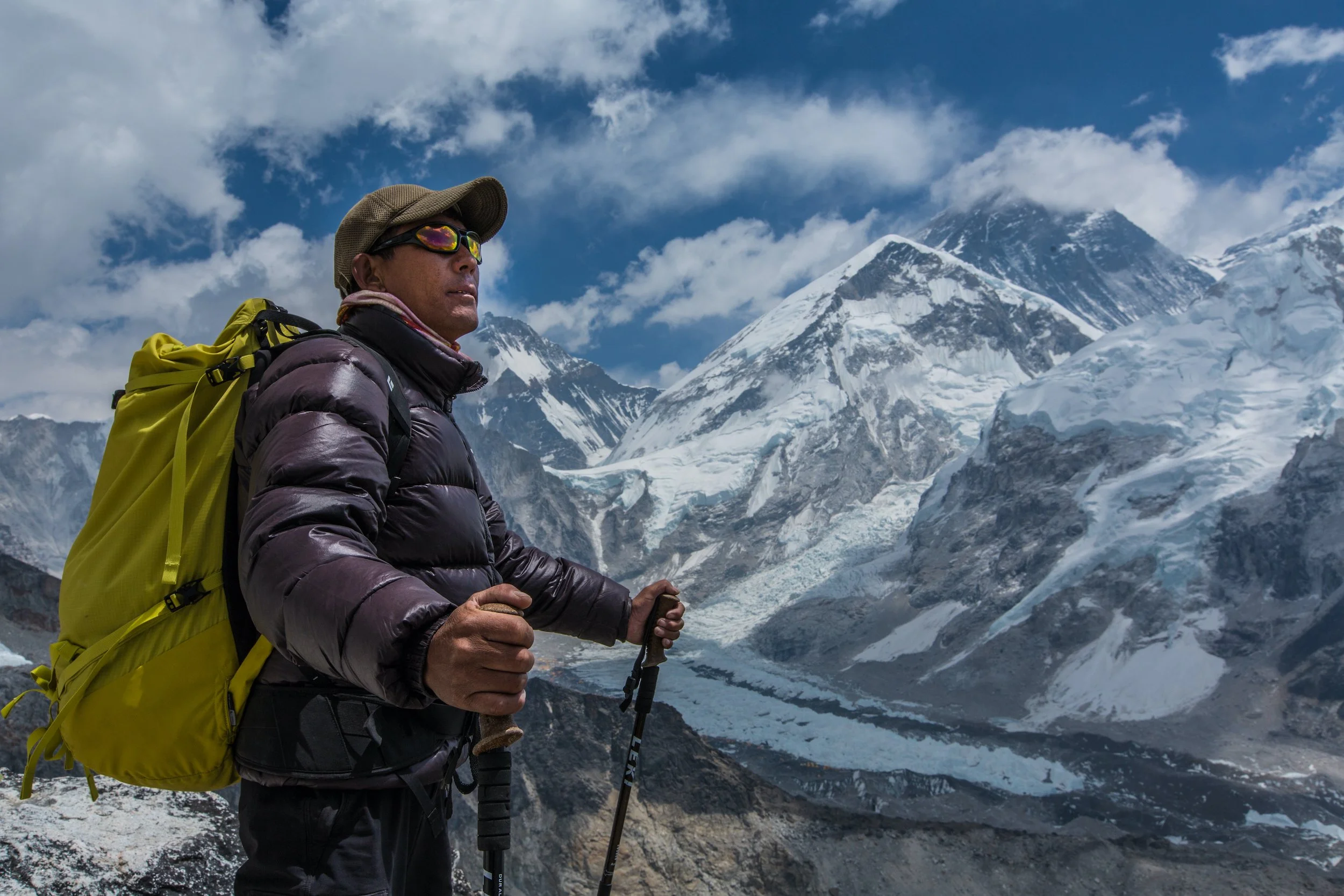
People have an image of Sherpas as the helper-of-helpless Westerners, the latter all looking to re-experience the singular, oxygen-starved joy Edmund Hillary felt in 1953 at the summit with a push from behind by the Sherpa Tenzing Norgay (in fact, many believe Norgay was there first).
But the Sherpas we meet in Everest Dark, particularly the famed protagonist Mingma Tsiri Sherpa, are there because more than 7,000 people have climbed to the summit since, with the result that some 200 bodies are unaccounted for.

As Everest Dark begins, we learn that Nepal has begun the project of having the Sherpas attend to the dead rather than the living. Already well-paid (the movie doesn’t do more than briefly mention it, but by Nepalese standards they are rich for their professional peril), they are offered an extra payday, a bounty if you will, for each corpse they discover and retrieve.
It’s more cultural than the mere consideration of tourists being creeped out by encountering the dead. Chomo Luma, as the Nepalese know Everest, is considered a god, and the littering of it with corpses is believed to be angering it – hence a recent increase in fatal avalanches and deadly weather.
For his part, Mingma believes he has been told by the god of the mountain to give up climbing or else. (Much of his thoughts are interpreted to us by narrator Jaswant Dev Shrestha, a Nepalese filmmaker who apparently has a close connection to Mingma). His decision to return is not for money (though his concerned wife is the one who mentions the pay to the filmmaker), but to possibly appease Chomo Luma with his work.

Though there is majesty on offer in Everest Dark, it is more personal and close-up than it is about IMAX-worthy images. The Sherpas have plenty to say, cigarettes to smoke, and plans to share. For people whose lives are constantly on the line for a living, they approach their jobs convivially.
As for the job at hand, the filmmakers are to be lauded for staying with their subjects through some unsettling moments, rather than simply sitting back and letting drones do the work. There is one drone scene, but it is pointedly identified as such, as we watch Mingma and his fellows search remotely for signs of the frozen dead.
They do find some (the squeamish be warned) and those lost climbers they do find are sent to their loved ones for proper burial. But the sense is there that they feel their mission is not fulfilled. And maybe it never will be.
Everest Dark. Co-written and directed by Jereme Watt. Stars Nim Tsiri Sherpa, Pasang Tenzing Sherpa and Jaswant Dev Shrestha. Opens Monday, March 2 at Cineplex Cinemas, in Toronto, Calgary, Edmonton, Vancouver, Victoria, Halifax, Ottawa, Canmore, Thunder Bay and artsPlace in Winnipeg. To be streamed at a later date on CBC Gem.