
Original-Cin Chat: Alexandre Trudeau & James McLellan on War, Toughening Up and Hair of the Bear
By Jim Slotek
Alexandre Trudeau’s inspiration for a profound course-change in his life came, not on the road to Damascus like St. Paul, but a road in another geopolitical trouble spot: Darfur, scene of civil war and genocide.
A co-director, with his longtime friend James McLellan, of the new wilderness thriller Hair of the Bear (opening this week), Trudeau first earned his filmmaking stripes with frontline documentaries like Embedded in Baghdad and Liberia: The Secret War. And he was deep into his film Refuge, about the humanitarian crisis there.
Trudeau – “Sacha” to his friends, the younger brother of former Prime Minister Justin – recalls, “I stopped making geopolitical documentaries primarily because they involved too much risk and too much time abroad when I started having a family.”
“I had a moment when I was with rebels in Darfur, taking trucks through the night to avoid the Sudanese army. And my son was maybe a year and a half then. And I was like, this would be super-ridiculous if someone had to say, ‘Well your dad was a good guy. Too bad he had to die in this desert.’”

He admits he had another family-based reason for letting go of those documentaries. His transition from documentaries to film dovetailed with Justin’s term as Prime Minister.
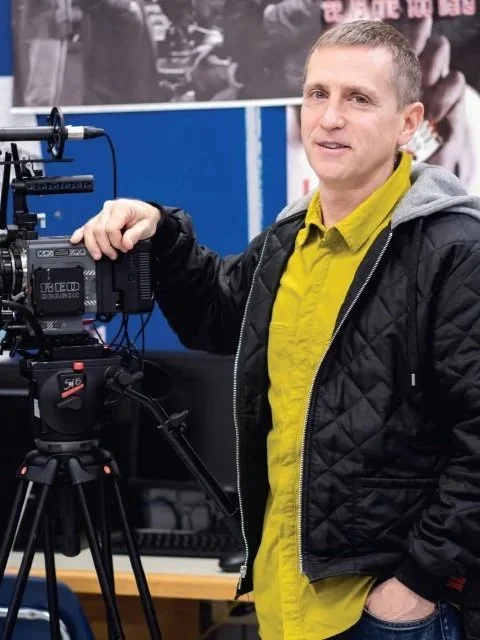
James McLellan (Courtesy Pembina Trails School Division)
“It lined up with the fact that I’m not going to start telling stories about Canada and the world with my brother in a decision-making position. I didn’t want to be commenting on geopolitics while my brother was in the hot seat.”
(The closeness of the siblings was in evidence at a recent gala pre-screening in Toronto, when Justin showed up for support).
The transition away from war-zones was a gradual one. He wrote a travel memoir, Barbarian Lost, Travels in the New China, and directed a short film called Bitter Smoke, a short film in Ojibwe dialect about the legend of the Windigo.
But it was his relationship with his Armed Forces buddy McLellan that inspired Hair of the Bear. Following decommissioning, McLellan had become a high school teacher in Winnipeg, who ran a film course for students and dabbled in indie features with the Winnipeg Film Group.
“We met while we were doing armoured officer training in the Canadian forces and in this sort of tense environment,” McLellan says. “We both were always cracking jokes. That was where we realized we both were a little bit unflappable. We could enjoy ourselves in extreme circumstances. And from that point on, we continued to stay in touch with each other and get involved in different things.”
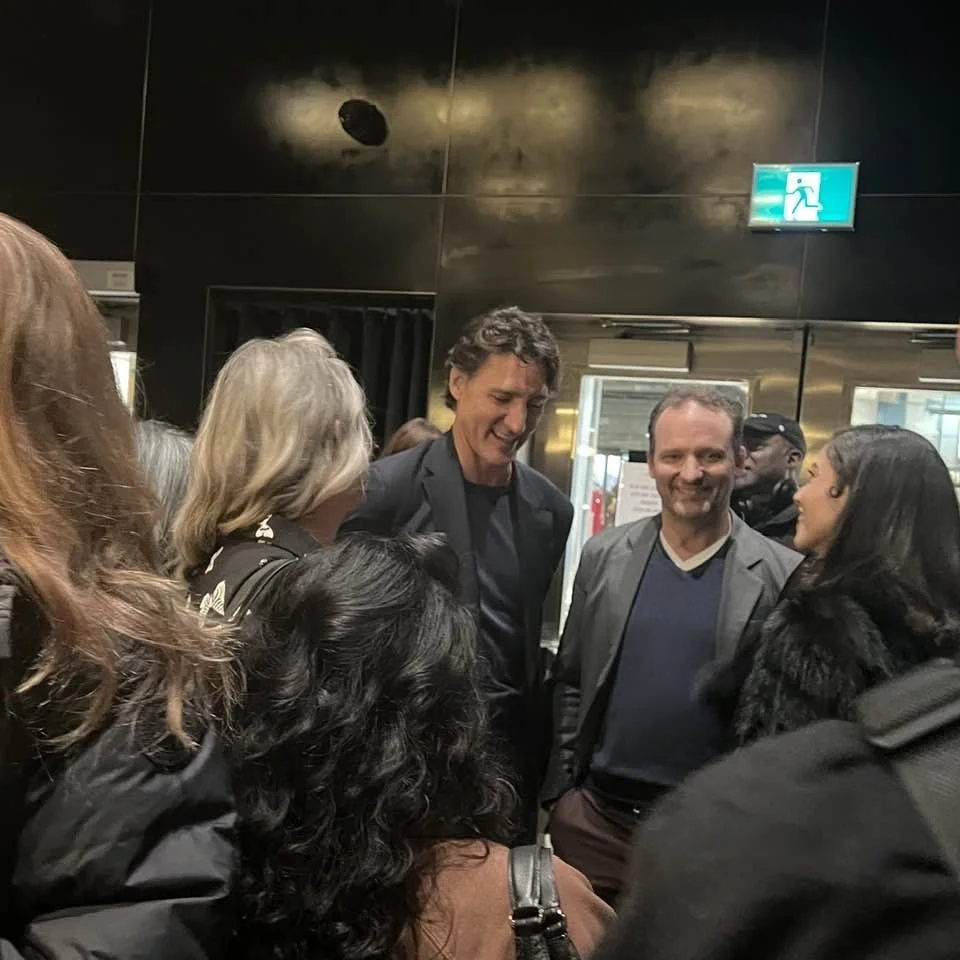
Justin and Alexandre at the premiere. (Courtesy Bianca Kapteyn)
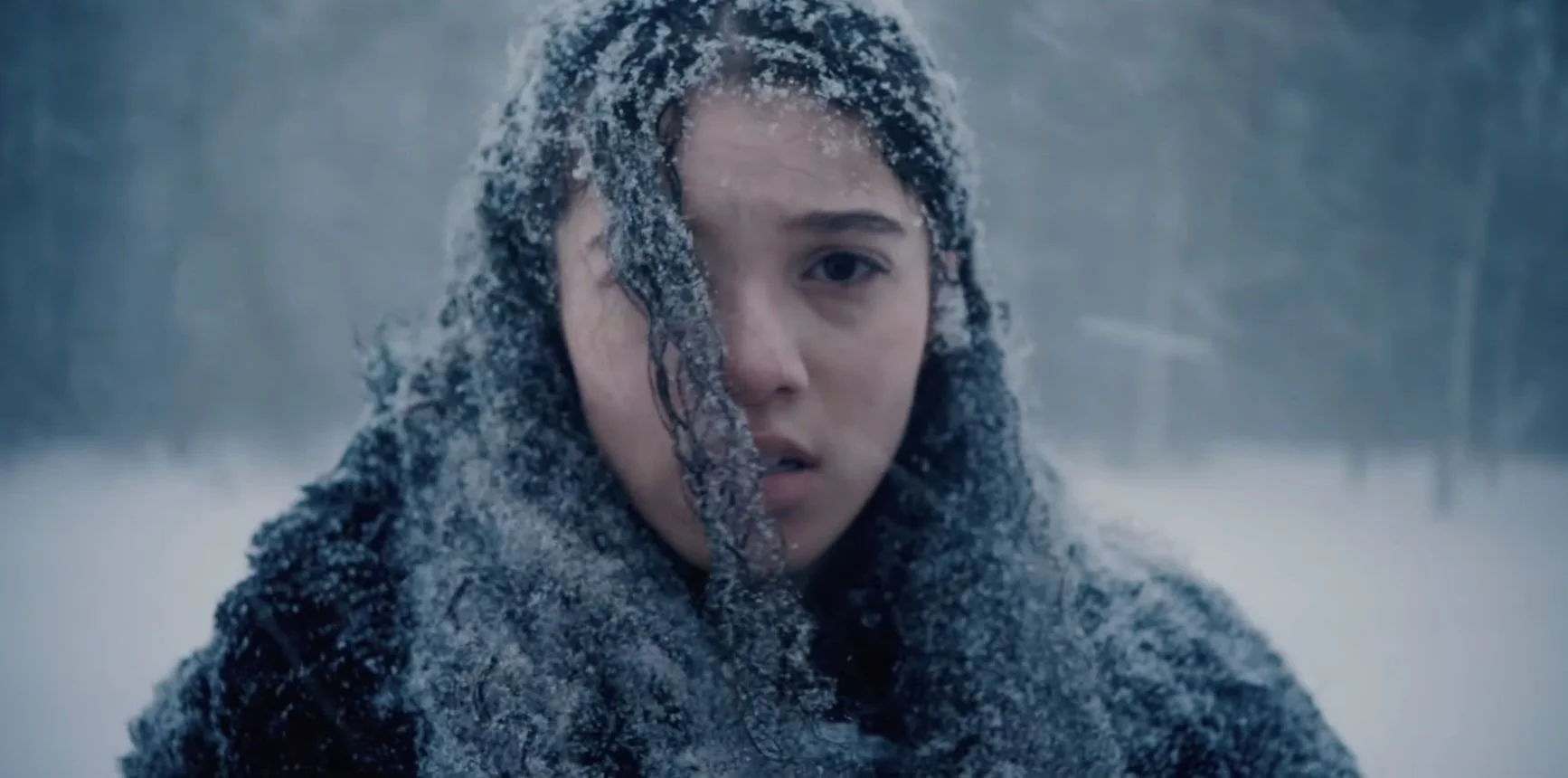
Hair of the Bear is about a severely anxiety-prone teen (Malia Baker) who is sent to the remote cabin of her grandfather (Roy Dupuis) to learn wilderness skills under his genial care. There, they encounter a pair of criminals and wilderness skills evolve into survival skills.
“It’s like paralysis,” McLellan says. “And it’s incredible how much it’s being diagnosed. There was a turning point around 2010 where I just couldn’t believe how many of these kids would come in with self-harm on their arms.”
Trudeau adds, “And the genesis of his project was him telling me this and me not believing him. And then, at one point, he sat down and said, “I’m going to tell you about three different kids, changing the names, and we went into a deep character study. And that’s what got us into, ‘Okay. Now what do we do about it?’”
It’s a simple, straight-on tale of survival and revenge. And where Trudeau says it might take two years to get a documentary made, it took “six or seven years” to get a fictional feature onto the screen.
“Some people said, ‘If you make this film you won’t be friends anymore. ‘” McLellan says with laugh. “But we’re fine.” For his part, Trudeau says he has scripts he’s written based on events he’s seen in the war zones.

Which brings us to the question, why was Trudeau such a thrill-junkie in the first place, running towards danger as a career?
“The thing is that war zones are so extreme they reveal who people really are. It’s why journalists keep trying to tell these stories through people. That’s been my approach as well. It’s a chance for me to strip away a lot of excess of my life, walk into a war-torn frontline town and deal with people who are just at the very edge of human existence.
“It’s a dramatic setting. You come back to your normal world and it’s a fluffy existence, and it’s full of lies and people pretending that they’re one thing when you really know that they’re something else.”
Says McLellan, “I’m very much in line with Sacha, you’re drawn to see the unfiltered parts of the world.
“Not that we have to be (apocalypse) preppers or anything. But we are in an artificial world with artificially controlled environments. But things can get tough, and let’s be ready to be tough.”
CLICK HERE to read Jim Slotek’s review of Hair of the Bear.