
Original-Cin Q&A: Hot Docs Programmer/Filmmaker Aisha Jamal on Stolen Afghan Art
By Thom Ernst
Aisha Jamal is a Toronto-based Afghan-Canadian filmmaker—Dr. Aisha Jamal, to be precise - with a PhD in German Cinema from U of T.
She teaches at Sheridan and programs at the Hot Docs Ted Rogers Cinema, which on paper sounds like someone you might be slightly intimidated to talk to. You’re not. She’s grounded. She’s candid. And she has a way of keeping things light, even when the subject matter isn’t—laying out facts that are hard to argue with, while making the conversation feel open, curious, and generous.
Her latest documentary, The Theft, comes out of one of those curiosities. It was sparked by a now-deleted tweet from the National Museum of Kabul warning that looted artifacts might be turning up on the art market. It’s the kind of thing most of us would scroll past. Jamal didn’t. She saw what she calls the “other cost” of conflict—the quiet loss of a country’s cultural memory—and followed it.
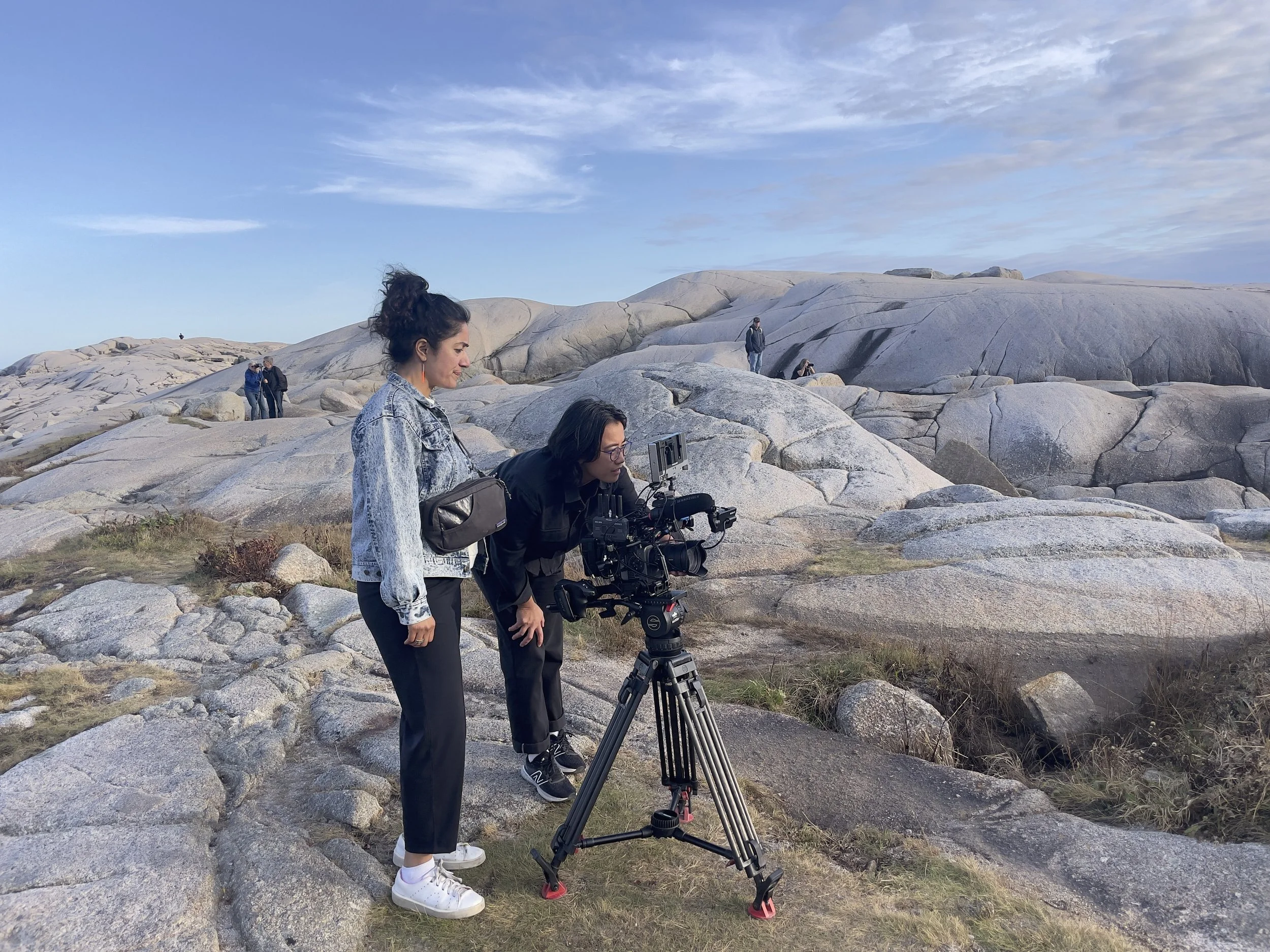
Aisha Jamal oversees a shot in Afghanistan
The result is a film that shifts the way we tend to see Afghanistan. Not just a place defined by war, but one with deep, layered histories that rarely make it into the conversation. The Theft isn’t just about stolen objects; it’s about who gets to tell history, and who gets left out of it. Or, as one of the film’s threads suggests, how even the smallest act of resistance can begin with thought.
ORIGINAL-CIN: Aisha, great to meet you. I want to start with The Theft. The perspective your film takes—seeing art not just as cultural expression but as something that can be taken, even used against a country—is not something I’ve ever really considered. I might be alone in that, but it genuinely caught me off guard. What brought you to this?
AISHA JAMAL: You know what, Thom? I don’t think you’re alone. I think one of the things that’s really different now, in the last five years or so, is that the subject is in the zeitgeist.
There are different ways of dealing with this topic in different places. In Canada, the conversation has been very much about Indigenous art. I’ve been following that. And I’ve also been really interested in the European conversation around African art, because there it’s very focused on Africa.
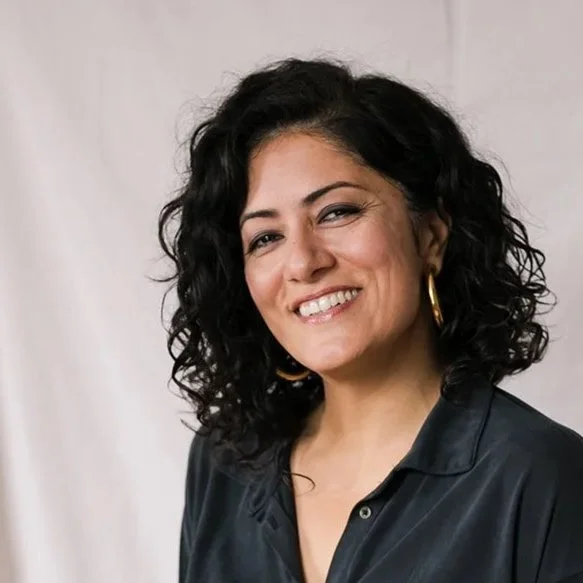
The Theft director Aisha Jamal
But what really brought me to this in a much more direct way was when the Taliban took over Afghanistan. I was on Twitter, looking at Afghan Twitter and seeing what people were saying, and one of the tweets I saw was from the National Museum of Kabul. They attached black-and-white photos and said, “Look out for these things on the art market.” That tweet was erased hours later, but it really made me think, “Okay, Afghanistan is again in this moment of instability.”
We know there’s this huge human cost, but that tweet made me think about this other cost, which is the cultural heritage of the country, and how that becomes so vulnerable and volatile. And that came together with a couple of other things I was thinking about at the time, and it made me really interested in thinking about repatriation through the lens of Afghanistan—a country that’s never really included in this conversation.
So, I was like, why isn’t it included? And then secondly, why do these objects matter? Some of them look remarkable, others look quite plain, and you think, “Okay, why does all of it matter?” That’s what really started shaping the film.
O-C: One of the thoughts I had watching the film—and I’ll admit this is me showing my limitations—was: why is Afghanistan having this conversation at all, given everything else it’s dealing with?
JAMAL: That’s a really honest thing to say, Thom, and a really good question. Afghanistan is one of the poorest countries in the world. The primary concern is for people to stay alive, to feed themselves and go to school. If I were to ask a hierarchy, I’d say, sure, art comes after that.
But what makes art important is that Afghans don’t have much knowledge of their own country’s history. We have this one big museum, but otherwise not much. And because the country is so focused on survival, it’s often seen through one lens—from the West, through the lens of fundamentalism and politics.
If you told somebody Afghanistan had a really rich medieval period, they’d say, “What?” But it’s actually a country with a deep history. It has a Buddhist history as well, before Islam mass-converted the country. So in many ways, it’s a place with different layers of history, different complexities, different people coming together at different moments. It was a beautiful melting pot at one point.

For me, it’s very important that people see Afghanistan not just through politics, but through art and through a very complex society.
O-C: You’re both a programmer and a filmmaker. How do those two roles inform each other?
JAMAL: I feel like they speak to each other quite naturally. I watch so many films a year—it’s actually kind of insane—and I think there’s something in my brain that just wants to see a lot and is really curious.
But at the same time, when you’re constantly watching, you start to see the holes, the things that aren’t being explored, and then you get the urge to tell stories. So, I also want to make. The desire to watch and the desire to make are really connected for me.
I’m here to champion other people’s work, but I also love storytelling myself. Those two things are very deeply related.
O-C: You mentioned holes—are you trying to fill gaps in understanding, or challenge misconceptions?
JAMAL: Both. Depending on the project. The Ziya Tong show I worked on, How We Die, was about thinking through death and dying in the West—conversations we’re not really having—and looking at different cultures and approaches.
And then with my own filmmaking, I also think about representation. There aren’t very many Afghan-Canadian filmmakers. There are some of us, but considering how deeply Canada was involved in Afghanistan, it’s missing from the broader understanding here.
So sometimes I see gaps in understanding, or subjects I’m interested in that no one is stepping into, and I feel like I want to make something about it.
O-C: Have you ever tried to champion a story that just didn’t work out?
JAMAL: Oh my God, 100 percent. About five years ago, I put a lot of effort into a film about a plane that was hijacked by a group of Afghans. It was supposed to be a regional flight, and they hijacked it to London. It sat on the tarmac at Heathrow for days. There was a real standoff. The pilot got out through a window.
O-C: I remember this.
JAMAL: You remember this?
O-C: Yeah. It was televised—the pilot climbing out. I remember that.
JAMAL: Oh my God, I would have loved to talk to you about that, because I don’t remember it at all. When I read about it, what fascinated me was that the people who hijacked the plane were part of a resistance group that called themselves “The Philosophers.” They resisted the Taliban through thought. They did nothing action-wise, but said, “We resist through our thinking.”
And I was like, that is so strange and poetic. I really wanted to explore that, alongside the tension of the event itself.
I went to London with my mom as my translator, because many of the passengers had settled there. I connected with an Imam in the community, and he said to me very clearly, “Please don’t make this film.” These people had lived through trauma, and with the rise of anti-immigrant sentiment, they didn’t want to be in the spotlight.
So, I had to think about the ethics of it. He wasn’t going to connect me with them, and I chose to respect that. I’ve let it rest—for now.
O-C: Watching The Theft, I found myself confronting my own assumptions—especially around who gets to be seen as an expert.
JAMAL: I mean, I think that’s a very Eurocentric thing to say, Thom—sorry to point that out. But it is. There’s a tendency to center the European expert.
And I think what films like mine try to do is show that there are people who have studied, read, and lived these histories, who don’t look like that traditional European expert, but whose perspectives are deeply informed and valid.
For example, Jawan in the film has a PhD in history. There are people who have spent their lives studying or living these things, or both. It’s important to extend the conversation beyond that narrow view.
O-C: One of the things that stayed with me is the optimism of your subject, even in very difficult circumstances.
JAMAL: It’s one of the saddest things, honestly. Living under the Taliban is incredibly restrictive, especially when it comes to education for women, or equality, or social justice. At the beginning of the film, Jawan is very optimistic about the work he can do, even under the Taliban. And then by the end, he realizes it’s much harder than he thought.
He’s not discouraged, but he understands that it requires a different approach. And that’s frustrating to witness, even from afar.
O-C: And yet, that sense of hope is still there.
JAMAL: It has to be. I get really discouraged sometimes, especially when I hear about new restrictions or brutality. But then I remind myself—hope is all we have for Afghanistan.
It’s gone through these cycles of conflict, and sometimes it feels like we’re walking backwards, especially on women’s rights. But we have to think about future generations. We have to use our imagination. We’ve got to imagine ourselves out of the situation, because the picture right now is not pretty.
O-C: Resist through thought.
JAMAL: A nice way of bringing it back. That’s probably why I’m still so fascinated by that group.
The Theft premiered April 19 on TVO Docs and repeats April 23. It’s available to stream on the TVO Docs YouTube channel website and Smart TV app. It has also been acquired for distribution by Game Theory Films for screenings at festivals, in theatres, in museums and at cultural events in Canada.