
Original-Cin at Cannes: Eight Films That Confirm Audiences Win Some, Lose Some
By Carol J. Bream
CANNES, France, May 20 — Family turmoil, a strange disappearance, Russian crime violence, a magnificent biopic, a tender tale of a humanoid child and a sad film about a millennial party girl kick off week two at Cannes International Film Festival
The second week started strongly with The Beloved, Paper Tiger, Sheep in the Box, Moulin and Fjord all in the Official Competition, but there was at least one very strange film in the mix, which was thankfully out of the Official Competition.
The Beloved from director Rodrigo Sorogoyen is a Spanish film (one of three in the Official Competition) where extreme closeups portray unnervingly the huge emotional distance between a film director and his actor daughter, whom he abandoned when she was nine. Starring Javier Bardem and Victoria Luengo, the film stirs strong emotions at numerous points, particularly one in the Spanish desert during the filming of Bardem’s latest œuvre.
The actors just won’t follow his instructions, even starting to laugh uncontrollably during the scene. He repeatedly storms out of the director’s tent and screams at them angrily after many failed takes, to the point where the film crew decides to abandon the location. Several other tense scenes depict the deep-seated anger the daughter feels toward her father, but she remains to complete the filming. One wonders whether she will ever return to acting, as she seems to prefer her job in a local restaurant to the high drama of movies, at least if her father is at the helm.
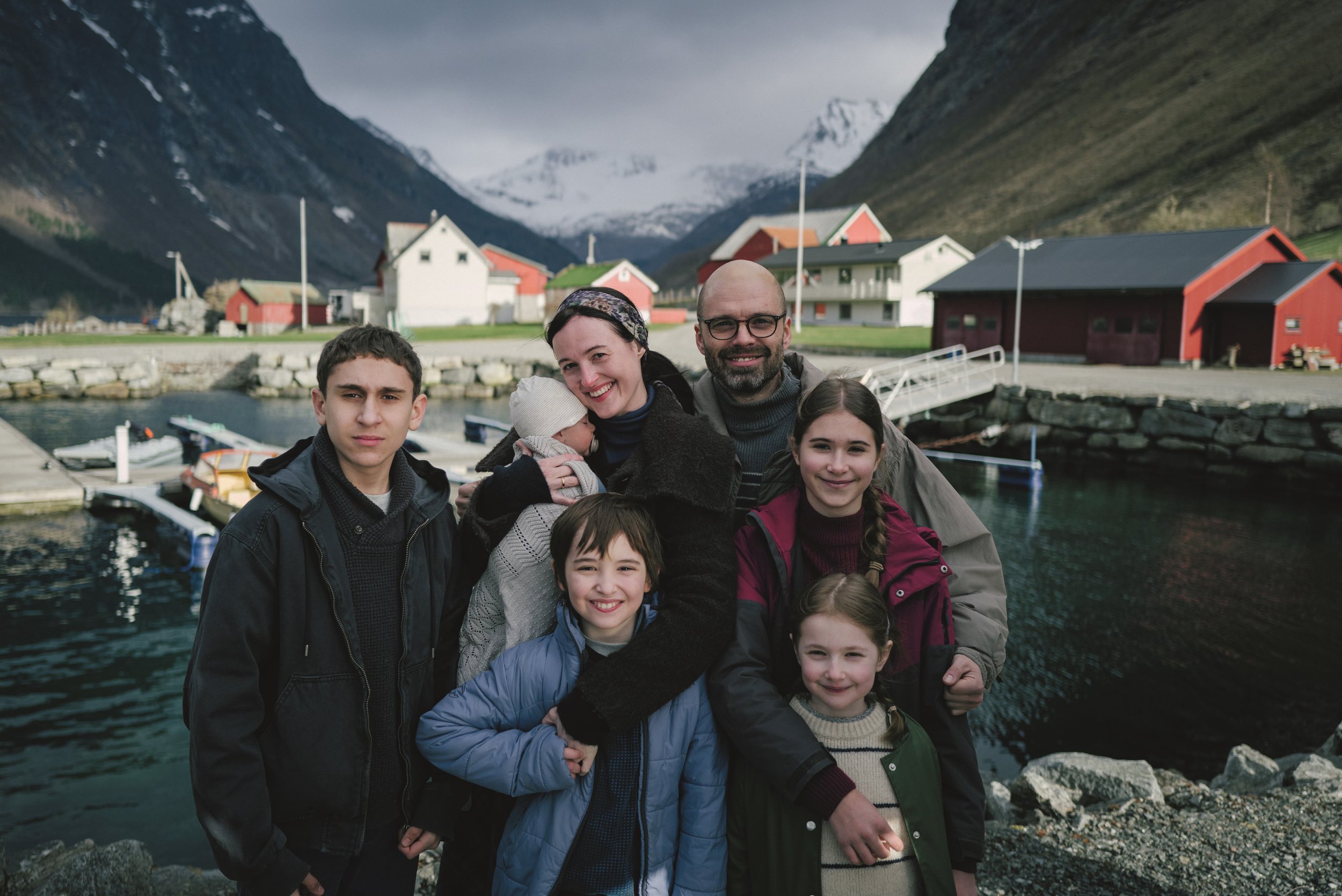
A scene from Fjord
Paper Tiger from American director James Gray stars Scarlett Johansson, Adam Driver and Miles Teller in a wrought family tragedy. It features violent Russian mobsters, the supposed cleanup of a highly polluted canal in New York City, and a pair of brothers who could not be more different despite their affection for one another.
Teller plays Irwin, an engineer who hopes to get some work on the canal. After Irwin takes his two sons to one of the locations where he expects to work, he and his family are threatened. Irwin’s brother Gary, a retired NYPD detective, tries to fix things up but fails spectacularly. The film ends in the Queens borough marshes where it started, with Gary’s reckoning the price to pay for the life and well-being of his brother’s family.
Johansson, as Irwin’s wife, is the family’s protector. Wearing an odd hairstyle (even for the 1980s), she must deal with her own personal crisis that she does not share with her family. This is a Hollywood film and quite unlike the others here at Cannes 2026. The opening and closing scenes show the Twin Towers in the distance, thus placing the film squarely pre-9/11.
Sheep in the Box, a sci-fi drama by famed Japanese director Hirokazu Kore-eda, is a bittersweet tale about a couple who have lost a child and then decide to adopt a humanoid robot to which they give the dead child’s name, Kakeru. The wife feels an emotional tie right away, but the husband wants to be called “Sir.” Loosely based on the children’s book Le Petit Prince, this is a disquieting tale set in the near future in a rather sanitized-looking rural setting. The film ends warmly but with an uncertain future for all concerned.

Another Day (Garance) by French director Jeanne Herry depicts the alcohol-driven life of an actress, Garance (played convincingly by Adèle Exarchopoulos). She is a millennial party girl whose acting career falters so much that the others in her troupe set up a group counselling session to try to get her to accept a detox. When she refuses, they set her loose. Eventually, Garance finds a female set designer who becomes her over-indulgent enabler and lover. After receiving a diagnosis of severe liver damage at the age of 36, Garance finally accepts the kind yet insistent advice of a doctor and goes sober. A hard film to watch and an ending that is just too Pollyanna-ish to believe.
Fjord by director Cristian Mungiu sees a Norwegian Romanian strictly Christian family move to a remote Norwegian village on a fjord (the film was actually shot in Chile), where the father accepts an IT position at a local school. The film begins to the sounds of “Amazing Grace” and an avalanche, signaling the two key themes of the film: the family’s traditional cultural, religious and parental outlook facing an avalanche of opposition from the locals, who are progressive Scandinavians.
After noting bruising on one of the family’s daughters, teachers report the couple to the Bureau of Child Protection. Thus ensues the key story arc: the arrest and trial of the parents, threatening them with prison time if they refuse to agree to the charges. The children, including a breast-feeding baby, are placed with foster families. The trial displays progressive political correctness gone wild versus the family’s belief that children sometimes need a bit of light corporal punishment to learn to be responsible adults. Even for the “woke” among us, this film represents a troubling refusal to accept “otherness” in those who move to our communities from elsewhere.
The Meltdown, a drama written and directed by Manuela Martelli, is in the Un Certain Regard section of the competition. The metaphorical concept suggested by the film’s title is revealed as Hannah, an elite teenage German skier, comes to Chile to train with her German coach but feels overwhelmed by his hard-driving style. She befriends Inès, a pre-teen local girl whose grandparents own the hotel where the team is staying. Inès accompanies Hannah to the hotel bar and on other adventures, eliciting anger and frustration from her coach.
One day, Hannah disappears without a trace after a late-night outing with Inès’s cousin. A massive search ensues, and Hannah’s mother — a former East German elite figure skater — comes to help, since the local police’s efforts frustrate her from afar. All to no avail, even as the snow begins to melt. In early spring, during a walk near a creek, Inès sees the red scarf Hannah was wearing floating near a log in the water. But where is Hannah? The performance of Maya O’Rourke as Inès is mesmerizing. She knows a secret about the disappearance but is told not to reveal it because it may hurt her family’s business. Her ability to hold the secret is written all over her face in a performance that belies her age. This is a film worth seeing, as enigmatic as it may be.
Moulin, a stunning biopic from Hungarian director Laszlo Nemes, depicts the last few days in the life of Jean Moulin, head of the French Resistance in World War Two. He parachutes into France at the request of the exiled-in-London General Charles de Gaulle to reunite the various resistance forces and liberate France from German occupation.
Lead actor Gilles Lellouche magnificently portrays Moulin, who is soon betrayed by one of his own and captured by the Nazi forces in Lyon under chief of the Gestapo, Klaus Barbie, a.k.a. the “Butcher of Lyon.” During his interrogation, although subjected to increasingly brutal physical and psychological torture, Moulin never gives up the information on the planned Allied invasion of Europe that Barbie is seeking.
I was struck by what I saw as the almost arrowhead-shaped head of Lellouche in this film, which helps to underline Moulin’s determination and strength in the face of constant danger. And by the fact that he also plays the smarmy and conniving gallery agent in The Electric Kiss.
Her Private Hell, a sci-fi horror from Danish director Nicolas Winding Refn, is one of those films that make me wonder why I got up at 6:30 am to walk to the Agnès Varda Theatre to see it. Although the description on Wikipedia makes it sound as if it might have a somewhat logical arc, it is one of the weirdest films I have ever seen. (Perhaps I have led a too-sheltered life.) “As a strange mist engulfs a futuristic metropolis and unleashes an elusive deadly presence, a troubled young woman sets out in search of her father. In this quest, her fate crosses with that of an American GI engaged in a desperate journey to snatch his daughter from Hell.” Oh well, you win some and you lose some.
Carol J. Bream is a writer living in Gatineau, Quebec, and a former Director of Communications at the Canada Council for the Arts. She is filing reports from Cannes for Original-Cin.