
Pressure: That Time During WWII When Weathermen Were the Heroes
By Kim Hughes
Rating: B+
Eight decades after World War II, one could be forgiven for thinking that every story about it had been exhumed, examined, and explored. Yet the tales are seemingly inexhaustible with the latest being Pressure, which opening credits confirm is a (mostly) true story.
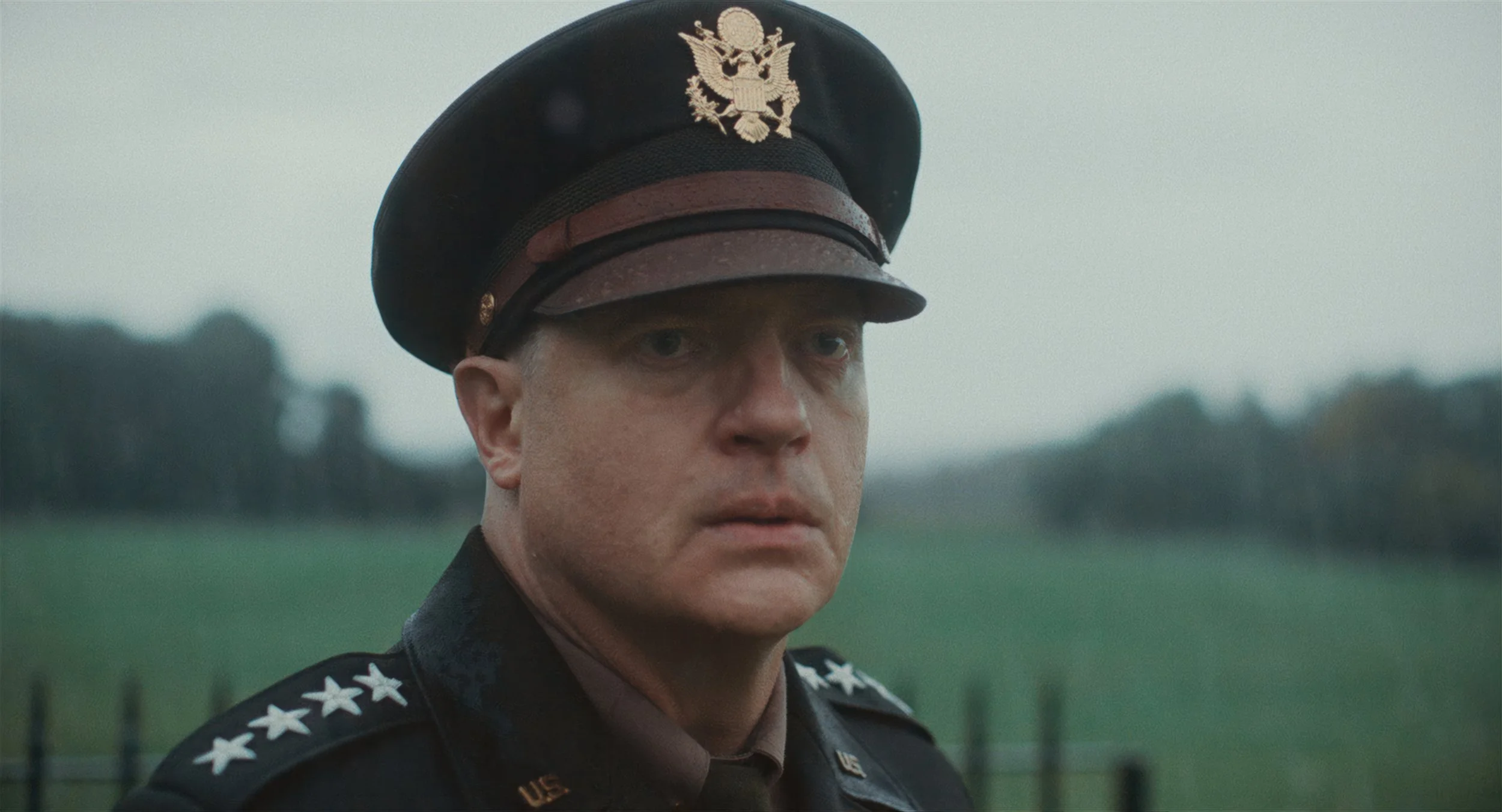
The historical drama, based on the 2014 stage play by British actor and playwright David Haig — who co-wrote the screenplay with the film’s director Anthony Maras (Hotel Mumbai) — feels marvellously urgent, each scene in its brief (and welcome) 100-minute running time essential, with scant exposition decelerating its thrust.
And here’s the kicker: it’s about the weather.
Its snappy, studio-issued synopsis neatly captures the film’s let’s-get-straight-to-the-point ethos: “In the tense 72 hours before D-Day, and with the fate of the free world hanging in the balance, Pressure follows General Dwight D. Eisenhower and Captain James Stagg as they face an impossible choice — launch the largest and most dangerous seaborne invasion in history or risk losing the war altogether.”
The stakes were incredibly high, and not just because the Allies “risk losing the war altogether.” Exercise Tiger, a rehearsal for the D-Day invasion held two months prior to the real thing in April 1944 in Devon, was a calamity, with hundreds of American servicemen killed on Eisenhower’s watch. A heavy scene depicting its fatal folly launches the film, shades of Saving Private Ryan. Eisenhower is haunted.

And why else not to launch the largest and most dangerous seaborne invasion in history when all those thousands of soldiers plus innumerable planes and warships were standing by? Because huge waves, pounding rain, and zero visibility, if that’s what was going to occur on June 5, 1944, the day the massive Allied invasion of Nazi-controlled Normandy was planned.
Though Eisenhower’s trusted American meteorologist Captain Krick predicts clear blue skies for June 5, Scottish meteorologist Stagg — billboarded as the best in the biz by Winston Churchill, no less — fiercely disagrees.
Weather patterns in the North Atlantic don’t remotely mimic those in North Africa, where Krick’s previous predictions seemed prescient, Stagg argues. So begins the battle of “go” or “no go” amongst Eisenhower and his cadre of fellow commanders while Krick and Stagg joust over jet streams and historical precedents as the clock ticks down.
That’s the basic story, and it’s surprisingly absorbing. But Pressure soars on its sharply drawn characters and the actors who make these men — and all but one are men, of course — compelling amid roomfuls of arcane paper maps and drafting tables.
As Stagg, the exacting, sombre but brilliant Churchill-endorsed meteorologist parachuted into Eisenhower’s command centre just days before D-Day, Andrew Scott is the film’s lynchpin and flat-out owner. He is remarkably good at, paradoxically, chewing scenery with an unflustered expression and an unnervingly conversational voice.
In a sea of big swinging dicks, notably Krick (Chris Messina), Stagg emerges as the adult in the room. And while a brief early scene with his very pregnant wife Liz (Tamsin Topolski) shows Stagg to be a closeted softie, his unwavering fealty to the facts despite intense pressure to paint a prettier picture makes him the unlikeliest of heroes: the game-changing weatherman.
Arguably less successful is Brendan Fraser as soon-to-be-president Eisenhower who, though committed and suitably ugly-ed up, comes off as hammy and caricatured, his clenched-fist outbursts sounding more scripted than visceral.
A late-breaking — and apparently fictional — subplot involving Stagg’s wife also triggers an uncomfortable hiccup, feeling gratuitous and merely in service of an emotionally manipulative ending rather than a legit narrative development.
But all that is a manageable debit against a strong overall cast. That includes Damian Lewis as the smarmy, smirking British commander Bernard Montgomery and Kerry Condon as Eisenhower’s no-nonsense Irish-born assistant Kay Summersby.
Interestingly, she is the only character in the film given a slim backstory, perhaps by way of explaining how on Earth a woman — a woman, of all damn things! — penetrated this rarified, testosterone-riddled milieu.
Pressure’s origins as a stage play are evident in its intense dialogue and limited, cloistered settings. Rather than subtracting from the drama, though, both elements boost it. That the film is gripping even though audiences already know the outcome of the main event speaks to Maras’ tight direction and the strength of his screenplay with Haig.
This is a fleet, persuasive, if buttoned-down production and, for some viewers perhaps, a welcome counter to the incoming summer blockbuster season sure to be dominated by Steven Spielberg and Christopher Nolan. Not that there’s anything wrong with that.
Pressure. Directed by Anthony Maras. Written by David Haig and Anthony Maras. Starring Andrew Scott, Brendan Fraser, Kerry Condon, Chris Messina, and Damian Lewis. In theatres May 29.