
Michael Jackson: The Verdict - Jackson Trial Doc on Netflix Hits Us From Both Sides
By Karen Gordon
Rating; A-
The term “documentary” may be the most abused word in entertainment these days. It implies a journalistic approach, a factual narrative, a contribution to the historical record of a person or events.
But In practice, it’s not as straightforward as it sounds. A highly watchable, entertaining or emotional documentary film or series can range from a slight distortion to an out-and-out hit job. This is especially true in entertainment documentaries, where a subject can assume generational importance.
Which brings us to the new three-part doc-series Michael Jackson: The Verdict, streaming on Netflix, which focuses on one of the biggest pop stars ever, Michael Jackson, and the charges of pedophilia leveled against him.
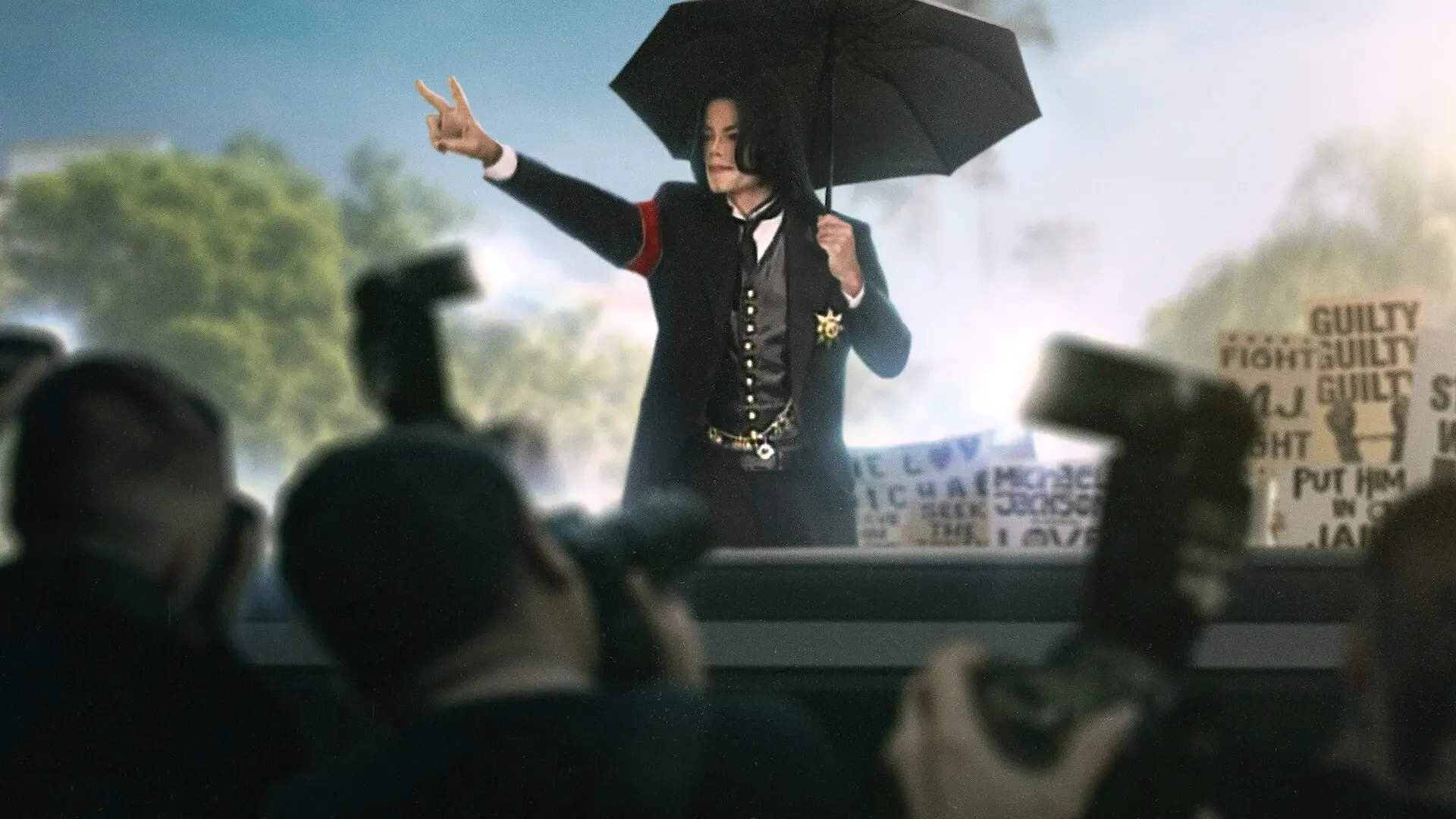
The series dissects the sensational 2003 trial where Jackson was charged with multiple counts of child molestation. In the end, a jury acquitted Jackson of all charges.
Jackson’s name alone is going to draw viewers. And in an era of misinformation, lowered attention spans, an interest in gaining clicks and likes, and add in the seriousness of the charges, and the fact that he’s not here to defend himself, all of this adds a layer of responsibility onto a true documentary filmmaker.
The good news is director Nick Green has taken a responsible, and thorough approach here. He’s made an engrossing series that presents a pretty full picture of the people involved and the storm around allegations that had started a decade earlier.
He presents a balanced story of the trial and the cultural maelstrom around Michael Jackson, by filtering the lurid charges through the recollections of the people who were part of the trial in some way.
“Neutral” is a relative word. But Green does a good job of weaving positions together and letting the various players in the story speak freely. But given Jackson’s stature, most people who care about the artist are likely to bring some baggage to the film, and that is an interesting byproduct here. In a sense, we become part of the subtext of the documentary.
Michael Jackson: The Verdict uses contemporary news footage, and interviews people closely involved, including prosecution, defense, jurors, an investigative reporter who’d covered previous molestation charges against Jackson that he'd paid to settle. There’s also a parade of TV analysts looking at the trial from entertainment and legal angles.
Michael Jackson: The Verdict does an excellent job of leading us to a series of sobering questions about the legal system and the way the public reacts to fame. There is a rush-to-judgment tendency (stronger than ever in the era of social media).

So, was Jackson guilty? Or was he exploited for money using one of the most heinous charges you can make, rushed to court by an overzealous prosecutor?
Although no family members participated in the making of this documentary, they are represented in footage from the era. As well, several members of the Jackson circle, mostly employees or former employees, are present.
The documentary includes a woman so convinced of Jackson’s innocence that she quit her job and travelled to Los Angeles in the hopes of getting to sit in the court to support him. She’s one of many ordinary people who stood outside Neverland, or the courthouse, wearing t-shirts supporting him, waving signs, and chanting “Innocent! Innocent!” Sometimes these devotees are seen clashing with anti-pedophilia protestors.
At the time of the charges, Jackson was the biggest pop star in the world, with millions of adoring fans, many of whom saw him as angelic, a kind of religious figure, here to bring joy to the world, and especially when it came to his oft-stated love for children.
On the other end of things, there had been a predictable backlash. He’d also become an object of some ridicule, gaining the tabloid nickname Wacko Jacko for his insulated life, his appearance, and odd habits, like using a hyperbaric chamber.
Rumours about Jackson molesting boys reared their head in the early ‘90s, when Janet Arvizo, the mother of Gavin Arvizo, accused Jackson of molesting her son. Jackson settled that suit for more than $20 million. His lead defence lawyer Tom Mesereau says, in the wake of the charges, that Jackson deeply regretted that settlement.
If you know the trial at all, the film doesn't present much that is new, although it is up close and personal in a way that was not possible when it was happening. There are pieces of information that are eyebrow-raising.
His wealth and ability to hire a massive legal team are also part of the story. The film details the police raids, the competing teams of lawyers and how they built their respective cases. We hear now, more than 20 years later, what they think about his guilt or innocence.
Beyond the trial, the series shows how we project onto people who are famous and, from our living rooms, judge people we don’t know. It’s a hard habit to break.
And that seems especially true of the brilliantly gifted Jackson, whose music touched millions so deeply that, for some, it was life affirming. One of the jurors in the documentary talks about understanding her responsibility as a juror, but still seems in awe of Jackson, the superstar. When he walks into the courtroom for the first time her reaction is noteworthy.
Michael Jackson: The Verdict gives us a lot of perspectives to contemplate, but doesn't lead us to any conclusions.
So, was he guilty of the charges, someone who used his wealth and adoration to groom families simply for access to their young boys? Or was he a sensitive and eccentric artist with a different way of seeing things, now being exploited by vengeful people who were no longer part of the circle?
And inside this tornado was Michael Jackson. After asserting his innocence and outrage at the charges and the raid on his home, he went silent during the trial. He waved at the crowds, but looked increasingly strained.
Mark Geragos, one of his lawyers, talks about Jackson’s reaction to the charges in the lead-up to the trial, about a man falling apart to such a degree that his team wondered if he’d be alive when the case was due to go to court.
He was acquitted and went back to his private life. The media circus left town. But the circumstances clearly had a profound effect on him. As the film reminds us, Jackson died four years after the end of the trial.
Michael Jackson: The Verdict. Directed by Nick Green. With Mark Geragos, and Tom Mesereau. Now streaming on Netflix.