
The Toronto Japanese Film Fest and the World Cup's Team Japan Play Nice Together
By Jim Slotek and Thom Ernst
It seems the FIFA World Cup leaves an impact crater wherever it lands. That includes Toronto, where fans of Team Japan will jostle for screentime with film fans at the 15th Toronto Japanese Film Festival starting this week.
The TJFF, the top showcase for Japanese cinema outside Nippon itself, will run June 11 to 26 at its usual home at the Japanese Canadian Cultural Centre. During that time, on screens at the same venue, footie fans will also be watching Japan play Netherlands (June 14), Tunisia (June 20) and Sweden (June 25).
As a result, two highly touted films – Samurai Vengeance and Nagasaki: In the Shadow of the Flash - have been bumped to August for what the organizers are calling a “special screening showcase.”
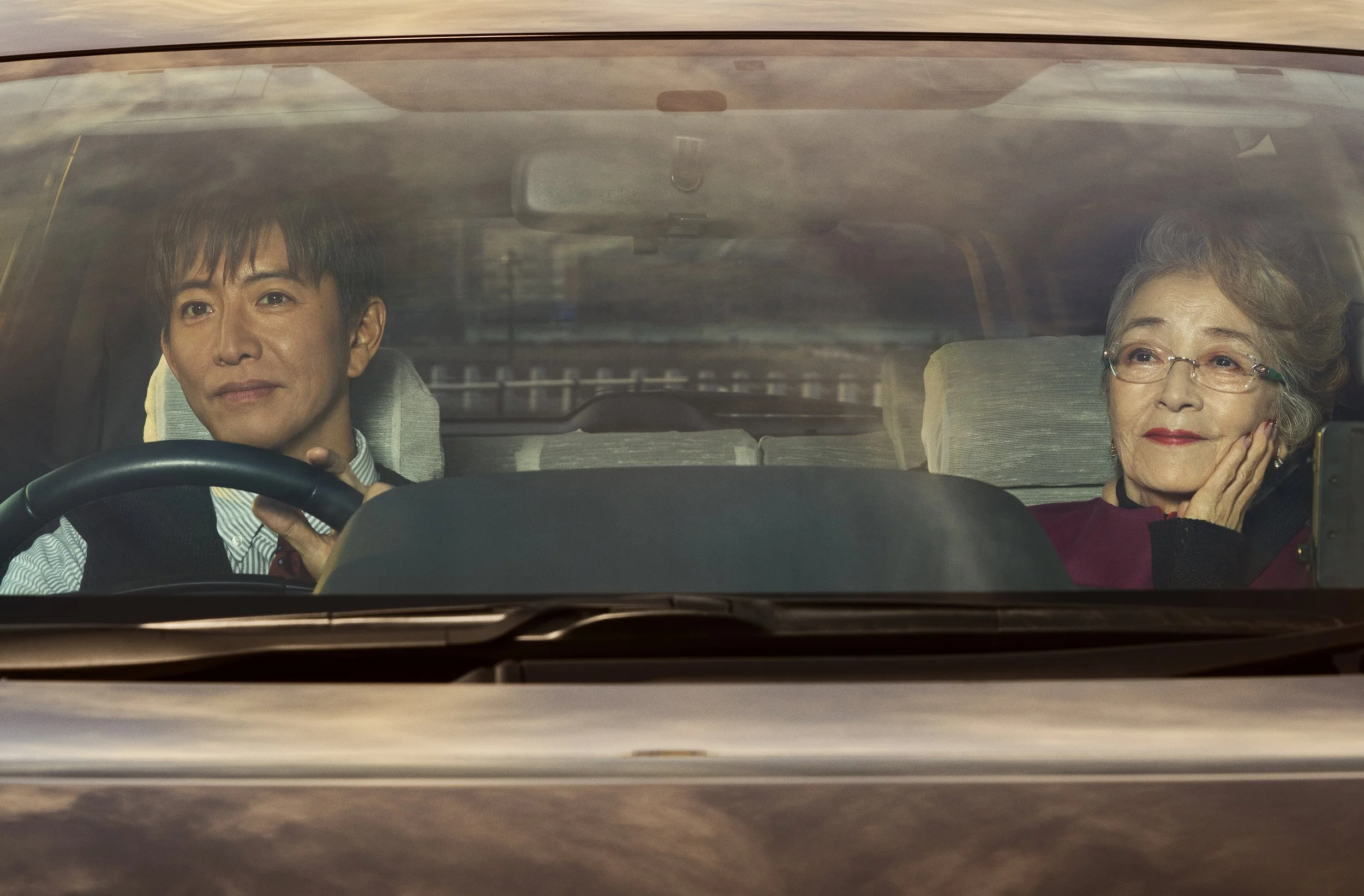
Takuya Kimura and Chieko Baisho in Tokyo Taxi
However, cineastes get first possession on Thursday with the North American debut of Tokyo Taxi, an adaptation of the 2022 Belgian-French film Driving Madeleine, and the 91st film directed by 93-year-old filmmaker Yoji Yamada. The film is about a blue-collar cabbie (Takuya Kimura), who drives a nursing home-bound woman (Chieko Baisho) to various places from her life and memories. It was nominated for 11 Japan Academy Film Prizes, with Baisho winning Best Actress.
Original-Cin’s Jim Slotek and Thom Ernst screened several features on the TJFF schedule, many of them adapted from best-selling Japanese novels and manga. They include:
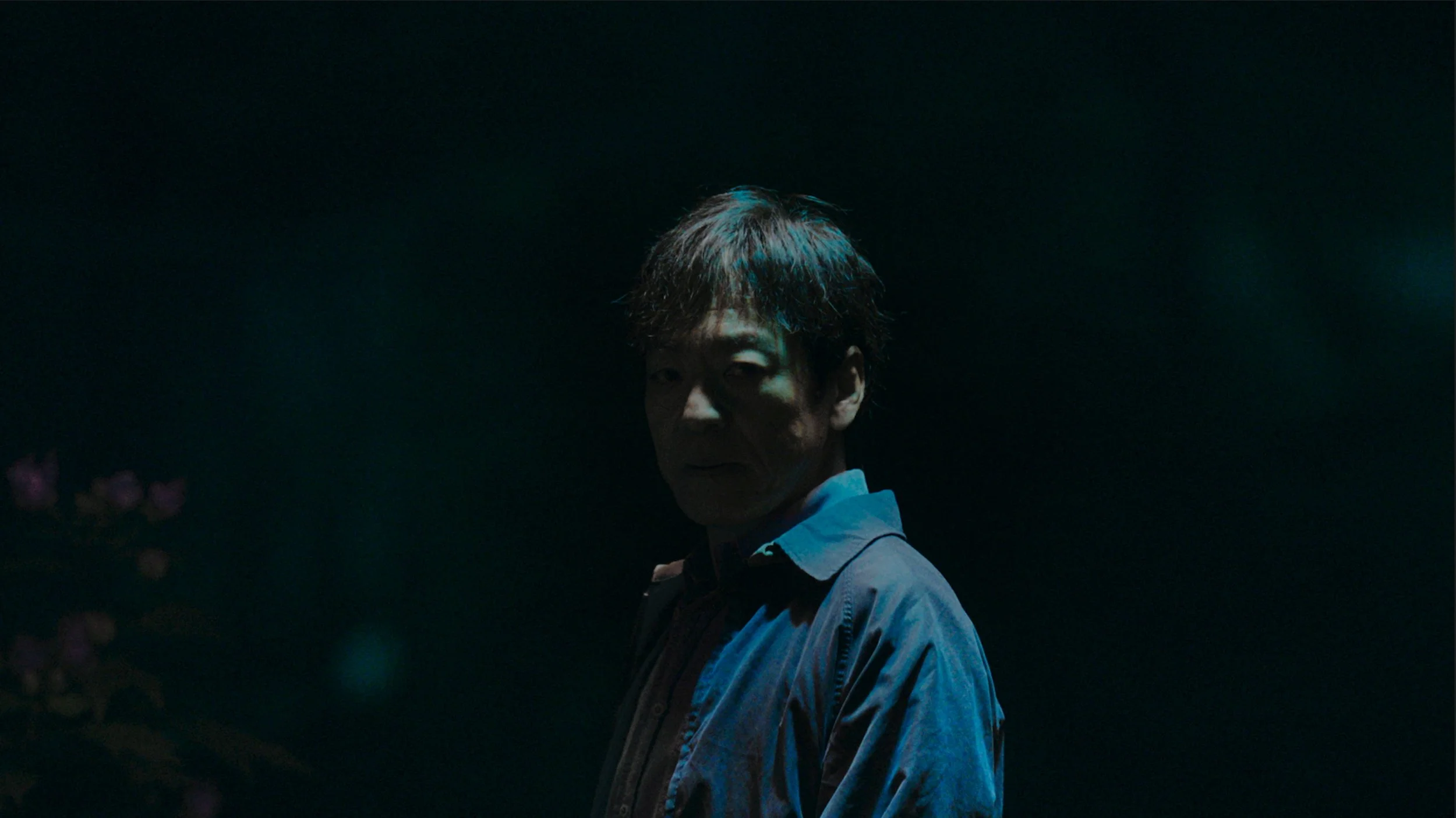
Teruyuki Kagawa kills in SAI - DISASTER
(Canadian Premiere) Monday, June 15, 7 pm
A wonderfully shot and whimsically rendered story on the theme of writer’s block. The film by Sho Miyake, based on manga short stories by Yoshiharu Tsuge, opens with a young woman named Li (Shim Eun-kyung), composing – by hand in smooth Japanese characters - a seaside sort-of romance between two melancholy teens (Yuumi Kawai and Mansaku Takada) as a typhoon approaches. A reality jump occurs and Li is speaking to an auditorium of film students, defending her morose narrative. A random death soon sees her driving to a snowy resort town, with the vague notion of curing her storytelling paralysis.
Fate directs her to a derelict mountain-top inn, where she must share accommodations with the disheveled owner, an equally derelict divorcee (Shinichi Tsutsumi). The cold is frost-on-the-breath real. And the innkeeper’s nothing-to-lose attitude soon infects Li in a good way. A feel-good minor adventure that sneaks up on you. J.S.
(Canadian Premiere) Tuesday, June 16, 7 pm
Director Kasho Iizuka's Blue Boy Trial transforms a little-known legal battle into a moving examination of identity and state control. Set in 1965 Japan, as the country basks in post-Olympic optimism, the film follows the prosecution of a doctor performing gender-affirming surgeries while a legal loophole allows transgender sex workers, known as "Blue Boys," to continue working. At first, the film threatens to undermine its own political urgency. Police officers are portrayed with a broad, almost comic ineptitude, while the transgender women meet their harassment with sharp-tongued wit and irreverence. For a time, it feels as though the story might soften the cruelty through humour. But Iizuka resists that temptation. Before long, both the script and performances settle into something richer, and ultimately more respectful of the lives being portrayed. Much of that success rests with Miyu Nakagawa, whose quiet, deeply felt performance as Sachi grounds the film's politics in humanity and lived experience. T.E.

(Canadian Premiere) Wednesday, June 17, 7 pm
A police officer (Anne Nakamura) goes rogue when obsessed with the notion that a series of apparent suicides and accidental deaths is the work of a serial killer. Teruyuki Kagawa, in an astounding performance, plays one man masquerading as six distinctly different personalities, shifting appearance, tone, and mannerisms as he invades and ruthlessly disrupts the lives of his innocent victims. Though restrained when compared to the standards of some Japanese horror films, SAI still shocks with its sudden and relentless cruelty, bearing a similar resemblance to Longlegs while remaining strikingly distinct from it. SAI depicts the high-stakes drama of a police procedural before grinding it through the horror mill. Originally presented on Japanese television as a six-part mini-series and a dramatic showcase for Kagawa, SAI translates both as Disaster and Calamity. The title proves fitting. SIA is a taunt, thriller with an unapologetic tilt toward darkness and the many disturbing faces of humanity. T.E.
(North America Premiere) Friday, June 19, 7pm
Contrary to its subject matter, Night Flower, director Eiji Uchida’s character-driven drama, doesn’t just rise above the bleak underbelly of Tokyo nightlife—it pushes through it. Like the flower of the title, the film’s heroine (Keiko Kitagawa) blooms in darkness, drawing strength from the very circumstances that threaten to crush her. At the centre of the story is a single mother abandoned and left to raise two children in poverty. Buried beneath responsibility, an absent ex-husband, and a sizeable debt, she is forced into a series of soul-crushing, demeaning jobs, including one that requires her to drink tall glasses of whiskey in a single shot. Situations draw her deeper into the darkness she works so hard to avoid. Along the way she meets a partner, and together they form an alliance that sets off a series of dangerous events. Although the movie travels familiar ground, recalling shades of a Scorsese film, one that echoes both Taxi Driver and Alice Doesn't Live Here Anymore (and arguably a touch of Raging Bull), Night Flower is full of moments of grace, resilience, and inspiration. Dark, yes, but never exploitative. Uchida finds tension without resorting to melodrama. It comes from the faces, the actions, and the choices people make when life leaves them with few good options. An engrossing and highly entertaining film. T.E.
(Canadian Premiere) Saturday, June 20, 7 pm
The title of the movie refers to youth activist Greta Thunberg’s famous “How dare you?” speech to adult delegates at the 2019 United Nations Climate Action Summit. And that moment is recreated similarly angrily by a Japanese child in the film’s opening. But Mipo Oh’s film is a lightly humourous treatment of a serious theme, told almost entirely within the world of a classroom of children, three of whom, Yuishi, Kokoa and Haruto, take it upon themselves to go rogue to protest for the environment. The adults are patronizing. But the children’s motives are innocently flawed. Iinsect-collector Yuishi (Tetta Shimada) has a crush on the wannabe-Greta Kokoa (Ruri), while she is smitten by the bad-boy Haruto (Yota Mimoto), who in turn, is only in it for the mischief. It isn’t the deepest treatment of its subject, but there are comic turns, and the children are uniformly terrific actors. (Mipo Oh is scheduled to appear at the screening for a Q&A.) J.S.
(Canadian Premiere) Saturday, August 8, 2 pm
This adaptation of an award-winning novel by Sayako Nagai, begins where you’d expect it to end. Set in Edo-era (1810), it opens with a young kabuki actor having an actual fight to the death onstage with a character who is accused of murdering the young man’s samurai father. A year and a half later, an officious and slightly comical ronin investigator shows up to ask questions about the killing. The light touch (including the investigator’s constant appetite) hides a thorough Columbo-like approach to piecing together hidden motives and identities. Part police procedural and, yes, part Rashomon tale, director Takashi Minamoto unravels a complex web of murderous and suicidal loyalty, motive-manipulation and deception. J.S.