
Antidiva The Carole Pope Confessions: Doc on Queer Canuck Icon Brings the Props
By Kim Hughes
Rating: B+
Of the many taking heads you’d expect to hear from in a documentary about Carole Pope, the lead singer with hetero headbangers Skid Row probably isn’t one of them.
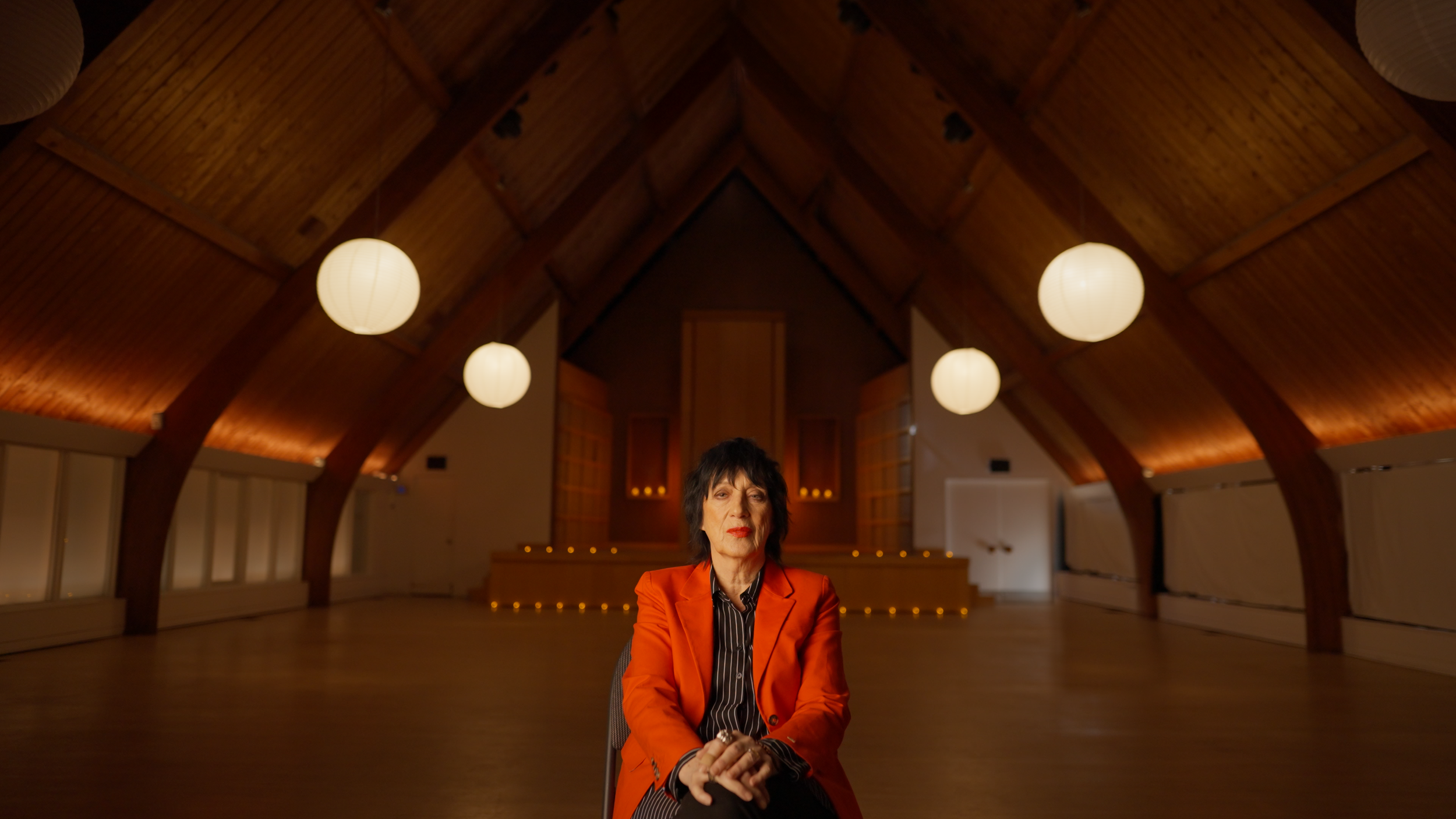
And yet with one quote in writer-director Michelle Mama’s film Antidiva: The Carole Pope Confessions, Sebastian Bach pinpoints what made Pope’s band Rough Trade stars on the Canadian alternative scene throughout the 1980s, and possibly what hobbled their career beyond its liberal borders.
“I love Rush with all my heart,” Bach declares, namechecking the preeminent rockers of the era. “Everybody loves Triumph. April Wine. But there’s one thing those bands don’t have that Rough Trade has. And that is sex.”
Indeed, sexually evocative lyrics animated by Pope’s inimitable voice and dynamic performances — most notoriously in the song “High School Confidential” which rather unambiguously detailed intense same-sex longing — propelled Rough Trade up the charts.
They won JUNO Awards, widespread notoriety and plum opening spots for their uncanny ability to seed what might be broadly described as musical performance art with tongue-in-cheek titillation at a time seemingly more concerned with shoulder pads than subversiveness.

More significantly, in director Mama’s view, Pope brought gay and lesbian experience to the airwaves and living rooms of Canadians, alerting an entire cohort of budding musicians, filmmakers and artists that their stories could exist in the mainstream. And they could cross over and be successful.
And so, people you would expect to hear from in a Pope documentary — fellow queer icons like Peaches, Rufus Wainwright, and k.d. lang plus singer Jann Arden, media personality Jeanne Beker, Pope’s Rough Trade cofounder, the late Kevan Staples, her longtime guitarist Tim Welch, music historian Rob Bowman among others — queue to throw light on a groundbreaker who likewise seems ready to bask a bit longer.
While much of Antidiva centres on Pope’s influential if not-quite-meteoric career leading Rough Trade, the film also paints a portrait of an artist unwilling to compromise even when, Pope admits, that single-mindedness can lead to financial precarity. This we see as she travels between a tiny L.A. apartment, New York, and Canada, where her profile allows continued — and necessary — gigging. Precious stuff like platinum records, meanwhile, are kept in storage lockers.
Despite her square-peg subject, Mama’s film largely follows the traditional documentary trajectory, from childhood forward to present day, mostly chronologically. We learn of Pope’s upbringing in the UK, of her mother’s performance ambitions which were snuffed out by marriage and motherhood, and her closeness with her younger brother Howard.
The Pope family’s eventual relocation to snoozy Don Mills, ON pushed Carole toward Toronto’s then-happening Yorkville music scene. There, Pope found her people, most notably Staples who became her symbiotic creative partner and her lover before the pair split, painfully, with Pope following her sapphic desires.
From there, the rise of Rough Trade is charted through archival footage and photos interspersed with contemporary interviews, most extensively with Pope herself, who refuses to whitewash career missteps or missed opportunities and offers not a hint self-pity. And boy, is she droll.
It’s revealed that Pope once turned down a deal with Motown, bristling at signing as a solo artist and not doing her own material. “It’s not always about the money and fame,” she tells an interviewer. “It’s about making great art.”
Pope allows that great art probably wasn’t what she was producing when she finally pursued a solo career Stateside in the late-1980s. That and her age (she would have been late-30s) were also hurdles; one wonders if even a successful solo Pope could have withstood the advent of grunge just a few years later, which consigned much of what carried a whiff of the 1980s to the dustbin.
Other disappointments are noted alongside milestone successes. In 1983, soaring on the global chart traction of their single “All Touch,” Rough Trade was invited to open dates on David Bowie’s smash Serious Moonlight tour. When Bowie offered them additional spots in the U.S. and the UK, their label, Columbia, refused tour support. The band was forced to decline the invitation. And they never did score a U.S. or European record deal.
Pope also candidly details her romance with closeted British soul singer Dusty Springfield, the agony of her brother Howard’s death from AIDS in 1995, and a catalogue of other letdowns, many also chronicled in her 2001 memoir, Anti Diva, upon which the film is partly based. (It includes a scene of Pope voicing a passage of the audiobook version).
Still, for all the bittersweet moments, there is joy in Antidiva. It is made abundantly clear that Pope’s blueprint for being unapologetically queer in the arts inspired others who might not have had the courage or conviction to create while living openly.
Pope herself continues to create. A musical is in development, blending Rough Trade’s music with the story of her AIDS activist late brother. Pope writes songs, performs and rallies the masses at Pride events.
Those who experienced Pope and Rough Trade IRL will enjoy the nostalgic look back at a unique moment in time when the door to queer acceptance in the arts in Canada was kicked wider. Queer Canuck up-and-comers will know who to thank for the receptive milieu now greeting them.
Antidiva: The Carole Pope Confessions. Directed by Michelle Mama. With Carole Pope, k.d. lang, Peaches, Jann Arden, and Rufus Wainwright. In theatres across Canada (with Carole Pope and Michelle Mama in attendance) including July 5 at Hamilton’s Playhouse Cinema; July 6 and 7 at Toronto’s Paradise Theatre; July 9 at St. John's LSPU Hall; July 22 and 23 at Vancouver’s Rio Theatre; July 24 at Vancouver’s VIFF; and premiering on Documentary Channel July 19, 9pm ET, and on CBC Gem July 24 at 9pm ET.