
Mary Oliver Saved by the Beauty of the World: Brilliant Poet Receives Lyrical Salute
By Kim Hughes
Rating: B+
If you’ve ever attended a yoga or meditation class that concluded with a hauntingly beautiful affirmation that stuck with you for days, you’ve probably heard the work of Mary Oliver.
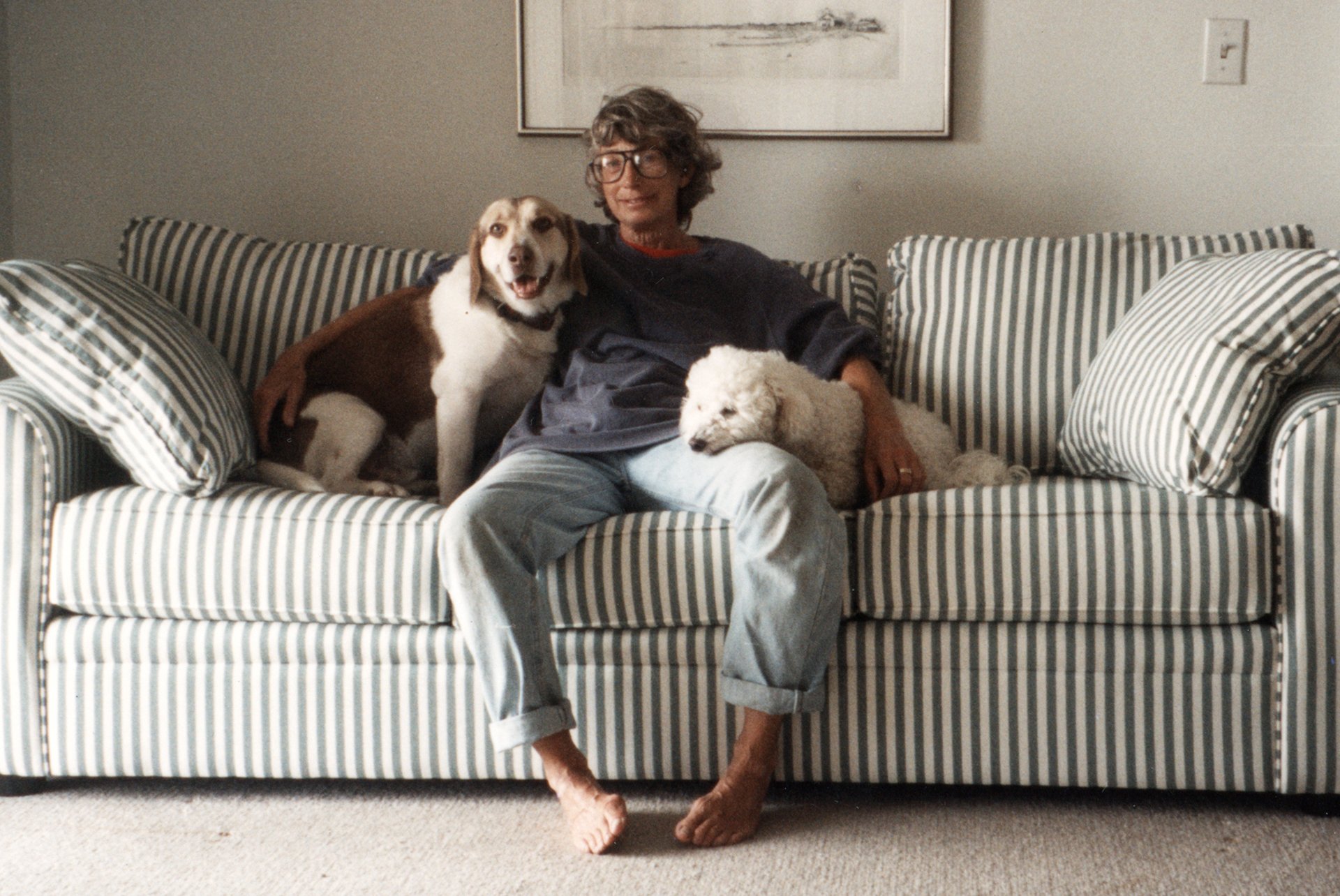
The American poet was renowned for her uncommonly direct yet profoundly moving prose, with many of her musings and observations rooted in nature she observed around her Cape Cod home.
As the new documentary Mary Oliver: Saved by the Beauty of the World makes clear, Oliver wasn’t your stereotypically brooding, beret-sporting poet. Rather, she was an openly queer, often sardonic, dog-adoring woman who, perhaps paradoxically, shunned the widespread fame her very accessible writing inevitably attracted, and which culminated in both a Pulitzer Prize and National Book Award.
Among the many friends who speak fondly of Oliver in director Sasha Waters’ lovely, understated film is director John Waters, a particularly close friend of Oliver’s and her longtime partner, photographer Molly Cook, as well as fellow “Massachusetts girl” Maria Shriver.
Oprah Winfrey, Steve Buscemi, Stephen Colbert and a bucketful of contemporary poets queue up to recite her work while offering explanations, if any were needed, of just how exceptional her writing was.
In several especially moving sequences, Colbert struggles to compose himself quoting Oliver, whose poems at times seem too ethereal to have sprung from such an earthbound woman who leveraged philosophy from interactions with insects, oceans, forests and air, receiving each with knock-kneed wonder.

Seldom explored given her adversity to scrutiny, Oliver’s backstory is illuminating if presented in boilerplate fashion. Born in 1935, she grew up in Ohio as a solitary kid obsessed with Walt Whitman. Greenwich Village wasn’t far behind, but it was Provincetown with Cook that Oliver’s most important and defining work took shape.
We learn that all of Oliver’s poems had to pass three conceptual litmus tests before publication: Does it have a spiritual purpose? Does it have a sincere energy? Does it have a genuine body? But this too, like much in Oliver’s life, was somewhat contradictory, applying an objectively clinical yardstick to an artform that can really only be measured by how it makes people feel. Which is obviously subjective.
Oliver hated being called a “nature poet” but the documentary consistently emphasizes how the great outdoors and the resilience it embodies impacted her inner voice and logic, which may explain why stuff she wrote in the 1960s — notably, “The Journey,” eventually published in 1986 and cited by several commentators as her most commanding work — continues to beguile.
If nature cannot absolve us of our existential grief and anxiety, Oliver seemed to be saying, surely nothing else can. So why are we ambivalent about stewardship?
In addition to many interviews, the film includes never-before-seen personal photos, notebooks, and correspondence from her archive, and most winningly, those beforementioned recitations of her work by various people deeply touched by it.
In her quietly beautiful poem “The Summer Day,” Oliver asked, “Doesn’t everything die at last, and too soon? Tell me, what is it you plan to do with your one wild and precious life?”
We now know definitively what she did with hers. It’s hard to conceive of a more compelling legacy.
Mary Oliver: Saved by the Beauty of the World. Directed by Sasha Waters. With John Waters, Stephen Colbert, Lucy Dacus, Jason Reynolds, Steve Buscemi, Maria Shriver, and Oprah Winfrey. Opens July 25 at Toronto’s Hot Docs Ted Rogers Cinema.