
TIFF ’26 Q&A: Drifter Triple Threat Sung Kang on the Camaraderie of the Car Community
By Bonnie Laufer
From blockbuster high-octane franchises to the director's chair, Sung Kang has built a career defined by heart and authenticity. Now, at TIFF 2026, he introduces us to Drifter, a deeply personal project he wrote, directed, and stars in.
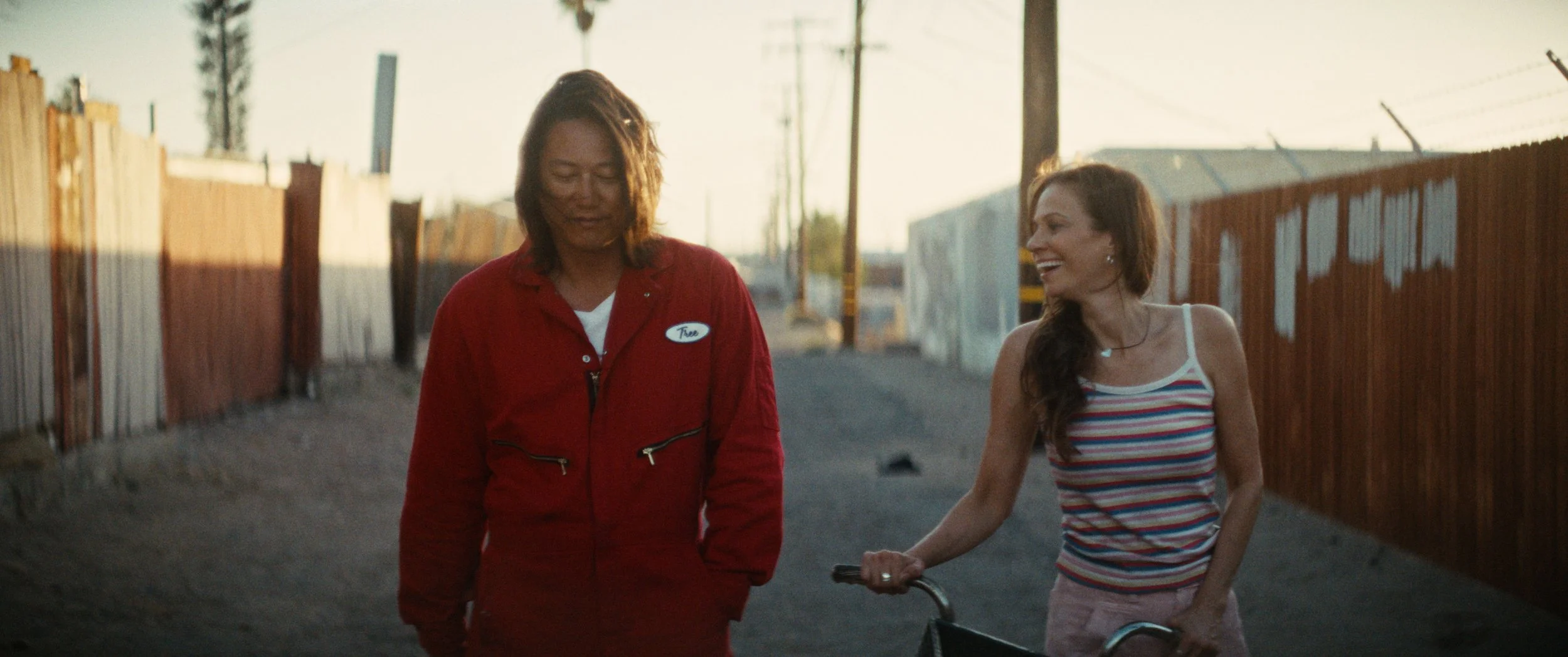
It follows Tree, a quiet custodian facing a heavy past who finds redemption behind the wheel. We spoke to Sung Kang about his personal journey getting this film made and why he is excited to premiere it in Toronto. Read our capsule review of the film.
ORIGINAL-CIN: What does having the world premiere of Drifter at TIFF mean to you?
SUNG KANG: A lot of nerves, but I am very grateful to Toronto. When we went there earlier this year for the Canadian International Car Show, my point of entry into the city of Toronto was much different from previous experiences there. I realized how deep this car community is, and they were great ambassadors in the reflection of the beauty of the people in Toronto and the Canadian people. I've always heard about it and got to experience it firsthand. It’s important and beautiful that I get to come back and show the film for the first time to the world in Toronto. I feel like the car gods have blessed us and given us the perfect film festival to launch our movie.
O-C: The film gives audiences a good sense of what the sport of drifting is all about, but the focus is also very much about the main character you play. He's an introvert who only shines when he's in that car. Aside from your extensive car background and how much you love it, what was the inspiration for you to write a story about this guy?
SK: I feel like many of us have felt invisible and overlooked in our life at some point, I’ve certainly felt that way. It's been amazing to be able to have this wonderful community because of my participation in The Fast & Furious world, but I did feel like there's an opportunity now to get deeper, and work with a theme that is very universal. This feeling of being lonely, not belonging and not being seen is very common. I think when you write from a place of truth, something blossoms that is not only very personal but is universal to everyone. So aside from the amazing action in the film and all the car stuff, I did want to make a movie that could touch people who maybe know nothing about cars or drifting.
O-C: Can you explain exactly the difference between something like a NASCAR or race car driving as opposed to drifting?
SK: I use the analogy of figure skating. You're not necessarily trying to get across the finish line. It is a very subjective motor sport that is judged by a panel of experts. In competition drifting, it's tandem drifting, just like couples figure skating. So, I use the operative word trust. You have to trust the other driver. You have to trust your car. You have to be one with the vehicle, and it is like dancing with someone else. That's the simplest analogy that I could give and why it's so different and so poetic compared to other motor sports.

O-C: Of your three roles in the film (director, writer, star) which was the hardest?
SK: Something I've been challenged with my whole life is being vulnerable and sharing that, which is very much a parallel to the character of Tree in the theme of the movie. Once I let that go, and I acknowledged the things that I do not know, the fears that I have going into production and even while we were shooting, I felt safe. I was blessed to have so many amazing crew and cast members that came in to protect me, to watch out for me to fill those gaps. The scariest part is also always being vulnerable, but once I got over it and I had the courage to acknowledge that and put that on the table, the right people came. They protect you, and they help you make this beautiful poetic movie.
O-C: Much like the character of Tree, it's mainly about the family you choose. It sounds to me like it's the same with making this film for you.
SK: Absolutely. Through the process of making Drifter, I realized that many times during production you could pay for someone's time, but you cannot buy their heart. When you put your heart on the table, most folks will recognize that. If not everyone, the right people will recognize that, and that's all that matters. They stick with you for life.
O-C: You also brought in real car-world icons and pro-drifters to help with the film and be in the cast. How important was that to you when you were writing, was that always the goal to make the film truly authentic?
SK: I have to give credit to my second unit director Brian Scotto, who is very influential in the modern car space, especially when it comes to drifting. When you look at his videos and his stunt work with cars, he coined this phrase ‘the honest angle.’ When he shoots, he makes sure that the camera doesn't lie. There are no camera tricks. There are no special effects, just real driving.
The driver is putting his life on the line and so I carry that throughout the film. Not only within the emotional truth of the characters, but the honest angle throughout. I had that northern star with the car community coming in droves. They supported us, and so the film is a love letter to the drifting and car community, and they knew that. That's why we were able to work with our independent budget and be able to mobilize so many authentic people in that space.
Every dollar of the financing came from the car community. Everything was built from the car community and the locations were given to us. Even for our big finale, 12,000 car-racing fans showed up. That's insane for a fake event but they wanted to support us.
O-C: We have to talk about your car Lola because, no offense, but she's kind of the star of the film.
SK: No offence taken. She is, yeah.
O-C: Did you always have this kind of car in mind, or did it just fall into place?
SK: This goes back to the honest angle. You know when one does research and looks into the history of drift culture, the Lola, the Toyota A86, is the ‘spokescar’ of that community. When that car first came out, it was an economy car that a lot of housewives that went to play tennis at the club would drive. It looked sporty, it had good gas mileage. As that car got older, it kind of was a disposable car. It was very cheap, or if not free, like a hand-me-down car.
Young folks who wanted to start drifting would get this car for free, or they could buy it for very cheap. It was designed out of the factory as a perfect drift car because it's manual. It came with a limited slip differential rear wheel drive, and it was light enough to just start sliding and slipping around. So, if I was going to keep this film on its angle, the star has to be Lola! That's why the car community, and the drift community, really appreciate all the details that we put into the movie. I used to kid on set every day, to everybody that you know number one on the call sheet is Lola. It is not me, so she had to be the star of the film.
O-C: How many Lolas did you have to have on standby?
SK: Unfortunately, we didn't have the resources to have a whole bunch of backup cars. Plus, those cars are very rare now. They're hard to find and pretty expensive these days. Mostly collector items. This is where, again, the beauty of the car community globally came together and supported me. My friend, Daijiro ‘Dai’ Yoshihara, a Formula Drift legend, and Hall of Famer, did the stunt driving for me. He is a legend.
He came to me and said, ‘Sung, I see the type of stunts you want to do in the movie, but you don't have the proper car to do it. You have to build a competitive drift car. It's going to be very expensive,’ and you know this is where I get really emotional. He showed up a month later and said, ‘I built the car for you.’
‘What do you mean you built the car?’ He said, ‘It's because I wanted to support your vision, and you have to have a full-on professional drift car.’ He spent his own money. He took one of his Lolas that was in his collection, chopped it up and he and his mechanic went and built the hero car that actually competes at the end of the movie.
O-C: Wow, what a story!
SK: Yeah, and even the junkie Lola, I did not have that car either. My good friend Chris Marion, who is a Toyota Corolla fanatic had several in his mom's backyard, brought this particular Lola over and said, ‘I want to give this to you. You're going to need more than one stunt car, and let's use this one. And if you crash it and it burns down or you tear it up. I don't care. This is a gift to you because I want to support you and this film that you're creating.’
O-C: Did being an actor help you be a better director? And then how does being a good director help you become a better actor?
SK: It kind of comes hand in hand. The privilege and the beauty of being an actor for the past 31 years is that opportunity to work with great directors who are also great people. In essence, they were my mentors. As an actor, my responsibility is just to really worry about my character's truth and protect that and then show up to set and do my part, and then I can go away. As a director, I'm responsible for the whole vision of the movie, and I'm also responsible for every single person working on the film, and that changed me not only as a director but as a human being.
Most of my life, I've only had to worry about myself. I don't have children, and it gave me this renewed sense of purpose in my life. It's like getting used to new shoes. As an actor, they were a little tight, or they were a little, maybe one size too small or too big. As a director, I feel like these are tailor-made shoes because all of us are looking for purpose every morning when we wake up, and if I can protect and be the caretaker and create an environment where the cast, the crew can fulfill their dreams to be, actors or cinematographers or costumes, to be in this wonderful place of filmmaking and make-believe. It gives me this beautiful purpose every morning.
So, it's changed me. It's changed the way I see myself. I see my future. I want to tell amazing stories that have great messages but at the same time, I want to surround myself with other dreamers and if I can help that dream, what a beautiful life.
Drifter screens Sat, Sept. 12, 8:45pm, Scotiabank 1; Mon, Sept. 14, 7:30 pm, Scotiabank 12; Fri, Sept. 18, Scotiabank 2.