
TIFF's AI Hub: Enjoy the Lesbian Experience or Lunch Atop a Skyscraper, Up Close and Personal
By Chris Knight
It may not have the cachet of Roy Thomson Hall or Festival Street, but TIFF’s Innovation Hub offers its own kind of storytelling through interactive virtual reality experiences, multimedia installations, and even AI glasses.
Tucked in an unprepossessing corner of the Metro Toronto Convention Centre, underneath the festival’s sprawling new Marketplace, the Hub features eight separate productions.
Some can take up to an hour and can handle only one or two participants at a time, so I wasn’t able to sample them all, but what I did experience wowed me.
Perhaps the most straightforward is Solwata, a 25-minute VR doc that takes you into the lives of the inhabitants of several Solomon Islands that are being lost to the heavy storms and rising seas driven by climate change.
Mark Ruffalo narrates the English version, but it’s the voices of the locals that really resonate. Computer-generated graphics show you the shrinking footprint of the islands, but real footage introduces you to the people and the landscape.
Another straight-up doc is “Lunch Atop a Skyscraper,” a photograph you know even if the title doesn’t ring a bell. It’s a crew of workers spread out on a steel beam of the under-construction RCA building in 1932 Manhattan.
The VR experience lets you grab small images of each man as you “build” the picture and learn about its photographer (not definitively known) and subjects (some identified, others not).
Targo, the company behind the exhibit, plans to do similar deep dives into other famous images, including Einstein with his tongue out, Marilyn Monroe and that dress, and Buzz Aldrin on the moon.

If you’ve ever visited one of those “immersive experiences” like Monet’s Gardens, where the images fill the walls, you’ll already have a sense of “Mekwâc: Now Is Good,” by James Monkman, a Canadian Cree artist.
Enter the small round structure and sit on the floor, and you’ll see and hear a 25-minute loop of what the festival program calls “Cree cosmology and Indigenous futurism” - images of nature, animals and even some mythical creatures.
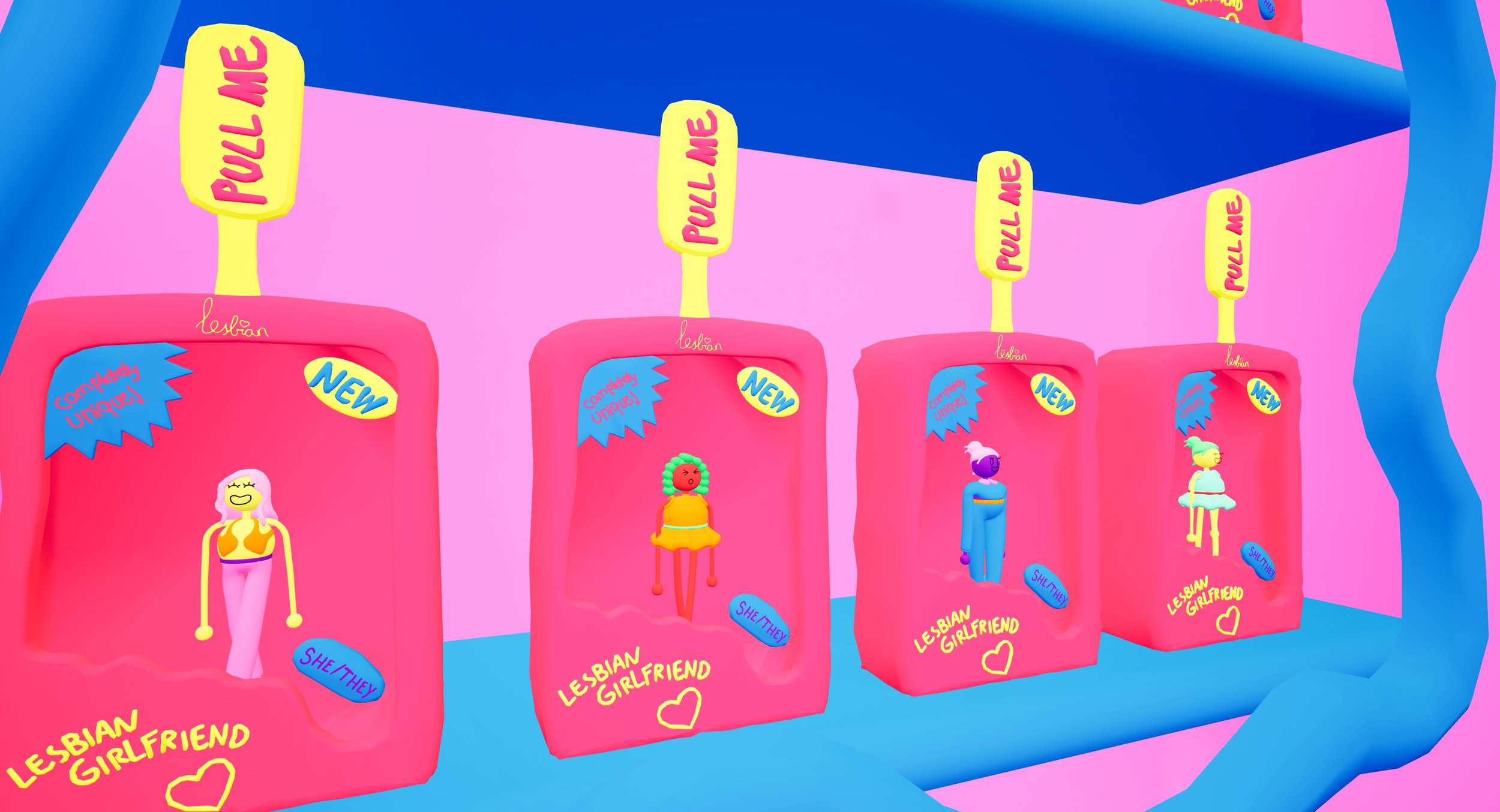
My personal favourite was “Lesbian Simulator” from Dutch artist Iris Van der Meule. Don the VR headset and you are transported into a cartoon world where you are given a “lesbian body,” go to a club, and then on a date.
With its bright colours and evocative name, “Lesbian Simulator” is meant to be more fun than didactic, but I was surprisingly moved when my VR friends ignored my coming out, my grandmother admonished me for not giving her great-grandchildren, and restaurant patrons got annoyed at me and my girlfriend for our public display of affection. (Come on, we were just holding hands!)
Also a little scary was the creepy dude on the subway who accosted us. We fought him off with “anti-man spray,” a term that slightly annoyed this square, straight, male critic, but that’s also the point.
I watched others try out the Canadian premiere of “Body Proxy,” where you don AI glasses and perform tasks with real-world objects - balance a ball on your knee, make two objects fight - while computers judge your performance and decide if you would make a good external peripheral for a body-less AI. Thought-provoking and disturbing.
I didn’t have time for the rest of the room’s offerings, but they all sounded good.
“Tartupaluk,” by Iqaluit-based Inuit artist Laakkuluk Williamson, is set in an imagined Arctic republic on an island in the Far North. (I asked if Tartupaluk is the place I know as Hans Island and was coolly informed that yes, that is another of its names.)
“Reflections of Little Red Dot” is a mixed-reality installation that lets participants switch physical slides on a retro projector to view holographic neighbourhoods and AI-rendered future landscapes.
The one I was most curious about was “The Clouds Are Two Thousand Meters Up,” a “large scale free roam VR” experience that tells the story of a man mourning the death of his wife, and seeking answers while guided by her unfinished novel.
The Innovation Hub was open to marketplace attendees only over TIFF’s first weekend, but the public can buy timed tickets for Tuesday and Wednesday, its last two days at the festival. Beware; like me, you may not get to see everything during your window of time.