Cut! The Bangers and Busts of TIFF ’26 (with a P.S. to Organizers)
By Original-Cin Staff
In the Toronto International Film Festival’s 51st year, Original-Cin marked a personal best.
Ten writers covered the 10-day festival like a blanket, seeing and reviewing more than 100 movies, day by day.
That’s a heck of a lot of dramatic arcs and comic misadventures. And the movies were pretty good, too.
After absorbing a good chunk of everything there was to see, we had all the Cinners choose one film they loved and one not-so-much. And they each offered an aside of helpful, and sometimes exasperated, advice to the brass at TIFF.
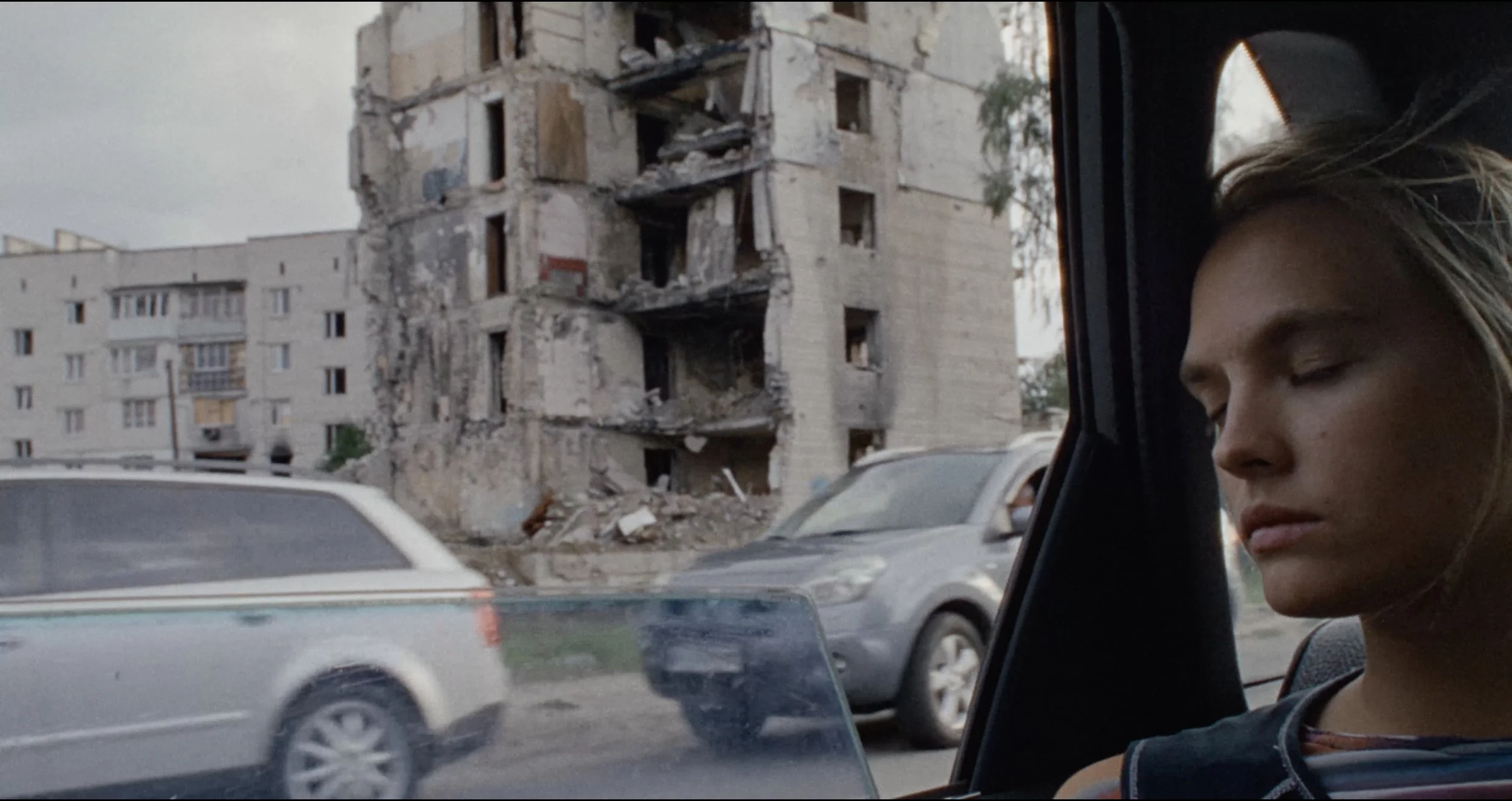
A scene from Black Sunflowers.
Liz Braun
Loved: The line-up at TIFF 2026 was solid, and many of the big, sparkly films will come your way soon, buoyed by massive marketing budgets and plenty of fanfare. So, take a moment to look out for the more modest Run Terry Run, a surprisingly moving documentary about Canadian hero Terry Fox from local filmmaker Sean Menard. Menard uses previously unseen footage in this understated film, reiterating Fox’s legacy and underlining the man’s grace, courage, and modesty. Footage from the 1980s is heartbreaking in its innocence — this is a film about all the good things Canadians believe about themselves.
Not So Much: I loved Danny Boyle’s Ink — it’s a must-see for newspaper junkies — but I am still puzzling over something: am I supposed to believe that UK Sun honcho Larry Lamb was somehow more culpable than Rupert Murdoch in kick-starting the post-truth, end of the world, Goths-are-at-the-gate current hellscape? It’s bothering me.
Hey TIFF! It’s exhilarating to see one’s favourite filmmakers or actors after some of the public screenings at TIFF. Unfortunately, the Q&A sessions that follow are often awkward, and one assumes they are likewise difficult for the talent. Is there any way questions could be submitted in advance, maybe during the brief break after the screening that permits seasoned viewers to wisely flee the Q&A? That way everyone could be subjected to fewer questions about wigs, dogs, plot points, plastic surgery, that-one-time-I-saw-you-at-Foodland-in-Port-Carling or the DP’s sex life. Just a thought.
Thom Ernst
Loved: I preface my ‘Loved’ category with the confession that, unlike my hard-working Cinner colleagues, I watched a mere 10 films this year, down from the usual 35 or so I’ve seen in the past. Of those 10, two stand out. On the basis of pure, unadulterated, unapologetic fun, there are likely few films to match HALF, a vampire-curry-western and balls-to-the-wall revenge thriller from the remote reaches of Rajasthan’s desert. Then, on the serious side, there’s the kind of cinematic excellence many who dive deep into the festival are looking for: James Haney’s outstanding documentary Black Sunflowers. Haney chronicles how the Russia-Ukraine war has upended the lives of young Ukrainians. His camera captures a cross-section of vibrant, distinctive personalities between 18 and 25. The film doesn’t shirk the atrocities of war — we’re taken into fields of combat, eyewitness to destruction and death — but it also thrives on raves and the unquenchable thirst for love, music, and life. An unforgettable portrait of youth during wartime.
Not So Much: Mr. Nelson, Did You Kill People? It seems evident that director Shin’ya Tsukamoto intended to make a powerful anti-war film by adapting real-life veteran Allen Nelson’s account of his nightmare tour in Vietnam. But his efforts are undermined by an unnecessary voice-over that spoon-feeds the “war is hell” narrative while the images are already telling us the same thing. Perhaps the film’s greatest misstep is its reminder of Truffaut’s argument that the more horrors an anti-war film is willing to show —people tortured and executed, innocents caught in the line of fire — the more it risks becoming less anti-war and more war porn. Tsukamoto’s relentless depiction of violence ultimately makes that argument for him. The point is amplified when the film is seen alongside James Haney’s powerful documentary of Ukrainian youth at war, Black Sunflowers.
Hey TIFF! If this year’s limited press screenings was an experiment, the experiment failed.
Karen Gordon
Loved: Can’t pick just one, so: Korean writer-director Lee Chang-dong’s masterful Possible Love. Funny, sad, complex, with fabulous performances. Elsinore, Andrew Scott’s stunning performance is enough reason, but also a reminder of the tragedy of who and what we lost in the AIDS crisis. Minotaur, set in Putin’s Russia, director Andrey Zvyagintsev’s film is a thriller, wrapped around troubling questions about individual morality. The Debut, writer-director Jesse Eisenberg gives us Julianne Moore as a fascinating, not really likeable character, in one of her best performances yet. Matching her with Paul Giamatti is the icing on the cake.
Not So Much: This is definitely a ‘It’s me, not you’ situation. I struggled with Double Freedom by Lisandro Alonso, a master of slow cinema. Not because I couldn’t see or appreciate the strength of the filmmaking, but because I’m not sure the style, with its unfinished narrative, captured me. Still thinking about it.
Hey TIFF! This year’s only one critics screening per film is bad and flawed policy. Writers and critics have always been part of spreading the joy and the love for the films, the theatrical experience, and for the festival itself, so why clip our wings?

Kim Hughes
Loved: Having read every gloriously detailed capsule review submitted by the Original-Cin team — and knowing there were nearly 300 features, documentaries, shorts, and series premieres on offer — singling out one title for praise seems impossible. That said, Wild Horse Nine thrilled me. There wasn’t a single thrust of John Malcovich’s performance that didn’t bullseye. I bow to writer-director Martin McDonagh, who consistently helms stuff I love.
Not So Much: The Debut. I loved the first hour of writer-director Jesse Eisenberg's tender/kooky ode to community theatre and community in general. Watching Julianne Moore become the mouse that roared despite her odiously indifferent family was exhilarating, especially under Paul Giamatti’s derisive gaze. But somewhere around the midway point, when Moore’s Mona goes full method, the vibe shifted in a way that rung false.
Hey TIFF! Maybe somewhere between the onscreen message permitting in-theatre texting at press screenings (appalling) and that blurb about respecting people, attendees could be reminded to stop blabbing about key plot points in films they have already seen that others around them have not. Also, if you are going to make people sit through 10 minutes of commercials from sponsors at public screenings, insist (gently if needed) those ads match the calibre of the festival they are supporting. A robot shorted out by a coffee spill? That’s your pitch?
John Kirk
Loved: Rogue Trooper for was a blast from the past, a stroll down memory lane as I saw my childhood come to life on the big screen. But that’s part of the magic of film, isn’t it? Basing a film on a property from a UK comic that would have been marked as obscure not only speaks to the power of adaptation but also to the joyful open-minded nature of pop-culture properties for this year’s selection of films at TIFF. More sci-fi and fantasy please?
Hey TIFF! The schedule seemed so haphazard. I get that you can’t please everyone. But it seemed like there were too few P&M screenings and at the strangest of times that interfered with the voucher tickets. Perhaps making screeners available to the press so that they can also see what they have tickets to?
Chris Knight
Loved: The Surgeon. Technically in the “Centrepiece” sidebar, this action-thriller could have played just as well in Midnight Madness. Michelle (who can do anything) Yeoh stars as a just-retired surgeon, pulled back in for one last gig because the patient is a crime lord who won’t take no for an answer. Certain she’ll be killed the moment the operation is either successful or botched, she threads her way between those outcomes with inventive and brutal tactics. This one was great to see in the traditional TIFF packed house because there were so many “woo!” moments and so many “I have to look away” shots, backed by fantastic rock from the likes of Thin Lizzy... though one scene really could’ve used Tracy Chapman’s “Fast Car.”
Not So Much: It Will Happen Tonight. Rarely has a film bugged me as much as this latest from writer-director Nanni Moretti. He was once known as “the Italian Woody Allen,” back when that term carried relatively little baggage. But it seems to fit in all the worse ways in this fable of a man on a lifelong, lustful quest for a woman he met for five minutes on her wedding day. One section of the film finds him married to his late dad’s doctor, whom the old man also clearly slept with at some point. Ick. Women as mysterious, sex-loving, opinion-free objects of desire and conquest? I got enough of that in the 1980s and was certain it was behind us now.
Hey TIFF! I liked your volunteer ads this year, with their puns and quotes. I enjoyed your People’s Choice montages, especially the one with Jays manager John Schneider, seemingly at a post-game press conference, remarking: “I never knew a Moroccan techno-thriller could be so fucking heartwarming!” But my favourite was the 50/50 draw spot, which asked viewers to imagine the odds of meeting their favourite celebrity in an elevator, or the love of their life in a rush line. Why did this tickle me? Because late in the fest I picked up on the small print at the end, which informed me that these were mere dramatizations and not prizes to be won. I don’t know if that’s lawyering run amok or blink-and-miss-it humour, but either way, and speaking for all readers of fine print: We are amused.
Liam Lacey
Loved: Some films are soup, some dessert and some, like Lee Chang-Dong’s Korean wealth-gap drama Possible Love, are a multi-course banquet of flavours, led by the performance of Jean Do-yeon as a woman both innocent and complex. In the nonfiction area, it was a privilege to time travel to 1972 and join the gathering of Harlem Renaissance luminaries who are documented in William and David Greaves’ Once Upon a Time in Harlem.
Not So Much: I was underwhelmed by Romanian director Christian Mungiu’s obvious Palme d’Or-winning Fjord, about Christian Romanian newcomers to Norway, clashing with a progressive agenda. Sometimes, you suspect, the top prize goes to every juror’s second choice.
Hey TIFF! The TIFF ticketing process is a major public relations liability. Here are five ways to help: 1. Get a ticketing vendor that can handle traffic surges without crashing, freezing, and putting loyal buyers in long queue loops. 2. Put a hard cap on high demand tickets. 3. Introduce a waiting room counter that explicitly displays a user’s place in line and wait time online. 4. Consider digital virtual rush lines rather than long frustrating physical rush line-ups. 5. Re-introduce discount ticket bundles rather than single ticket sales. You’re welcome.
Bonnie Laufer
Loved: As a musical theatre fan, I was completely enamored by writer-director Jesse Eisenberg's latest treasure, The Debut. Julianne Moore soars as Mona, a neglected mother and housewife who sheepishly joins a community theatre group. Her transformation into a confident performer and eventual diva will surely land her an Oscar nomination. I was also obsessed with Mike Flanagan’s serial adaptation of Stephen King’s classic novel, Carrie. Canadian actor Summer H. Howell is brilliant in the lead role, bringing a level of compassion to the character that we've never felt in previous portrayals — no, not even Sissy Spacek’s.
Not So Much: I was on the fence about Danny Boyle's Ink, which chronicles the rise of the British tabloid The Sun. It started off slow and never quite found its momentum. Despite great performances from Guy Pearce as Rupert Murdoch and Jack O’Connell as editor Larry Lamb, I couldn't connect with the characters or find a reason to care about their narcissistic greed.
Hey TIFF! Once again, TIFF offered press-pass holders access to public screening tickets (a number that shrank to eight from 10 this year), and once again, securing anything I wanted was a nightmare. Once my schedule filled up, exchanging tickets for screenings I wanted to see proved nearly impossible. After facing rejection after rejection, I simply didn't have the patience to restart the process from scratch. While I had a bit of luck when speaking directly with a customer relations representative, I found the entire experience completely exhausting.
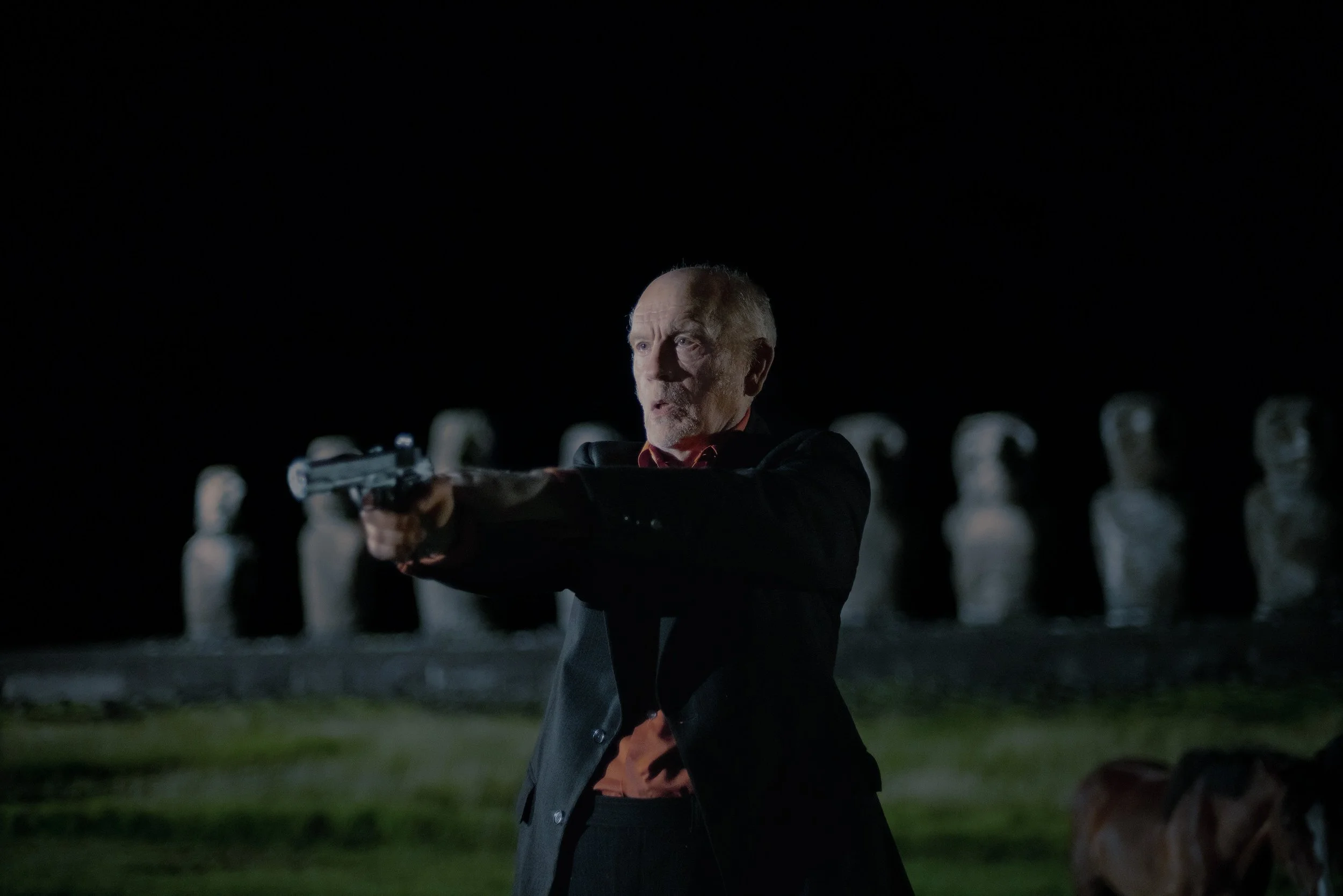
A scene from Wild Horse Nine.
Jim Slotek
Loved: Wild Horse Nine. For those who consider In Bruges to be Martin McDonagh’s best, here’s a masterfully written story that roughly follows the plot of two hitmen (CIA here) hiding out in a beautiful touristy place and being tailed by their assassin boss (Steve Buscemi). In this case, it’s Easter Island, just before the brutal 1973 Chilean coup, where John Malkovich’s ill agent whimsically ponders death, his memoirs, the world events he’s violently affected, etc., while his partner (Sam Rockwell) waits to perform a reluctant mercy killing. It’s In Bruges with geopolitics and dark, hilarious lines.
Not So Much: Julián. Louise Bagnall’s animated feature debut about a boy in a Dominican family in Brooklyn who wants to be decked out in the Coney Island Mermaid Parade is lovely to look at. But, taken as it is from a bestselling children’s picture book, Julián deserved a fuller story, one that included pushback from a conservative immigrant culture. There’s one short scene of bullying by boys. But many Juliáns in this world would relate to a more dramatic victory story than the mild one here.
Hey TIFF! I thought I was hallucinating at Press and Market screenings when I saw the onscreen words, “Limited use of devices for email and texting purposes is allowed.” I know there are dealmakers and potential sponsors in that audience. But even they can turn off their phone for a lousy couple of hours. What will be allowed next when the rest of us are trying to watch a movie? Smoking?