
We Bury the Dead: A More Thoughtful Zombie Film
By John Kirk
Rating: B
We Bury the Dead breaks a bunch of movie-zombie paradigms, showing itself to be more a thinking person’s zombie story. In fact, our conversation with lead actress Daisy Ridley supports that point of view. When you imagine the number of extras it takes to cast a zombie film, it’s very easy to forget that these people are all playing a role and they have stories of their own.
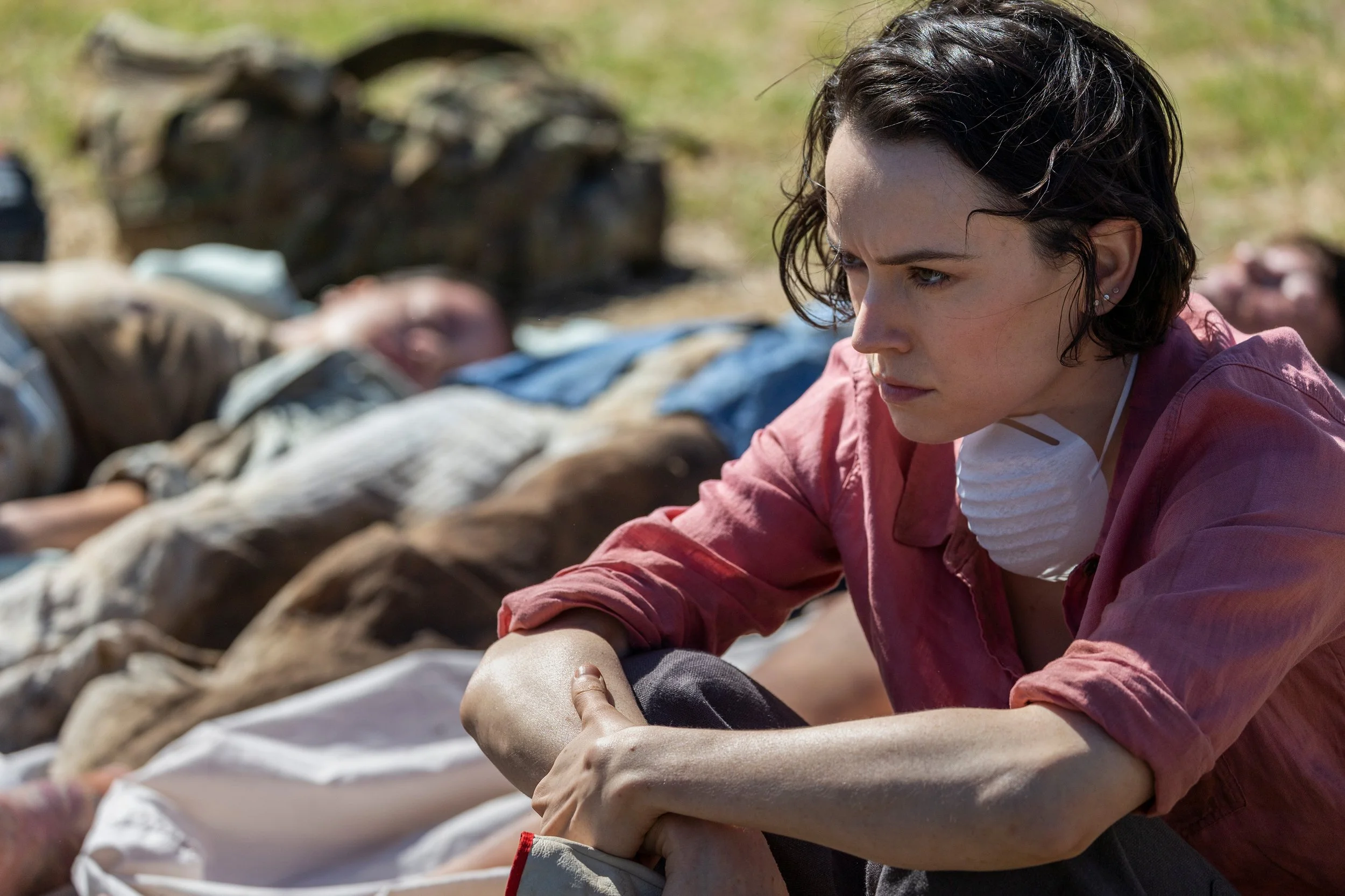
It's also easy to forget that from the story’s point of view as well. Imagine that all these zombies didn’t ask to be mindless, shambling husks intent on wantonly murdering the first human they encounter. They also had stories. They were people too and in a horror story, it’s easy to forget that as we watch the main characters fight for their lives.
The story in We Bury the Dead: when the American military detonates an experimental pulse weapon off the coast of Tasmania, thousands of people drop dead as their brains stop functioning. Surprisingly, some of the dead victims inexplicably wake up and must be dispatched by the Australian military. Ava (Ridley) has to travel from America as a recovery worker of the dead, to locate her dead husband and see if he is one of the “returned.”
The first twist in this film is when the dead wake up, they are quite docile. It’s as if they are trying to process what has happened to them and there is a human-like apprehension of the waking reaction that isn’t customary of typical zombies.

This is just one of the ways that this film breaks typical zombie conventions. It does account for the slow pacing in the film, but in these cases, when the new zombies pause, it also gives the audience time to pause and reflect on the situation from Ava’s perspective. But it allows for that consideration that these were people once too. Ava sees what they have become but she also sees their own, debilitated recognition of their condition.
It’s a more thoughtful approach to the, ahem, zombie condition. They aren’t mindless killers under some sort of magical curse or viral contagion, they’re just people and something has happened to them that none of us understand.
There is an underlying story about Ava’s relationship with her husband. She loves her husband but differences in their seemingly perfect marriage come out. While this tends to detract away from the zombie genre, it provides context for Ava’s character and rationale for why she is curious about the afflicted. The differences about these zombies wouldn’t be noticed if there wasn’t this thoughtful character to recognize them.
Not to say that the violence that is usually associated with these films is absent in We Bury the Dead. There are plenty of tense moments, rich with suspense that culminate with the eventual zombie attack the audience anticipates.
But what’s different is that zombie bites don’t transmit the condition. This adds a layer of protection to the characters but it also reinforces the notion this isn’t a disease.
The usual remedy of the shot to the head can kill these brain-pulsed shamblers, but not out of a remedy for a disease or a supernatural curse; they’re just medically afflicted and that’s an affirmation of their residual humanity.
That has to be the greatest distinction in this film that separates it from others in the genre. They aren’t zombies, just people who have had lives, identities, value and the moments of pause and reflection give pause to the audience to remember those things. They’re still to be feared but also understood.
One scene in this film epitomizes this difference and will be apparent as soon as it watched. It shows the innate and resilient humanity within the zombies and can’t help but make the audience pause and think about their end. Trust me, you’ll know it when you see it and it happens to be Ridley’s favourite scene as well.
Sadness is the dominant emotion in this film, not fear. While there are those moments that will accelerate the audience’s hearts, there are also those moments that will open them. After all, zombies were once people, too.
We Bury the Dead. Written and directed by Zak Hilditch. Starring Daisy Ridley, Brenton Thwaites, Mark Coles Smith, and Matt Whelan. In theatres January 2.