
Original-Cin Q&A: Sentimental Value Director Joaquim Trier on Communicating Beyond Language
By Karen Gordon
Norwegian director Joaquim Trier is having a year.
His latest film Sentimental Value won the Grand Prix when it debuted at the Cannes Film Festival last spring. It has also gathered seven Critics’ Choice awards, eight Golden Globes nominations and is expected to show up strongly when the Oscars are announced January 22.
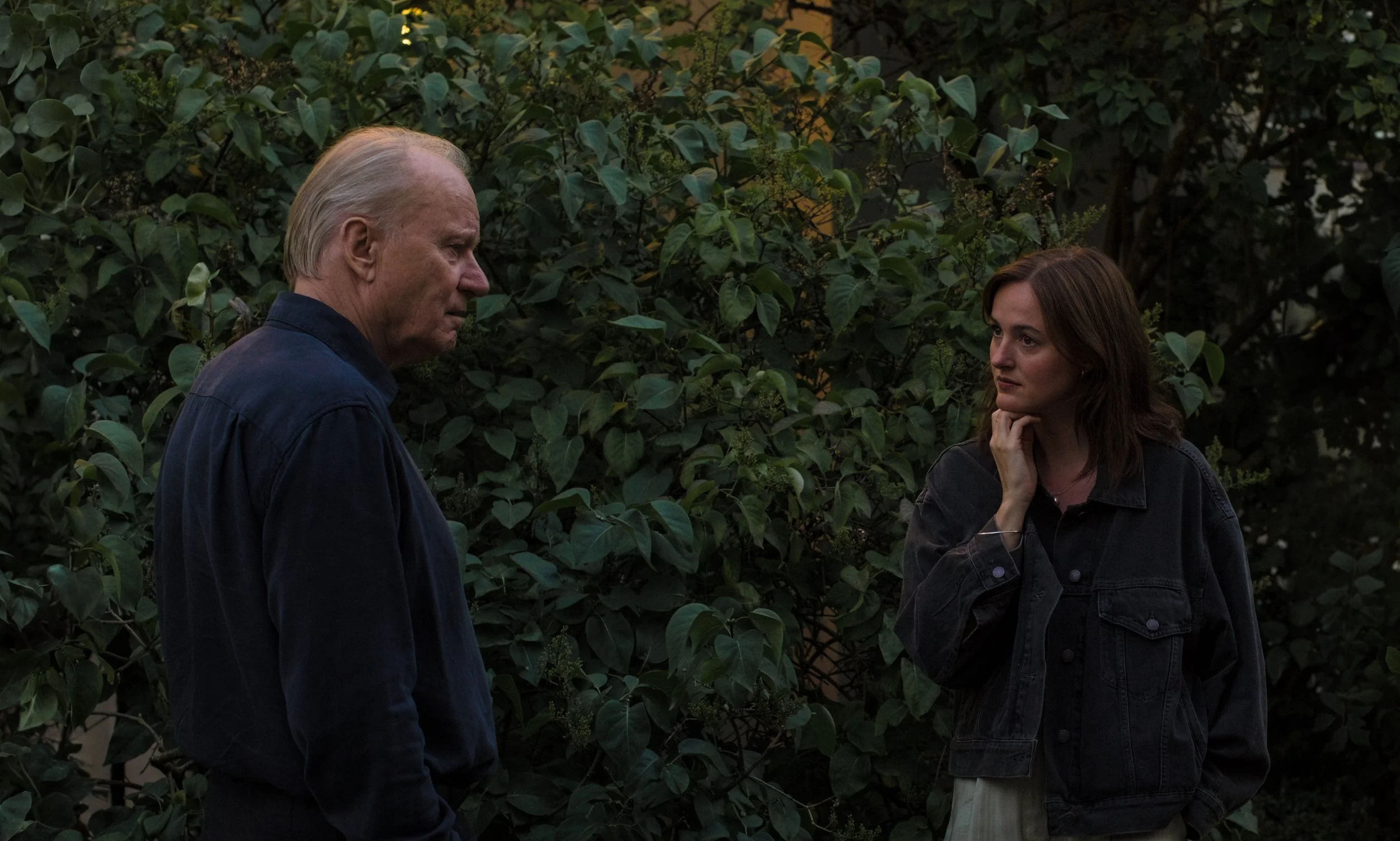
A scene from Sentimental Value
Whether or not the film picks up Oscar nods is perhaps irrelevant. The bottom line is a respectful acknowledgement of the kind of films Trier and his co-writer Eskil Vogt make: solid, non-manipulative, and insightful.
For Trier and Vogt, the success of Sentimental Value, now playing in theatres, must feel like déjà vu. Their previous film and fourth collaboration, 2021’s The Worst Person in the World, buzzed at Cannes where it was in competition for the Palme d’Or and won Renata Reinsve Best Actress. It went on to be nominated for two Oscars including Best Original Screenplay.
Sentimental Value mines similar turf. Both are quiet, intelligent movies about people trying to figure out some things in their lives that are hobbling them emotionally and holding them back in a significant way. Both have a depth that makes them resonant.
Gustav (Stellan Skarsgård) is a famous film director who hasn’t made a movie in over a decade. The death of his ex-wife brings him back to his childhood home and his two estranged adult daughters, the grounded Agnes (Inga Ibsdotter Lilleaas) and Nora (Reinsve), a leading actress in Norway dealing with anxiety issues.
Gustav’s mother committed suicide when he was a little boy. He's written a fictionalized story around that, a screenplay, and he wants Nora to star in it. When she turns him down flat, he instead casts an American (Elle Fanning) and plans to shoot in his childhood home.
There are tensions in general, but the film’s major stand-off is between Gustav and Nora. Gustav tries to reach her, but he can't seem to stop himself from saying the wrong thing. The script isn’t obvious about naming the issues its characters are wrestling with. But there is deep understanding of human psychology and the wounds that make us fragile in places.
In the end, Sentimental Value speaks to intergenerational trauma, the way world events affect families, and more. There’s movement in the lives of the characters and their relationships, but the film doesn't give easy answers.

Despite the accolades, Trier seems unaffected. He's fun to talk to as we chat by Zoom. Even in the middle of a schedule jammed with back-to-back interviews, he is in the moment, full of energy and humour and wanting to engage. He describes himself as an optimist and you can feel that through the computer screen. Note that the following interview contains spoilers.
ORIGINAL-CIN: The Worst Person in the World was incredibly well-received. Did that attention and success impact you when you sat down to write the follow-up?
JOAQUIM TRIER: Yes because The Worst Person in the World had gotten more attention than anything we'd done before. But since the mechanics of that writing room is very angst-driven (laughs), we drive ourselves into this complete fear of failure and feel terrible. I stopped sleeping and had bad nights and everything.
But through that process of ‘How can we keep being hardcore about what we care about’ drove us into a deeper understanding of our yearnings and what we need to talk about which always comes from a personal place. When I see Renate at the beginning of this film having stage fright to open her emotions, that's a metaphoric extreme version of what I think a lot of creative people go through, that regardless of last night's successful play, every day you've got to do it again.
There’s a wonderful quote by Philip Roth, the great American writer. He was so prolific and it was so comforting to hear him say that every time he went back to the blank page it was like a little bird in his hand that almost couldn't breathe and he had to think, ‘Can I do it again… and make it into an eagle?’ It’s crazy. We were scared shitless, but here we go. At least we went personal!
O-C: You're talking to someone who has been in therapy, so your movies really speak to me…
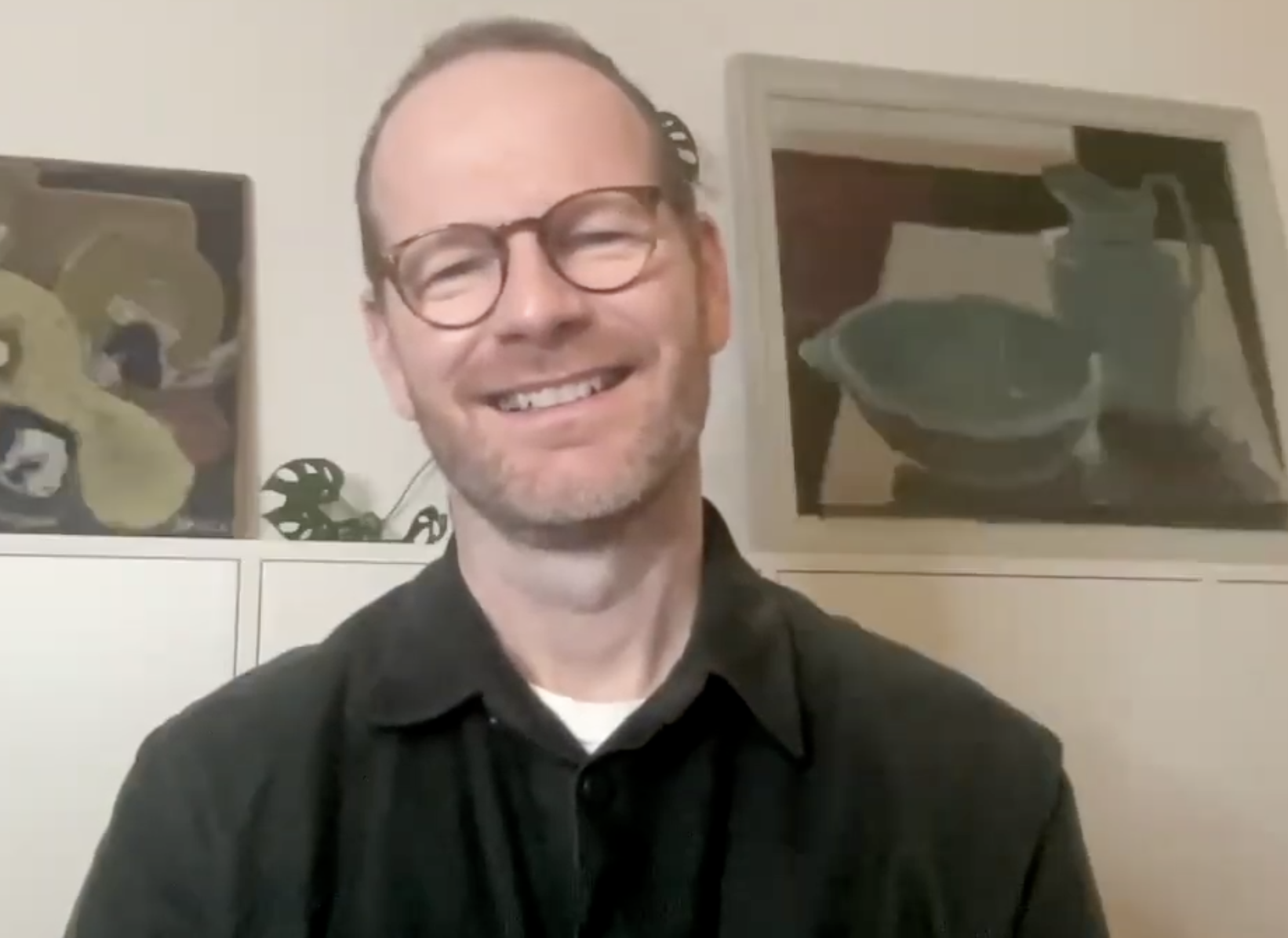
Joaquim Trier captured in a screenshot
JT: We have a couch in our writing room (laughs) so I know where you're coming from. It’s the unconscious workings of seeing things multidimensionally that creates interesting work to me. Not identifying only with one identity in a story. But understanding the complexities of all these relationships and how they mirror each other in ways that the characters don't see.
Interesting drama isn’t creating a good and a bad character and they fight it out. I'm much more interested in the slippery lack of language to convey ourselves and our emotionality which we miss as human beings all the time. Particularly this father character who is terribly clumsy. But at the heart of that character is also a wounded child.
Will his daughters, in the short time they have with their father, be able to see his vulnerability as a saving grace or not? That’s very complicated. They can’t just have a great conversation where everything is talked about and solved. That’s not a story I would be able to tell because I don't believe it's true.
O-C: Gustav often seems like he's being a jerk to his daughters and can’t relate to them but he's amazingly thoughtful and receptive with Fanning’s Rachel Kemp.
J-T: That is the substitute. He is able, to a much larger degree at least, give her that hug which he can't give to his daughters. That’s the sadness of it. I will say that I'm optimistic, that’s in my nature. I wanted to make a film with some hope in it, but not false hope.
O-C: Nora and Gustav mirror each other. Each has been stuck in their lives. And just watching the film it seems like neither of them can get past it all until they solve things with each other. Although we can see it, I don't think that they understand it that way.
J-T: I agree. They are mirroring and there is this sad love story between a father and a daughter. One of my favourite scenes in the film was the scene where they’re smoking. They don't say anything, they just look at each other. You realize they love each other, and silence is the best they’ve got.
O-C: And they’re also afraid of each other at the same time, like they recognize that to get to the love, they both have to face some things within themselves.
JT: There is a complicated tension there, yes.
O-C: You don't give us any easy answers at the end. We see things have changed a bit, but it's not like we see them hug and resolve. Why do you withhold that? Or is that just reality?
JC: It’s Stellan, Renate, me, Eskil and the editor and everyone understanding film form and what needs to be the space for an audience. But it's also true, I think, that the shock of that final scene to Gustav and Nora would make them almost incapable of concluding it, because they’re kind of floating in this new realization of something they’ve touched in each other on a level beyond language.
That is the whole point of point making this film for me. That there are other modes of being and conveying and feeling than the language which we're offered to try and function with each other. And I think whether you're interested in the artistic aspect (of the two working together) or just the human aspect, I hope I'm talking about that in some way. I mean, I don't have the answers either, but I think that's an interesting area to explore.