
Wicker: Olivia Colman and Alex Skarsgärd Get Twiggy With It in Medieval Feminist Comedy
By Liam Lacey
Rating: B-
Considering some of the most culturally resonant films this year — The Odyssey, Obsession, You Can See Everything — it is obvious movie-goers crave originality, anything that isn’t a sequel, prequel or formulaic treacle.
You could sense it in the murmurs of interest that rippled through audiences for previews of Wicker, a new comedy starring Olivia Colman as a woman in a medieval village who marries a man (Alexander Skarsgård) who is made out of twigs.
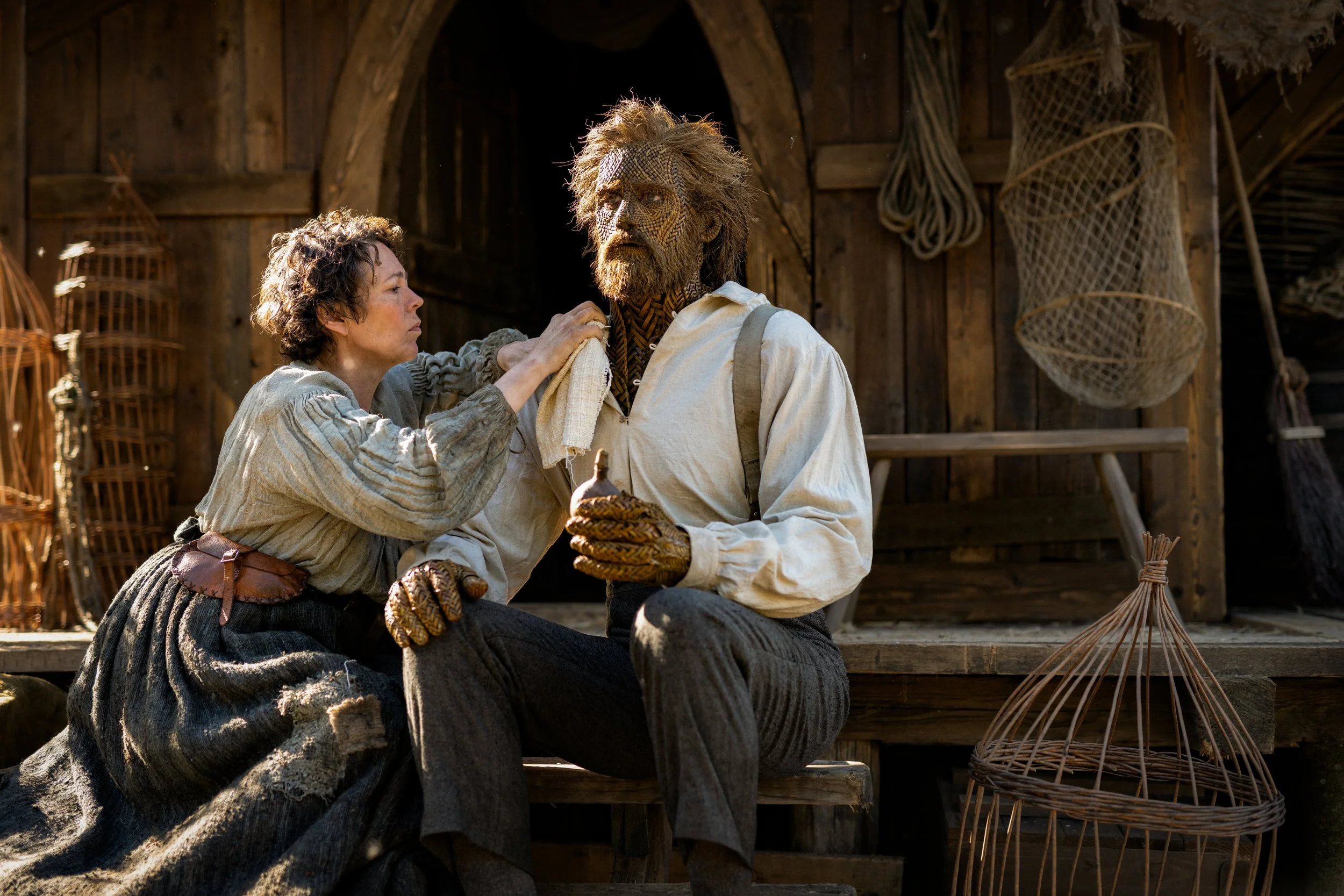
Wicker, which is based on a 2008 short story by Ursula Wills-Jones, takes place in a thatched-roofed, unpaved English medieval village where marketers yell their wares, everyone wears billowy clothes and people don’t have names, just jobs.
Colman’s character is known as Fisher Woman, because she catches and peddles fish from a basket and is known for her fishy aroma. In response to humiliating teasing about her unmarried state, she pays the local Basket Maker (Peter Dinklage) to make her a husband out of wicker. The creation, who is unexpectedly alive, meets her at the chapel a month later and weds her.
With a lattice-work face and body of muscular twigs, he’s a perfect male — handy around the house and sensational in the sack, who limits his conversation to compliments: “I was made to be with you” and “You are the only reason that I live and breathe.”
Naturally, the presence of this uxorious paragon in this backward, patriarchal town causes problems. The town’s alpha lady boss (Elizabeth Debicki), known as “Tailor’s wife” or “Doctor’s Daughter,” leads the campaign against Fish Woman and Wicker. The key source of grievance is that other women don’t have bed-breaking, high-decibel orgasms like Fisher Woman, which disturbs both the village’s men and women in different ways.

Wicker is something of a pastiche of connected ideas, a light satire of the current “romantasy” literary trend, of women and supernatural lovers, but also a twist on the cult 1973 English horror movie, The Wicker Man (remade in 2006), involving pagan debauchery and flaming sacrifices. Wicker might make a fun double feature with Ken Russell’s 1971 film, The Devils, which has been recently re-released in theatres, starring Oliver Reed as a medieval priest who is burned at the stake after driving women mad with desire.
While playing with these tropes about medieval horniness and yeasty squalor, the film unfolds like an extended comedy sketch that occasionally takes a break for a sincere moments. In its favour, there’s no denying the appeal of its cast: Colman’s fluttery adorableness and Skarsärd’s deadpan reserve, the tall imposing Debecki as the chief antagonist, and Dinklage, whose character is given to flowery, explanatory monologues. You can also catch a welcome glimpse of Richard E. Grant as a manic medieval surgeon, mixing up his dinner with some messy surgery on the bar counter.
Regrettably, Wicker did not live up to the fresh promise suggested by the preview trailer. The screenplay is distractingly erratic, with Colman’s character both firmly independent in one moment and easily swayed to distrust her perfect lover in the next.
The dialogue aims for playfully literate, but often settles for jokes predictably on the nose or aimed at a lower appendage. To quote an old adage (not medieval, but a few centuries old), the parts that are good are not always original and the parts that original are not always good.
Wicker. Written and directed by Eleanor Wilson and Alex Huston Fischer, based on the short story, The Wicker Husband by Ursula Wills-Hones. Starring: Olivia Colman, Alexander Skarsgärd, Peter Dinklage, Elizabeth Debicki.
Wicker is showing at cinemas across Canada.