
Josephine: A Child in Crisis, and a Brilliant Performance, Power Intense New Drama
By Kim Hughes
Rating: A
There are many reasons to see the shattering new drama Josephine, none as compelling as 10-year-old Mason Reeves in the title role as a deeply traumatized and spiralling eight-year-old, the age Reeves was when filming began.
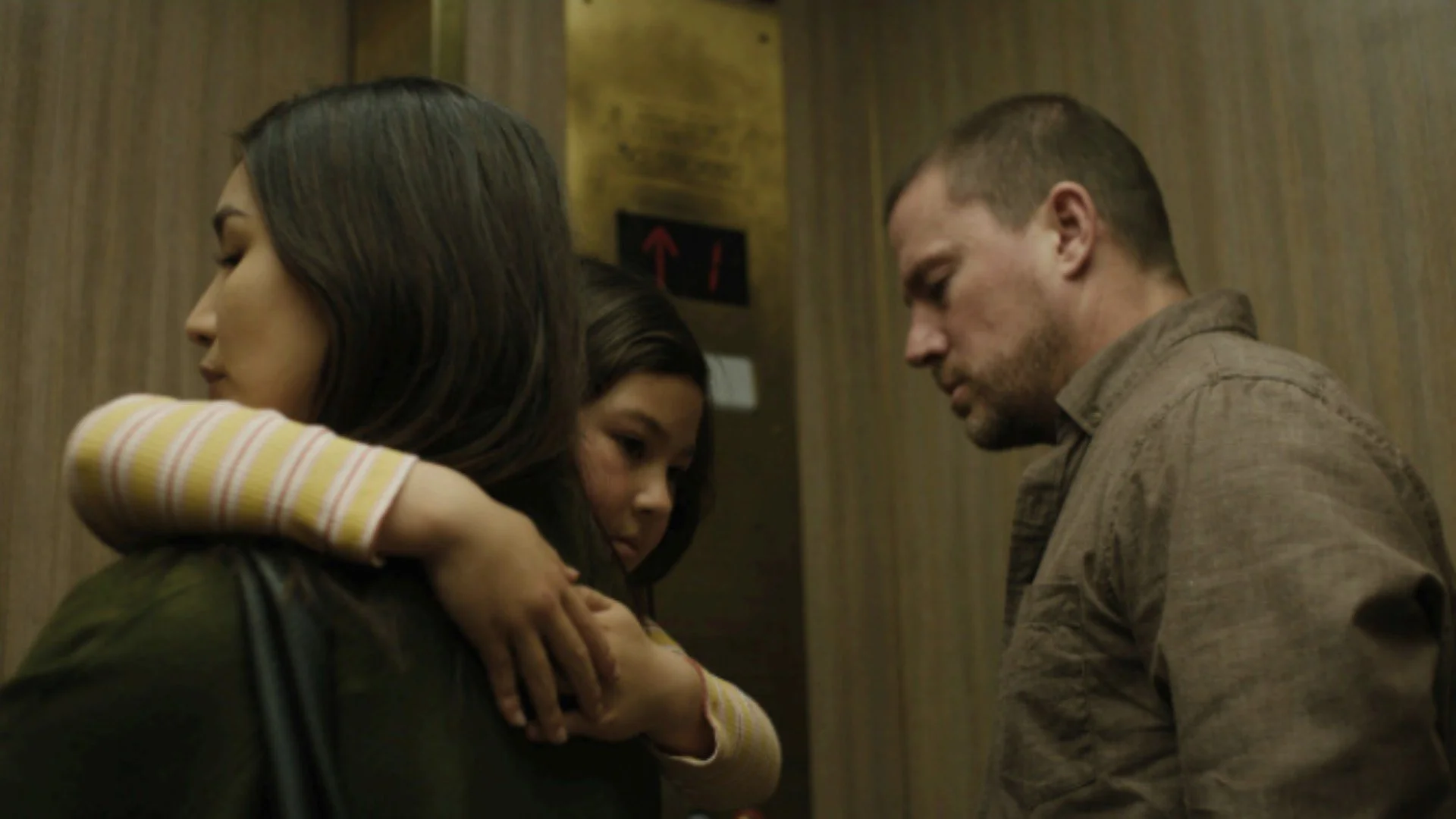
It’s impossible to overstate how remarkable and wide-ranging Reeves’ performance is in the film, in which she must convey emotions including, but not limited to, terror, bafflement, rage, frustration, innocence, and joy.
Already, she is rumoured to be a lead actress Oscar contender with co-stars Channing Tatum and Gemma Chan, here commensurate with their astounding lead, leaning into the respective supporting categories. A win for Reeves would be record-breaking. It would also be entirely apt.
Which is not to suggest that Joesphine is an easy watch. It arrives with trigger warnings for depictions of sexual assault and animal cruelty that, while central to the plot (in the first instance anyway) are nevertheless harrowing to observe.
Josephine is the only child of Chan’s Claire and Tatum’s Damien, a happily married San Francisco couple. She is especially close with Damien, a doting dad with a progressive streak and admirable deference to the females in his orbit.

The opening scene finds Damien gamely taunting Josephine in a game of “run out of the garage before the automated door closes,” establishing their unique bond, built largely on doing physical activities together.
From there, the pair go on a Sunday morning jog through a nearby park where competition to outpace each other sends them on divergent trails. Separated from her dad and pausing in a spot behind a tree, Josephine, and the audience, witness a brutal attack.
What Joesphine sees, and how she and her parents respond in its aftermath, is the film’s core. The child doesn’t entirely grasp what has occurred, though she knows instinctively it was wrong and horrible. Suddenly, she feels very vulnerable; threats could lurk anywhere, and she begins to act out in disturbing and potentially dangerous ways.
Meanwhile, her parents are torn between wanting to shield their daughter from the ugly realities of the world — do they try and explain the nature of the crime? — while desperately trying to comfort her amid the outbursts they are struggling to manage. And the couple doesn’t necessarily agree on the best way forward. Things slowly but forcefully unravel.
Into this morass comes the police. Josephine was eyewitness to a crime. Should she testify? Can the case proceed without her even though involvement in it keeps her anchored to that awful event. Is that a fair exchange for helping right a wrong?
The ethical questions quickly mount; writer-director Beth de Araújo adds another bruising element (no spoilers) to the mix to amplify Josephine’s escalating distress.
So, Josephine is a family drama and, in its final third, a courtroom drama. But mostly it’s an incisive and unflinching look at trauma through the eyes of a child and, conversely, how any child experiencing trauma inevitably creates serious blowback for her family. Heavy stuff that has already resonated.
Josephine won two top awards — Grand Jury Prize and the Audience Award — in the U.S. Dramatic competition at this year’s Sundance Film Festival and had its international premiere at the main competition of the Berlin International Film Festival, where it was nominated for the Golden Bear. (It lost to Yellow Letters, reviewed here).
More awards chatter for de Araújo and Reeves seems certain.
Josephine. Written and directed by Beth de Araújo. Starring Channing Tatum, Gemma Chan, and Mason Reeves. In theatres in Toronto and Vancouver November 27; in theatres nationwide December 4.