
Original-Cin Chat: VisionQuest Showrunner Terry Matalas on his Vision of Vision
The Vision, a popular hero in the lore of comics, has been given new life by another of that same audience’s heroes: VisionQuest showrunner Terry Matalas.
Original-Cin was able to catch up with Matalas to share his vision of … Vision. The Vision is arguably the Marvel character with the most complicated backstory in superhero history, involving everything from Tony Stark’s AI valet J.A.R.V.I.S., the Avengers’ nemesis Ultron, and, as we see in VisionQuest, the Human Torch (not the Fantastic Four’s version).
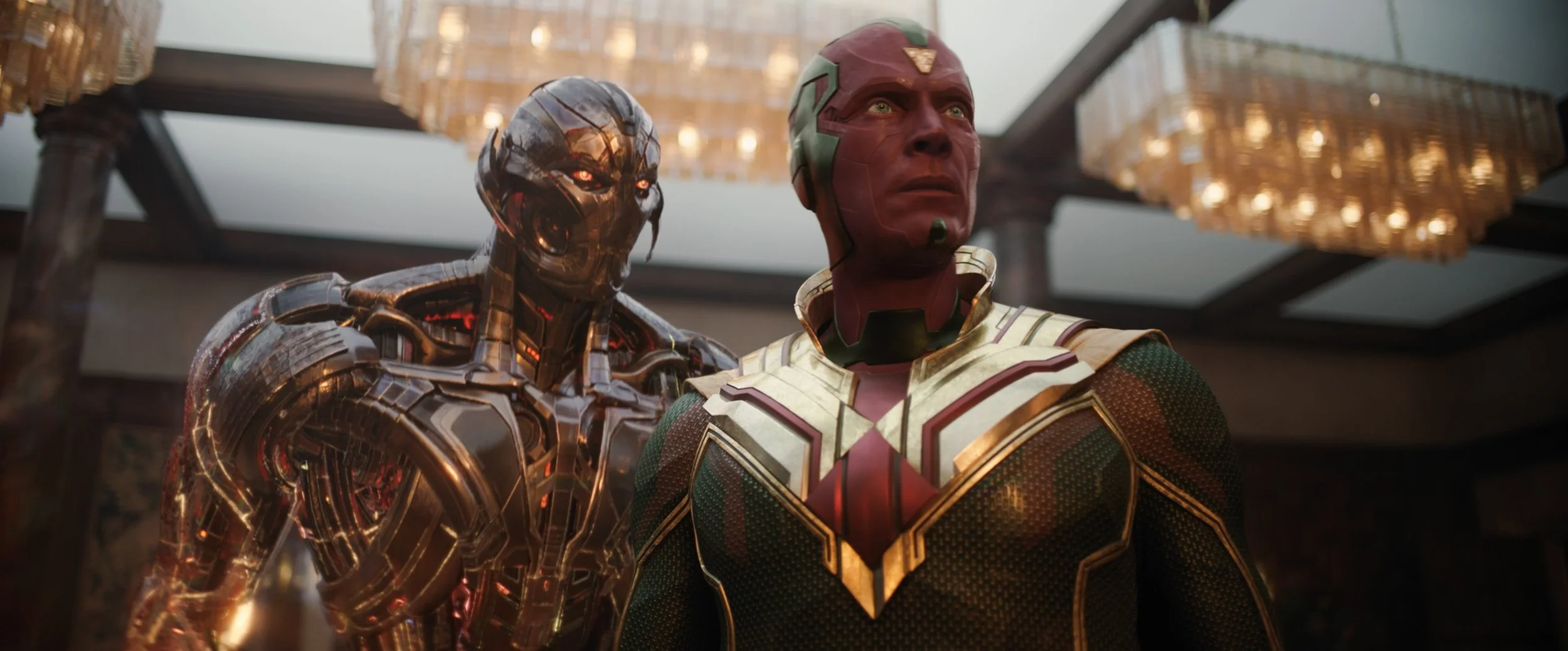
Ultron (James Spader) and Vision (Paul Bettany) in VisionQuest
Matalas previously won over genre fans with Star Trek: Picard S3 (generally agreed to be the best season of that series) by successfully highlighting the values of the characters and franchise that both he and the audience love. The secret to his success is simple: he is one of the fans. So, we were curious to see if that was the same methodology he applied to his treatment of the Vision in VisionQuest.
CLICK HERE to read our review of VisionQuest.
We started by asking about his comics pedigree.
“It’s funny but I was just talking about this today. I grew up in the days of when your mum was going shopping for milk and you could buy a comic at a convenience store off the rack. Marvel, DC, I’d always go home with one. And to this day, I get the best, and in my office shelves there are tons of comics that I have yet to still read.”
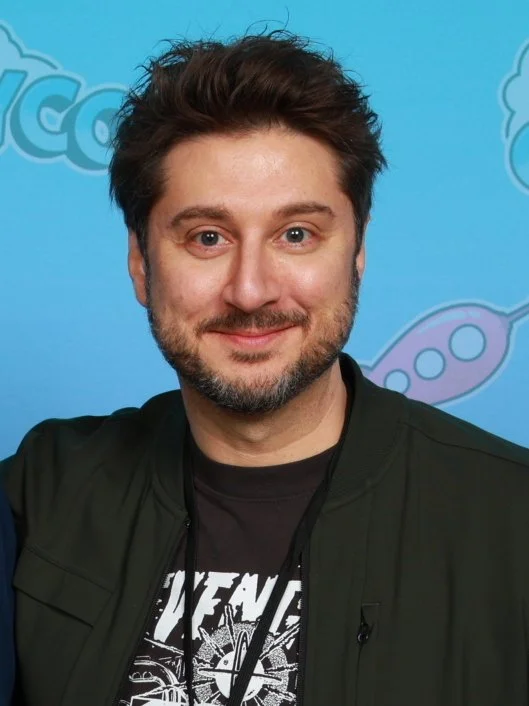
Terry Matalas
There’s a love of comic history in Matalas that is apparent in VisionQuest. The show is rich in details and lore, like Paladin, an obscure mercenary Marvel Comics character given new life through the gritty and realistic performance of Todd Stashwick. Then there’s the intricate weaving into comic canon the complicated fate of the Vision and Wanda Maximoff’s sons. Terry has latched on to details that comic fans in this series’ audience want to see.
Why? Because he wants to see them too and because he is one of us. Well, let him say it.
“I’m definitely one of you guys.” Matalas chuckled. “I had been talking with Marvel about a number of different things I wanted to see and (Marvel Studios president) Kevin (Feige) called and asked what did I think of Vision? Well, I’m a HUGE fan of Vision, especially from where we left off with Wanda, and I knew from the comics what had happened to that character and where he went to, and I was like: that was it.”
What was the “it?”
“They wanted to do a third show, reuniting him with (his son) Tommy, and that was all they had. Kevin said to go for it, come back in with a pitch. As soon as I hung up the phone, I had this weird idea about an “AI House” with Ultron in the attic and his (Vision’s) quest to go find his son in the real world.”
If there’s anything a fan hates, it’s a lack of closure. Of course, fans want to know what happened to Tommy and Billy (characters created by “hex magic” in their mother’s fantasy-world-made-real in WandaVision). More importantly, what happened to their dad, Vision?
But fans also like structure. Structure in the form of a carefully-crafted story gives way to legitimacy. Terry proved that with S3 of Picard. What did he learn from that experience that gave way to VisionQuest?
“It was fun.” He started. “How to make television under pressure? I mean, you’re always making television under pressure. Picard was made during COVID and we had very little time to write that third season. But there were strong points of view throughout the whole thing. You want to put everything on the screen. You want it to look like a movie every single time.”

Given VisionQuest’s complexity, it needs to be epic. The episodes, 60 to 70 minutes in length, are magnificently structured, cinematic in scope and the story is character-driven on a legendary scale. Which is what fans want. They want their heroes to be larger-than-life because that’s what makes them superheroes.
“It’s the pressure I put on myself as a showrunner. Every episode has to be a cinematic experience.”
Marvel Studios responded to that pressure by giving him a welcome degree of freedom in the creation of the story.
“Marvel was really great about not limiting our runtime to x, y, or z. They told us to tell the story the way we wanted to tell it.”
What were the sources of the storytelling?
“Well, we had a lot of the MCU to rely on – the history of the Vision and WandaVision, Phineas Horton and Jim Hammond. This was going to be THE AI show, the sci-fi one. Once we had established that, then we needed to explore the universe and see what else we could play with.”
Using the already-established material as a foundation to build and explore the universe of the Vision is a logical, fan-minded approach to storytelling. It’s exactly what any loyal fan would do if they had the talent and opportunity. There’s the creation of the original Human Torch, as well as the artificial lifeform named Jim Hammond created by the driven and obsessive Horton – all based on researched and cleverly applied comic canon. We get a fan-valuable story that reveals more about the origin of the Vision.
But there was also the contribution of fan-favourite actors whom Matalas could trust to maintain his storytelling (including Paul Bettany as Vision and James Spader as Ultron). That list also includes actors he’d previously worked with, including Stashwick as Paladin, and Canadian actress, Emily Hampshire (Schitt’s Creek), who plays Vision’s AI accomplice, E.D.I.T.H. Stashwick had worked with Matalas on Picard, both actors had also worked with him on 12 Monkeys.
“It always happens organically. It always starts with writing the character and listening for whose voice I hear. In this case, Emily Hampshire, who I’ve worked with before, was E.D.I.T.H. When I started to sit down and write Paladin - who I saw as an older, grizzled bounty hunter who had his own snark to him - I started to hear Todd’s voice, and there it was.”
At the end of the day though, what was Terry’s most favourite thing about the series?
“It’s tough to boil it down to just one thing. You know, I think we had such a great time making it and I’m glad the audience is loving it. But doing this with Paul, James, Todd, Emily – everybody, it was just such a great experience. Marvel was so collaborative about it.”
True fans recognize the value of collaboration when it comes to telling a story about a hero that is deeply engrained in the history or Marvel comics lore. It’s also chance to make something worthwhile and Terry reveals that importance.
“It was something I really needed. Star Trek was harder to make. This show, while it was hard to make it physically, because television is always ambitious and you never get enough sleep! We had a lot of laughs on this one … and continue to make each other laugh.”
Matalas shared how the cast contributed to his storytelling.
“Well, it’s their voices. They start to read these words and turn it into something that is actually their own. You’re lucky when you have a cast like that because they inspire you to tell more stories.”
Collaboration is a natural feature of fandom. Fans gather to share what they love about a mutual interest. Eventually that leads to speculation and from that speculation comes new stories. “What If?” is shared concept to fans and in VisionQuest Terry Matalas brings that concept to life by inviting shared storytelling, a love of lore and detail and yes, identifying himself as “one of us.”
That’s why his vision of the Vision is also ours.
VisionQuest is streaming on Disney+.