
Leviticus: & The Evils of Eating Shellfish and Wearing Mixed Fabrics
By Thom Ernst
Rating: A
Leviticus, by title alone, draws attention not away from, but directly toward, the ancient Old Testament law often cited by those who condemn the 2SLGBTQIA+ community. The verse, paraphrased here, is familiar: a man shall not lie with another man as he would with a woman. Less frequently quoted is the punishment that follows.
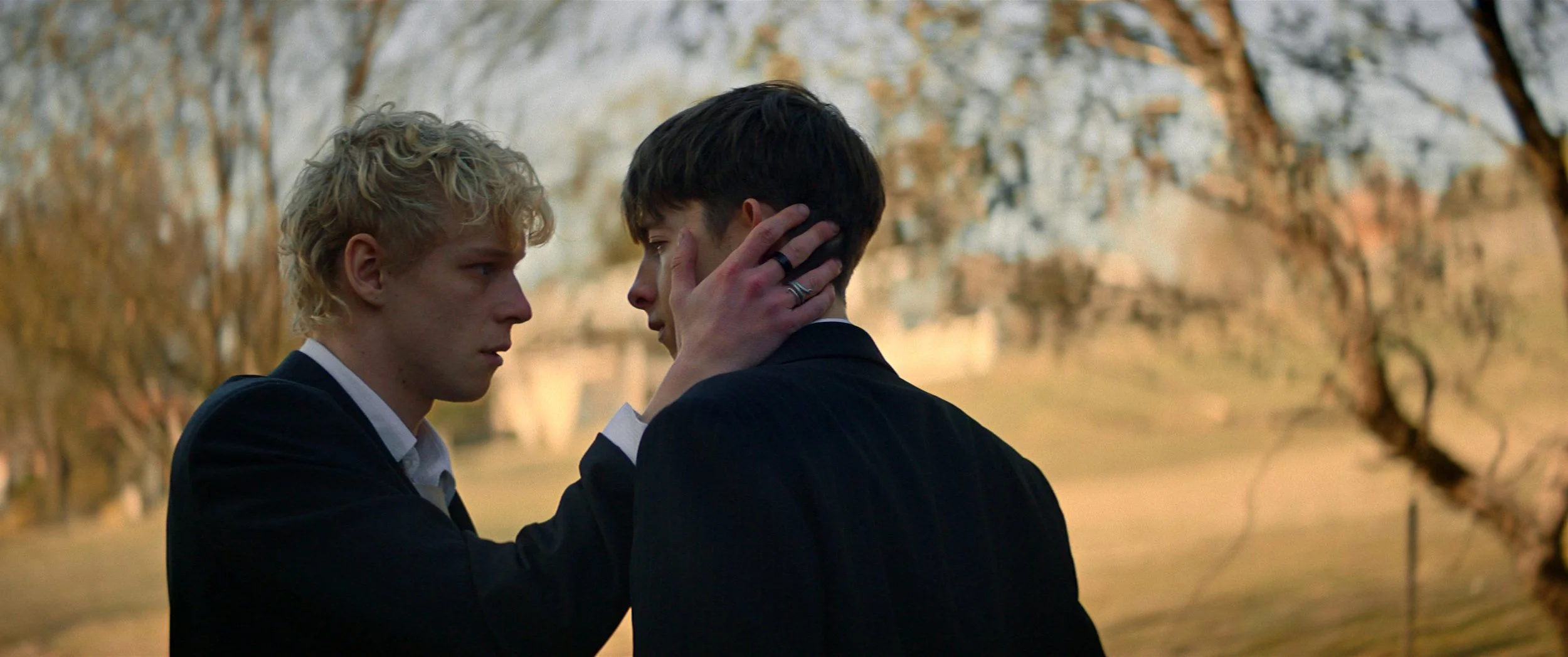
By placing that passage front and centre, director Adrian Chiarella transforms scripture into something far more unsettling than a sermon. The verse becomes a source of dread. Before the film introduces a monster, it introduces an idea.
What makes Leviticus so impressive — particularly as a debut feature — is its restraint. Chiarella could have built an effective film around the psychological cruelty of conversion therapy or the violence of social conformity.
He could have unleashed the ignorance and hostility of a small community upon his central characters, high school lovers Naim (Joe Bird) and Ryan (Stacy Clausen), and still emerged with a gripping drama. Instead, he chooses a more unnerving path.
Those elements remain present, but they exist largely at the edges of the frame. The biblical passage serves as the stage upon which the story unfolds, while Chiarella fills the space with uncertainty. Strange details drift into the narrative like fragments of a dream.
Some moments feel deliberately disconnected, as though the film is preparing to float free of reality altogether. Yet every curiosity, every unsettling image, every apparent detour ultimately belongs.

The result is a film that recalls recent standouts such as Talk to Me and It Follows, not because it imitates them, but because it understands that the most effective horror grows from atmosphere, suggestion, and the nagging suspicion that something is wrong long before you can identify what it is.
And when the true nature of the horror finally reveals itself, the film doesn't lose its power. If anything, it gains momentum. I've seen other reviews discuss the specifics, but I'm reluctant to do so here. Part of the pleasure of Leviticus lies in assembling the pieces yourself, in recognizing how carefully Chiarella has been guiding you toward a destination that feels both surprising and inevitable.
What follows is not merely a plot twist but a deepening of the film's emotional and thematic concerns. Chiarella introduces unexpected layers of backstory in which betrayal begets betrayal — how biblical is that? — and each revelation broadens the tragedy while simultaneously tightening the screws.
The horror does not emerge from a single event or discovery. It grows from the accumulated weight of secrets, deceptions and wounds passed from one person to another. The result is a film where the emotional consequences remain every bit as unsettling as the supernatural ones.
Much of that success rests on the performances of Bird and Clausen. Neither actor approaches the material with the kind of self-conscious importance that can sometimes accompany stories about marginalized communities. They don't perform their relationship as a statement. They simply perform it as a relationship.
The affection between Naim and Ryan feels genuine because Bird and Clausen resist sentimentality. Their connection is evident in glances, silences and small gestures rather than grand declarations. We understand their love because the actors understand it.
Chiarella shows similar confidence as a filmmaker. He never treats the characters' sexuality as a narrative shortcut, nor does he position them as symbols carrying the burden of representation. Naim and Ryan are not stand-ins for an argument. They are young people in love who happen to be gay.
That distinction matters. It allows Leviticus to function first and foremost as a horror film rather than a message movie. Yet the film never loses sight of the reality that inspired its title. The biblical verse hangs over the story like a curse, informing everything that follows without ever reducing the characters to a talking point.
Leviticus announces Adrian Chiarella as a filmmaker of remarkable confidence and control. It's a horror film that trusts its audience, trusts its characters, and trusts the power of what remains unseen. In doing so, it becomes one of the year's most unsettling — and impressive — genre debuts.
Leviticus. Directed by Adrian Chiarella. Starring Joe Bird and Stacy Clausen. In theatres June 19.