
Original-Cin Q&A: The Directors of Neil Peart: No One's Disciple on the Late Rush Drummer's Legacy
By Bonnie Laufer
He was rock’s ultimate craftsman, a lyrical philosopher, and a drummer who transformed the instrument. Six years after the loss of Neil Peart, directors Sam Dunn and Scot McFadyen are giving fans the cinematic tribute he truly deserved.
Their new film, Neil Peart: No One’s Disciple, offers an intimate, inside look at Peart's life and legacy, through the eyes of his closest friends and fellow music legends.
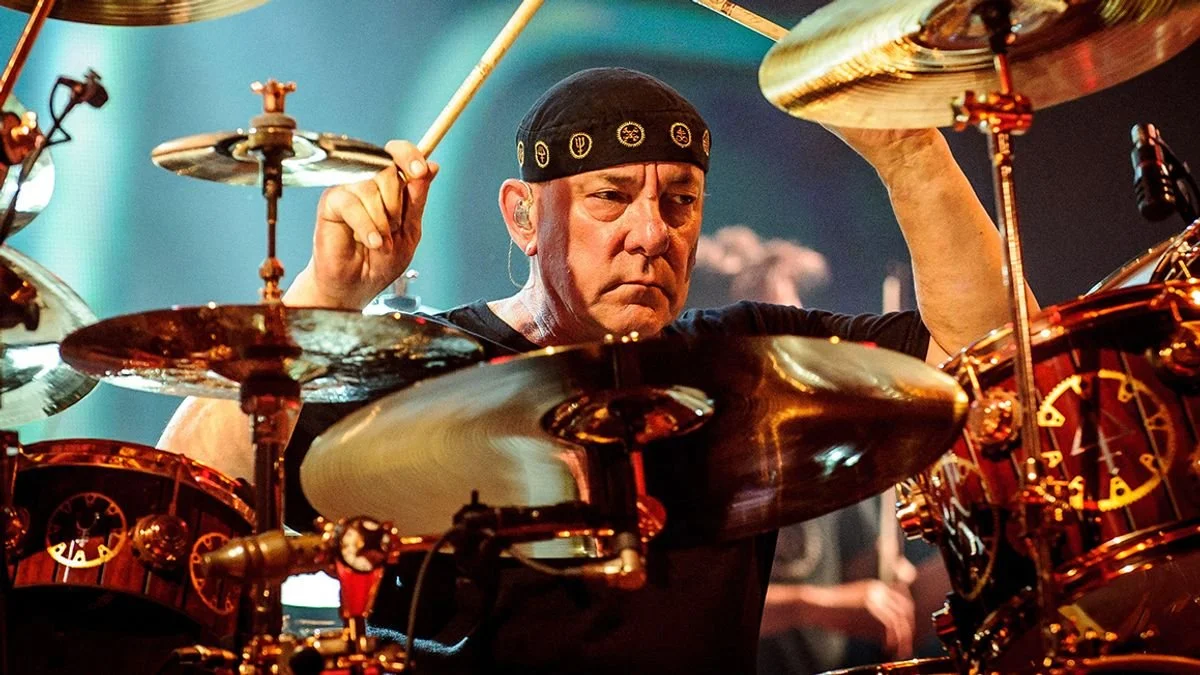
We spoke with Sam Dunn and Scot McFadyen about capturing the spirit of the legendary and much revered drummer.
Neil Peart: No One’s Disciple will have its broadcast premiere as part of CBC’s The Passionate Eye, Wednesday September 23 at 8 pm (8:30 NT) on CBC and CBC Gem.
ORIGINAL-CIN: Rush has not only been a band for 50 years, but Alex Lifeson and Geddy Lee have been friends since high school and are practically brothers. You both collaborated on a documentary on the band, Rush: Beyond the Lighted Stage, 16 years ago.
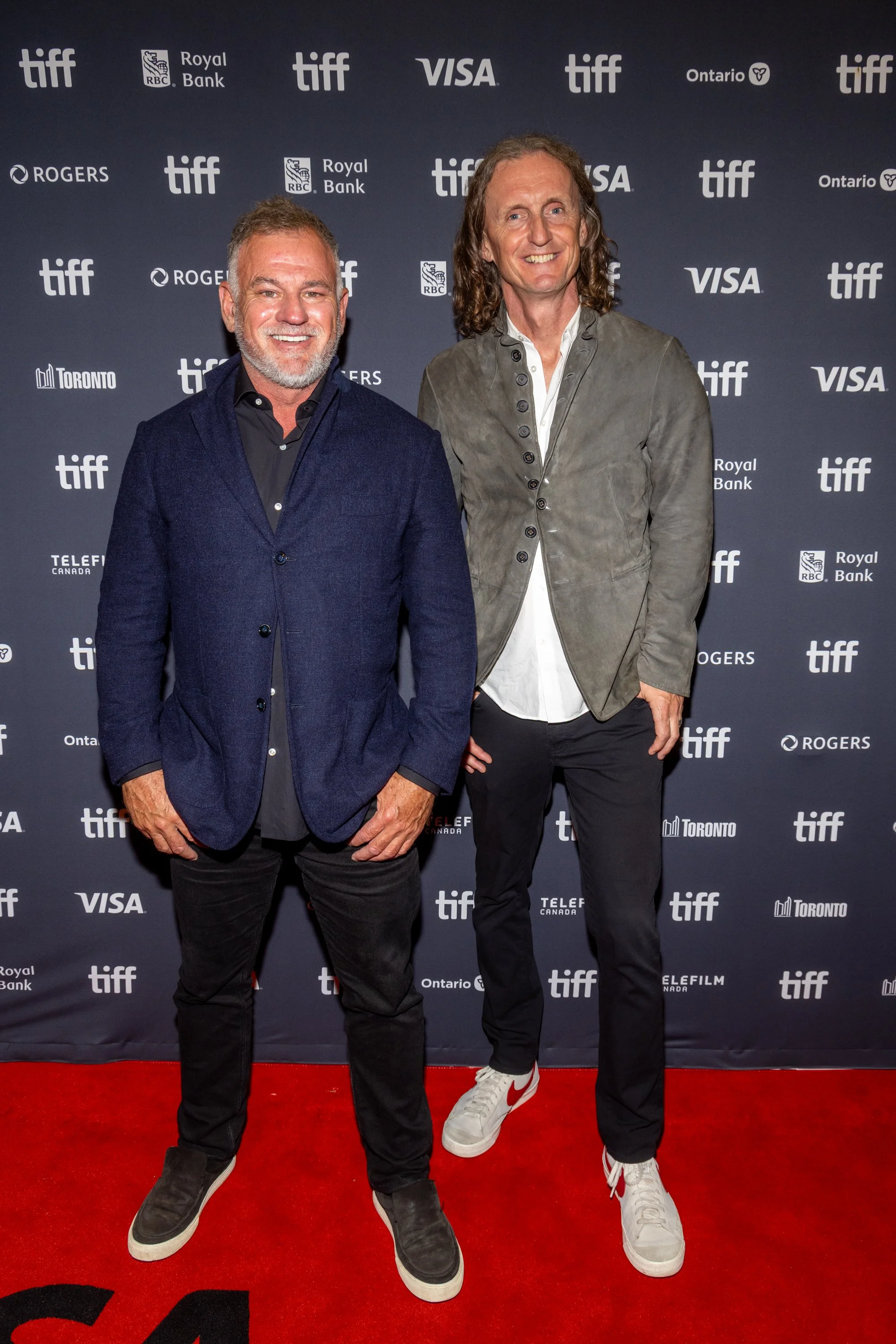
Directors Scot McFadyen and Sam Dunn
Now we're getting up close and personal with Neil Peart, a guy who really never wanted to be in the spotlight, who couldn’t care less about accolades. What did you learn about Neil this time around that maybe you didn’t catch when you made the first doc?
SCOT McFADYEN: I think that first of all there haven't been many documentaries about drummers in the world, and it's a very hard thing to translate in a documentary form what makes someone a genius drummer. So, I think that really diving into the musical aspect, showing rather than telling was the goal of this documentary.
We wanted to really immerse people into the music and in a joyful way in order to understand who Neil was. I'm not a drummer and I was trying to understand myself. It was about getting into those parts and the idea that he can play a song, strip out all the music, and just hear the drums, and know what song it is. I think that really was kind of a nerdy aspect and “nerd alert” was how do we get that across to a general audience.
SAM DUNN: I grew up in Victoria, B.C. and Geddy Lee was one of my heroes growing up because I wanted to be a bass player. So I spent a lot of time with Rush’s music. I'm not a drummer, but I certainly spent a lot of time trying to understand the music and learn how to play it and get inside all the complexities of the rhythms and loved it.
It was like an endless place to explore the possibilities of music. So for me, it was really getting to know the friends of Neil that were in the film. We learned about how great a friend Neil was to the drummers that appear in the film, but also his other friends. I really had no idea how closely connected he was to his friends because we all knew Neil as kind of the recluse and the person who was never comfortable with the accolades and the praise and the adoration.
But meeting people like (Vertical Horizon guitarist) Matt Scannell and (Jethro Tull drummer) Doane Perry really revealed that Neil was a very loyal friend. He was a very supportive person and he really took a lot of interest in people and particularly their creative pursuits. For me, that was a whole other aspect of Neil that I had no idea about prior to making the film.
O-C: Obviously this documentary could not be done without Alex and Geddy. What were the initial discussions like with them when you had this idea?
McFADYEN: To be honest, it was kind of weird in the beginning. I didn't think we'd make another film about Rush. But there was some talk when Alex had come back from a retreat in Europe where he was feeling better physically, he thought he could play again. We just had this conversation about wanting to do something for Neil, whether it was a memorial or a concert. We knew we all wanted to do something about Neil, so maybe there could be a doc.
We went to Geddy’s house and just talked it through and that's really what you hear at the beginning of the film. The guys never really felt they got to make a proper tribute to Neil, and because of COVID and other circumstances, they really wanted this to be. It was kind of a complicated genesis, but it's all because we've stayed in touch with those guys and worked with them for all this time. There was a closeness there and a trust.
O-C: When you have so much footage at your disposal, where did you even start?
DUNN: Given that we've worked with this band so many times in the past, the place to start was kind of easy, and that was with our own material. We've done several interviews with Neil over the years for Beyond the Lighted Stage as well as for the show, Rock Icons. So, in the process of making any show, there's more material that lands on the cutting floor than ends up in the show itself.

We had a lot of unused material to look at which was really exciting, especially the interviews with Neil himself. He's such a talker. He's such a deep thinker. He's always got something insightful to say. So there was really a ton of material to draw on from our own archive, and that felt good.
Then, obviously, there's the whole deep archeological process of digging into the archives from MuchMusic. And he did a lot of drumming instructional videos and on and on. We had a lot to work with because even though the drummers and Geddy and Alex were going to be central to it, we always did obviously want to make sure that it felt like Neil was telling his own story as much as we possibly could.
O-C: Let's talk about the drummers that appear in the doc. All drumming legends in their own right who we all know and the bands that they play with. (The Police’s Stewart Copeland, Tool’s Danny Carey, Red Hot Chili Peppers’ Chad Smith, King Crimson and Porcupine Tree’s Gavin Harrison) How did you ultimately decide who was going to be in it?
McFADYEN: I think that it really was very much about making sure that they were friends of Neil's and knew Neil. Sure, we could have reached out to a ton of other drummers that are great drummers, and it would have been fun to watch them play Rush's parts. But there really was that emotional aspect with the four that appear in the doc.
These were the people who were at his funeral, who hung out with him before, and they would drink Macallan whiskey together and jam together. So these are his friends, and you'll find that out in the film as it goes. You realize they’re not just famous drummers, but these are people that knew him. (The Foo Fighters’) Taylor Hawkins would have been one of those if he hadn't passed away. They were his “drum brothers,” as we call them.
O-C: I want to talk about Anika Nilles, who is now on tour with Rush as their drummer. I was at the 50th Anniversary concert in Toronto and she was phenomenal. You address her in an epilogue at the end of the film, there was no way you could leave her out. I can't imagine what this woman felt when she was accepted by Geddy and Alex to go on tour with them. I can't imagine her first time behind the kit and having to play, not like Neil, but she really does honor him and his legacy.
DUNN: She’s amazing and she had to hit the gym. One thing I will say on that is - and it may sound a bit convoluted, so bear with me. When we went to see them live in L.A., and then again in Toronto, it was almost like seeing another drummer play Neil's parts. It gave me an even deeper appreciation for how complicated Neil's parts were because Neil played them. It was just Neil. That's what Neil does.
But when you hear someone else do it, it's something that draws your attention to how challenging it is because you're sitting there going, this is someone that had to learn all of that material. So in a weird way, seeing Anika play it live gave me an even deeper appreciation for how challenging and complicated Neil's drumming is.
O-C: I felt that too being at the concert, but I also felt the same way watching your documentary. When I was watching Chad Smith and the other drummers play Neil’s music I really did pay attention to the drumming. I'm not a drummer but it’s obvious to see that this is complicated drumming!
McFADYEN: It sure is, and watching them they're all very different drummers, but they all represent aspects of who Neil was in the way that they play. Going back to Anika again, the idea that everyone knew Neil really well in the film, she's the only person who had never met him.
What was fascinating was her learning about him through his music, and having to learn 40 songs, and all the complex parts was astonishing. The fact that she has some freedom, but there's something she has to play a certain way and respect his ‘feel’ had to have been a lot of pressure. Watching her come off stage, you knew how much work and devotion she put into it was amazing to watch.
O-C: So rumor has it that Rush will be playing the Sphere in Las Vegas. Any plans on making that into a doc or something for the fans?
DUNN: (Laughs) I don't think we ever imagined we'd be making this doc about a member of Rush, so maybe never say never is the right approach here. I don't know, but if there was a band suited for the sphere, it's definitely Rush!
O-C: With Neil having been such a personal, quiet, and introverted guy, if he were looking down watching this documentary, what do you think he would say about it?
McFADYEN: Well, Alex sums it up pretty well when he says in the film, “You know, not so easy, is it?” I think that the weird thing is that it was Neil that embraced us initially to do the first film, but he never watched the first film.
That's something he didn't want, he didn't want that adulation. But, I do actually think this is a film that he would watch. I think that he would appreciate the way it's done. It's through his friends. And how they're playing his parts he would find pretty funny. It's not about fame. It was not just famous people talking about Neil. It's his friends. So that's what I think you would appreciate.
DUNN: I just wanted to draw attention to one thing you said, Bonnie, which is you paid more attention to the drumming. So mission accomplished. Not to be facetious, but people generally aren't paying attention to the drummer. It's the drummer's curse.
So to that end, we wanted this documentary to have music in it and to spend time in the music and to reveal as best we could who Neil was through these drummer jams. So I'm pleased you paid attention to the drumming because that was part of the point. We just wanted the music to help tell the story of Neil by showing just how much of a remarkable drummer he was through these jams.