
Original-Cin Q&A: Gus Van Sant on Dead Man's Wire and the Hostage-Taking That Inspired It
Acclaimed filmmaker Gus Van Sant returns with Dead Man’s Wire, an intense new film inspired by a stranger-than-fiction true story.
The film involves Tony Kiritsis who in 1977 entered the office of Richard Hall, president of the Meridian Mortgage Company, and took him hostage with a sawed-off shotgun connected to a "dead man's wire" from the trigger to Tony's own neck. It stars Bill Skarsgård as Kiritsis, Dacre Montgomery, Colman Domingo and Al Pacino.
Known for his fearless storytelling and genre-defying career, Van Sant brings a quiet Intensity and moral complexity to the project.
Read our review of Dead Man’s Wire
Bonnie Laufer spoke with Van Sant about what drew him to the story, shaping real events for the screen, and how Dead Man’s Wire fits into his body of work.
Dead Man’s Wire opens on January 16 across Canada.
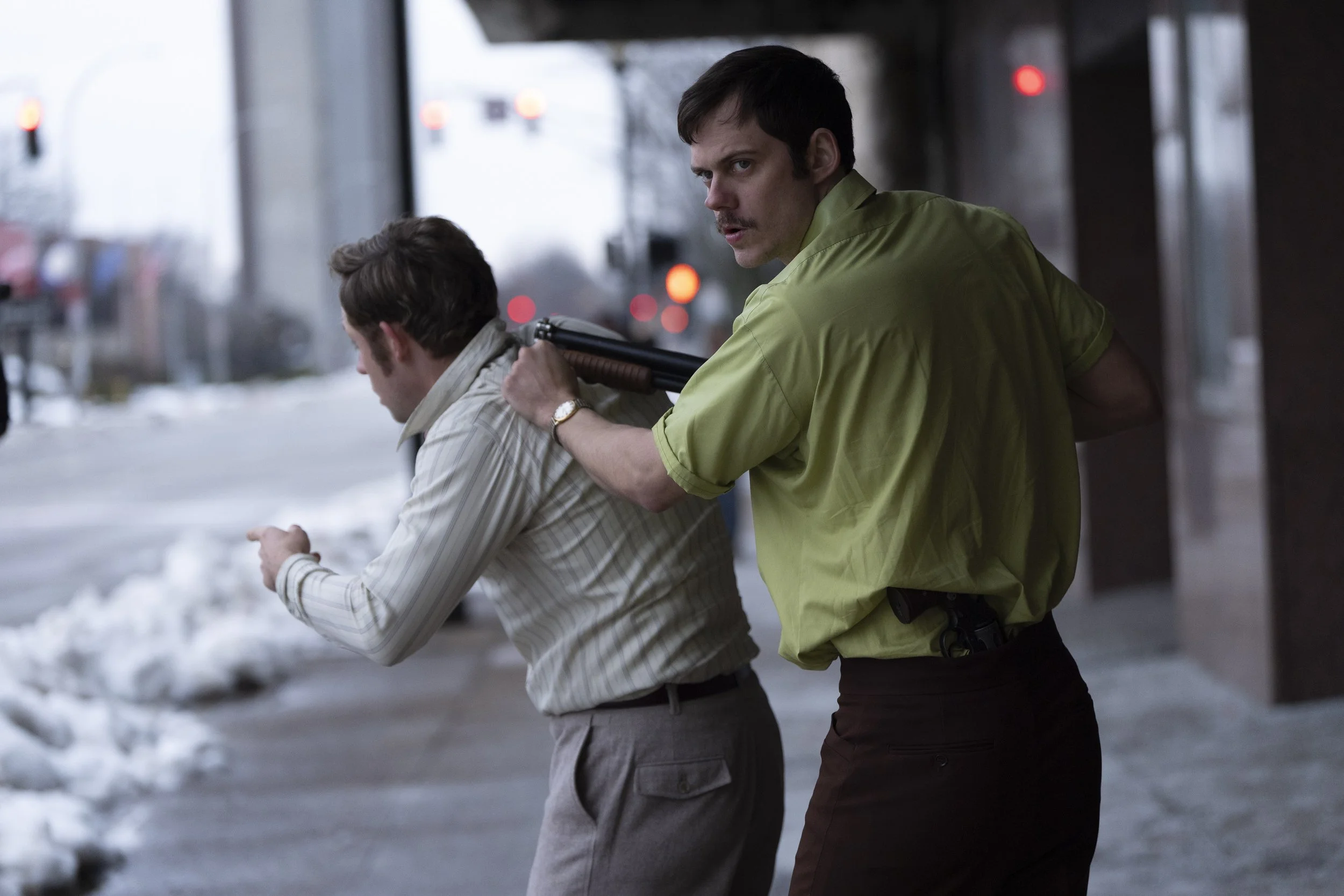
Bill Skarsgård holds Dacre Montgomery hostage in Dead Man’s Wire.
ORIGINAL-CIN: Before we get to Dead Man’s Wire, I have to ask about your love for Toronto. Not only have you premiered or shown many of your films at the Toronto Film Festival (starting with Drugstore Cowboy) but you have also shot several films here. What is it about our city that keeps bringing you back?
GUS VAN SANT: I really do love Toronto, the people and the film fans. I shot To Die For, Good Will Hunting and Finding Forrester there and they were all great experiences.
When Drugstore Cowboy premiered in Toronto I felt like a fish out of water. It was my first bigger project that I had done and so I was a little nervous about it. I remember so vividly seeing Michael Moore, he was there with the documentary Roger and Me, and I remember seeing him and his team in the lobby of the hotel with Roger and Me hats on.
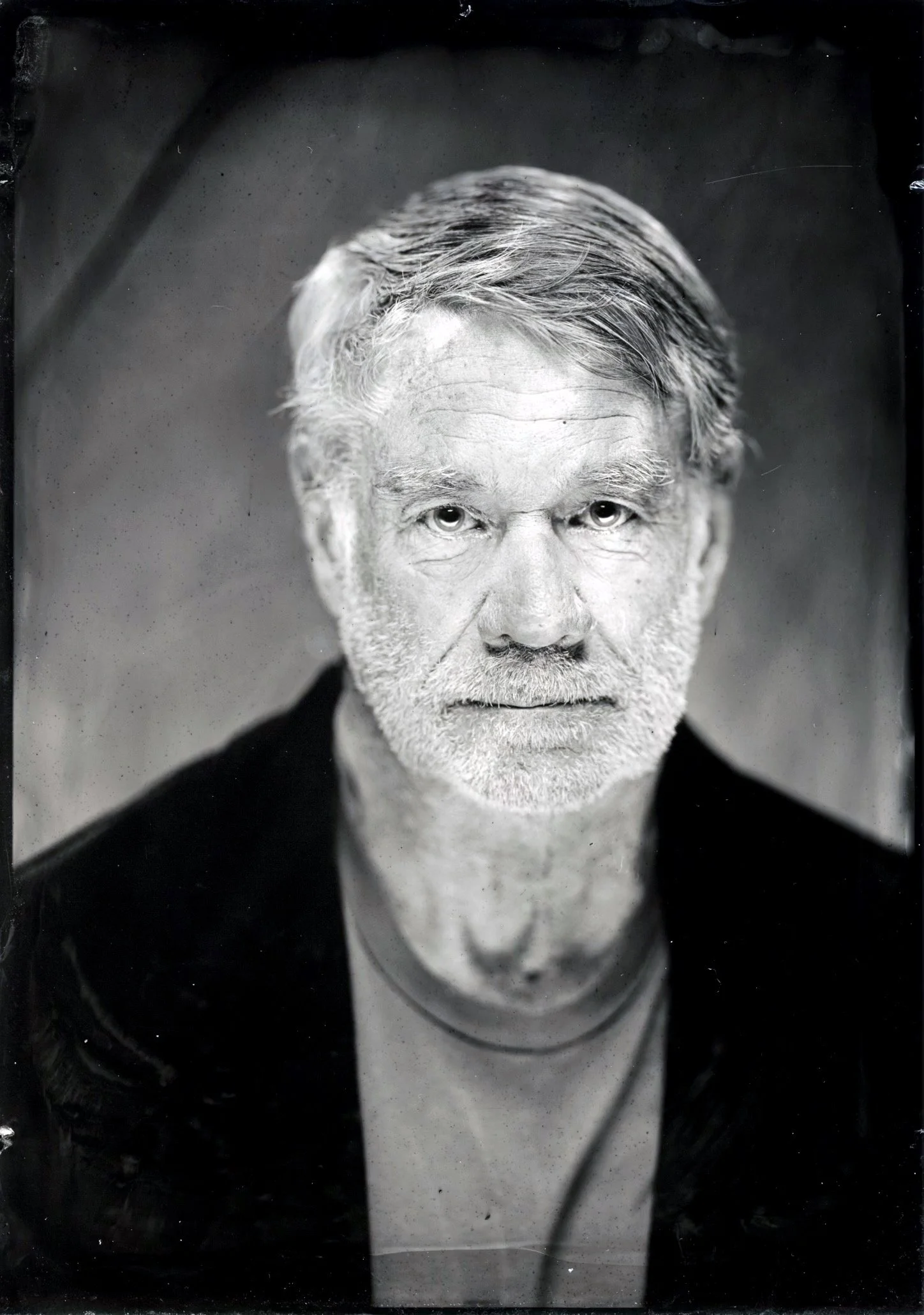
Director Gus Van Sant
And I thought, “Who are these guys? Who is this group that has Roger and Me hats and where can I get one!” (Laughs).
The Toronto experience has been really fantastic and I miss it when I’m not there. I was there this year with Dead Man’s Wire this past September and it was great to be back.
O-C: Dead Man's Wire, what a riveting and fascinating movie. I knew nothing about Tony Kiritsis and his taking of a hostage at Meridian Mortgage Company. Did you know anything about this before you got the script and what was it that you thought would be an interesting story to tell on film?
VAN SANT: I was completely unaware of the story. In 1977, I was living in L.A. and I guess it may have been a story you'd see in the papers. But it never came on my radar.
The blackout that they had in the TV stations where they promised to air Tony's plea and black out everything else, I think that must have been limited to the Midwest region. I don't think it reached L.A., or else I would have definitely heard about
That was something that you’d know, if you're reading the papers properly, which I probably wasn't. I missed that particular story. There are people from Indianapolis that remember it very well.
The scriptwriter Austin Kolodney saw the documentary about Tony during COVID here in L.A, and he was so astounded by the whole thing that he thought this should be, definitely be a screenplay and a film.
O-C: I understand that when he sent you the screenplay, there were links in it so that you could listen to Tony’s actual audio while everything was going on. How did that affect the way you decided to direct the film?
VAN SANT: Yeah, that was probably one of the better things that happened in the script, because, as you're reading this true story, there were actual recordings of the first call to the police that Tony made.
So I started reading and the first time you hear Tony is, like on page four, maybe, and the hyperlink where you could go to a site that had a picture of an old tape recorder, and his voice talking to police and demanding things before he would release his hostage. It was riveting to listen to him and his demands, and I found that kind of stuff so real and inspiring that I think that was the first time I fell in love with the material.
O-C: The story is very serious and such an intense thriller, yet it’s infused with quite a lot of humour. How challenging was that for you to balance? Did the actors improvise or add any of the humorous moments while you were shooting?
VAN SANT: Bill and Dacre, from the beginning, they're sort of masters at many different things. But both of them like a good comedic moment.
They immediately started to do things that would be representative of the characters, that included quirky or funny moments, very naturally. The way they moved or reacted, their expressions were very helpful.
O-C: Al Pacino plays a small but very impactful role in the film. You have worked with some amazing actors in your career but to direct Al Pacino, was that a little bit nerve wracking. Or is he just a pussycat?
VAN SANT: I do remember when somebody mentioned Al Pacino for the role my palms were sweating. It's like, “Oh, okay, all right, Al Pacino.”
I’ll be honest, I was nervous because you'd never know. When some people become very big movie stars, you just hope that it all goes well. But he was the easiest person to work with, and really concerned and helpful, even though he's playing a hard businessman, not a very likeable guy. He knows how to do that. And he's not like that at all in real life. He's very gentle and such a wonderful guy.
O-C: The media plays such an interesting role in this story, especially when it came to sensationalizing what was going on. How do you think Tony would have handled himself if there had been social media at that time?
VAN SANT: Well, it might have been the same kind of thing, but he could shoot it himself, as opposed to getting the press’s attention. He wanted to get his point across and was adamant about having that press conference. He wanted to have an apology by telephone first, but was more enamoured by the lure of television.
O-C: Just to wrap it up, I was so thrilled when I watched the Ryan Murphy series, Feud: Capote vs The Swans and saw that you directed most of those episodes. How much fun did you have doing that, and did it give you more freedom doing episodic TV as opposed to a film?
VAN SANT: I had never really done it before. I had done a TV show earlier, but I'd really just done the first episode of a show called Boss with Kelsey Grammer.
For Feud, I did a lot more. I did six out of eight episodes and it was a fantastic experience. Ryan gave me a lot of freedom with the script and the actors. It was like making six short films. And creatively, I was trying to make it uniform and I think it worked. It was a lot of fun.