
Dracula: Luc Besson Gives us a Deeper, Tragic Vamp in Need of Redemption
By John Kirk
Rating: A
The story of Bram Stoker’s Dracula is so well-known that it’s hard to find a new angle. That is, unless you’re Luc Besson and you go back to the book’s inspiration, and present Dracula as a lost soul in need of forgiveness and redemption.
And, refreshingly, that’s exactly what you get in this film.
Previous versions of Dracula have included the history of the prince’s lost love, and his reason for cursing God for his loss, and for his curse. But too often, the vampire has leaned into his role as the villain instead of the victim. Dracula has been synonymous as one of the greatest villains of the last 140 years of supernatural horror.
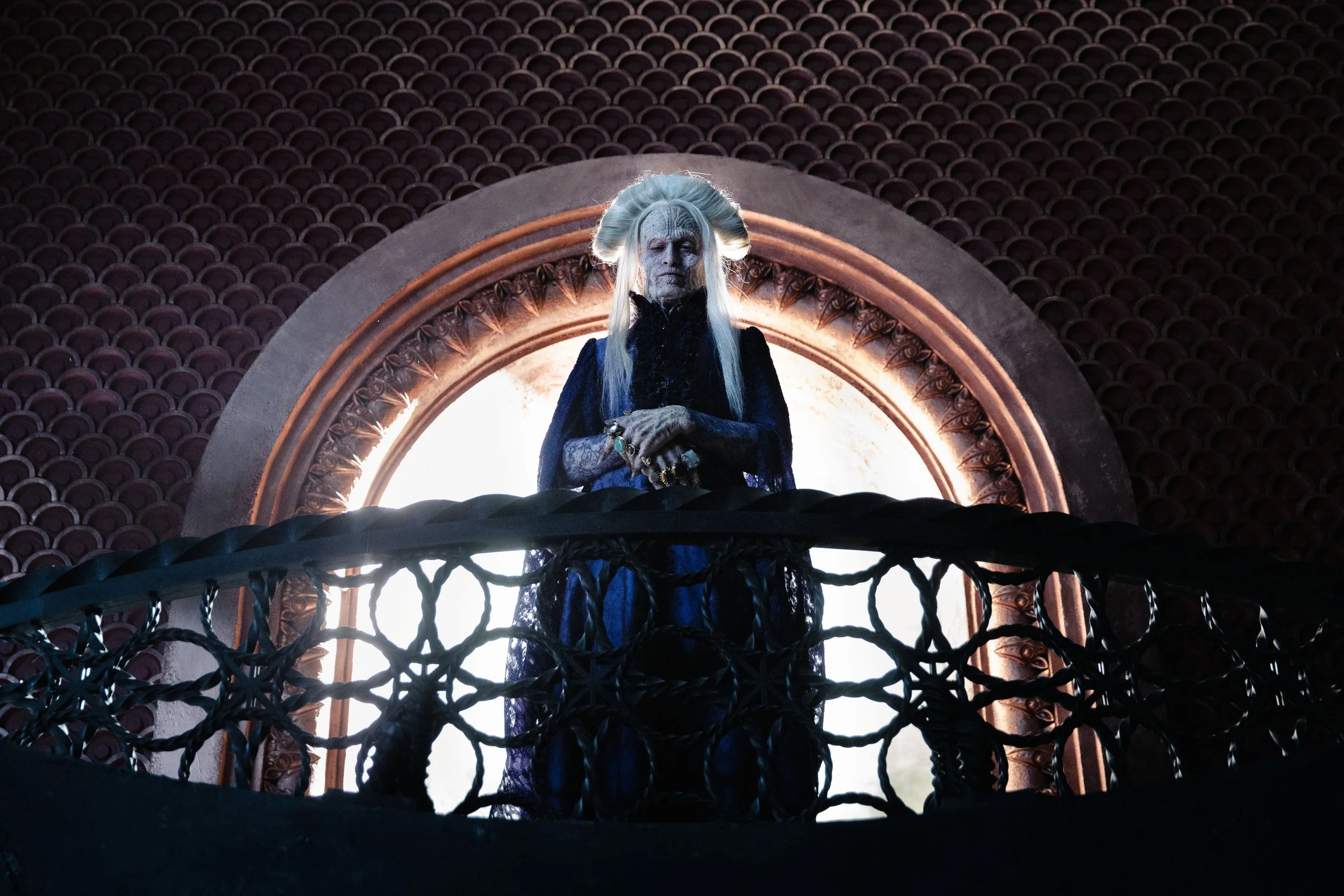
Caleb Landry Jones stars as… well, you know.
In this version though, Besson taps into that original story and unleashes a full tragedy based on the Wallachian Prince’s life and portrays that as the real horror.
We see Besson’s historically based back-story (Caleb Landry Jones), Dracula’s service to God in defending Christendom from the advancing Turks, his request to God to preserve his new wife Elizabeta ((Zoë Bleu) from harm during this crisis, and the betrayal he feels when she is ripped from his life. And we have a measure of understanding of his turn of spirit (and of his sudden thirst for blood - not a characteristic of the real character, but some legends need be retained).

Dracula is a love story, raw, passionate and based on the fires of a new marriage, but set in a time when miracles and mysteries of God and the supernatural are intertwined When Dracula defiles the Sacraments of the church, turns his back on God. We can understand and even accept this great loss given his belief, his service and his love.
But the mysteries of God, as told by a 19th century author, are meant to be vague, Gothic in their scale and complicated. We are not meant to understand them and this was the appeal and conceit of Stoker’s Dracula – the shadowy uncertainty and a 400-year-old curse that could last even into the age of reason.
But the Age of Reason grudgingly allowed the co-existence of science and both the supernatural and faith. This allows for the introduction of character of the Priest (Christoph Waltz). Though not named specifically, fans of this timeless tale will understand this cleric to effectively be Dracula’s nemesis, Van Helsing. However, while modern adaptations have portrayed Van Helsing as a scholarly man of science, in this rendition, he is a priest, hunting Dracula not because he is a servant of Satan, but because he is a soul in dire need of healing.
Waltz is superluminal in this role. Fearlessly compassionate and masterful in his knowledge of the Vampiric. He is indisputably the expert in this pursuit, yet he does so with the knowledge that God endlessly forgives and would welcome this wayward soul back to his care.

Forgiveness and the aim of returning this soul to God are the two ambitions of the Priest in this story, which gives it a nobler trapping than other versions. Though the struggle is no less exciting than other versions, knowing the motivations make it a moral and righteous hunt more than a retributive one.
Like other representations of classical fiction, Besson’s Dracula leans toward exposition. There are scenes that drag a bit, but this is due to the nature of the source material and still goes far to elevate the nature of the conflict.
This is more than just protecting the world from a supernatural evil; it is a righteous battle between the forces of Satan and God to return a worthy soul to the fold. Still, if there was a complaint, it would be that this makes the exposition a little slow at times.
More than Francis Ford Coppola or any Hammer retelling of this timeless tale, Luc Besson’s version of Dracula is now my favourite. Dracula is a tormented soul in need of forgiveness and healing and it is the well-matched expertise of Waltz’s Priest who wages this sinner-to-saint battle to return him to God.
It is an exact recipe of legendary compassion, mixed with a devout understanding of the mysteries of God and the devil, along with a scientific understanding appropriate for the time. Reincarnation, soul-saving, the boundaries of religion and science, folklore and even a nod to the historical influences that created this character are thoroughly integrated in the way Stoker meant them. It may be the finest realization of the Dracula story.
It’s why I can forgive Vlad Dracul – and maybe you will too.
CLICK HERE to read Bonnie Laufer’s Q&A with Dracula’s Christoph Waltz.
Dracula. Directed by Luc Besson. Stars Caleb Landry Jones, Christoph Waltz, Zoë Bleu, Matilda de Angelis, Ewens Abid, Guillaume de Tonquedec. Dracula is in theatres February 6.