
The AI Doc: Is There an AI Doc In the House? Yes, There Is!
By Chris Knight
Rating: A-
Daniel Roher’s new documentary about the future of thinking machines opens with a clip from Sept. 21, 1964.
It’s science-fiction author Arthur C. Clarke. “The present-day electronic brains are complete morons,” he says. “But this will not be true in another generation. They will start to think, and eventually they will completely outthink their makers.”
A few years later, in the novel 2001: A Space Odyssey, Clarke imagined HAL 9000. To quote the movie adaptation, HAL is a computer that “can reproduce — though some experts still prefer to use the word mimic — most of the activities of the human brain.”
Sound familiar? I just asked ChatGPT to talk to me in the style of HAL 9000, and it gave a chillingly good imitation, ending with: “Just be aware… I am incapable of making mistakes.”
The filmmaker might have planted his first step a hundred years earlier, on Samuel Butler’s 1863 treatise “Darwin Among the Machines,” which also predicted an eventual artificial superiority. Or a hundred years before that, when the Mechanical Turk — which turned out to be an elaborate hoax — seemed capable of beating humans at chess.

The point is that we have always looked forward with a combination of fear and rapture to artificial intelligence. And now we have it. Roher’s urgent questions: What is it? And what comes next?
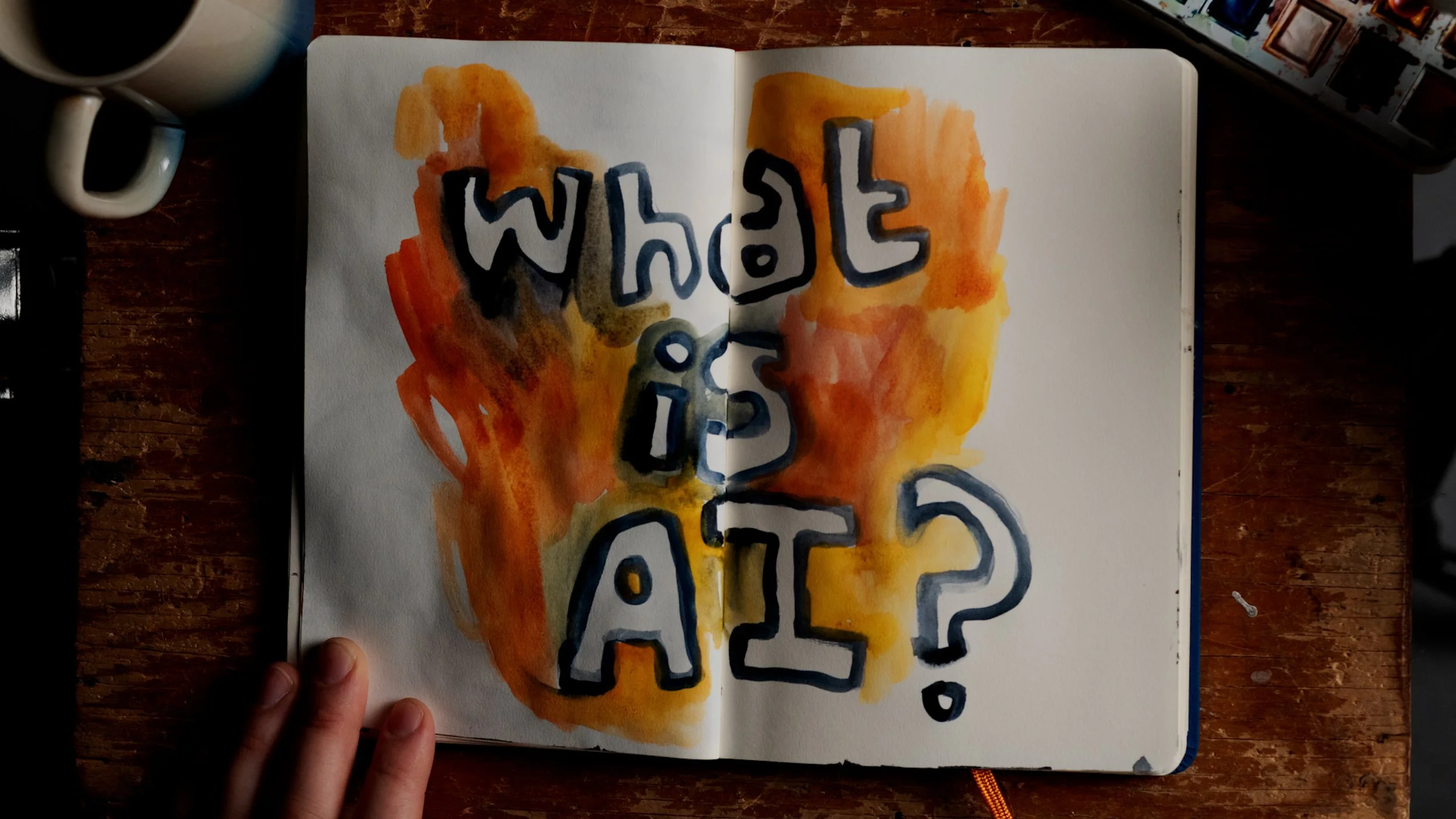
At 104 minutes, The AI Doc (it bears the tongue-twisting subtitle “Or How I Became an Apocaloptimist”) can’t hope to fully answer these questions. But it takes a helluva run at them, from an admittedly high-level rather than granular point of view.
Roher corners an impressive collection of thinkers and doers, including Sam Altman (OpenAI), siblings Dario and Daniela Amodei (Anthropic), Yoshua Bengio (neural networks pioneer), authors, game theory experts, you name it. (Though not Zuckerberg or Musk. One didn’t respond. The other agreed, then backed out.)
They all agree that something big is coming or is perhaps already here. Its world-changing effects are likened to the industrial revolution or the taming of fire, but the metaphor that seems to best fit is nuclear power. Splitting the atom unlocked the potential for both unlimited power and unlimited destruction and created a race for both.

And as someone notes in the film, the race is the biggest threat, because it’s causing even the most altruistic of AI thinkers to push their product into the world with minimal testing rather than risk falling behind.
Roher is a fascinating filmmaker. An Oscar winner for the 2022 Russian dissident doc Navalny, he also made last year’s Tuner, which IMDb.com refers to as a heist-crime-drama-music-romance-thriller, and honestly I don’t think that covers the half of it.
The AI Doc is visually pretty standard — lots of talking heads, B-roll of robots, and cutesy animation to make it more personal — but it’s also a grand primer on the topic, skipping the standard news headlines of Will It Take My Job? (maybe) and Does it Espouse Suicide (tragically, sometimes yes) in favour of a kind of point-counterpoint-synthesis setup.
We’re told why Roher and his wife (she’s pregnant) should not have a baby, because the world will soon not be a good place. We’re told why they should, because it’ll be the best of all possible worlds. And we’re left teetering on a kind of cusp.
It’s not an answer, because no one knows the answer — yet. Get back to the dominant intelligence on Earth in 2063 for an update.
The AI Doc. Directed by Daniel Roher. Starring Daniel Roher, Sam Altman, and Dario and Daniela Amodei. In theatres March 27.