
Love, Harold: NFB Doc Explores a Wide Array of Emotional Aftermaths of Suicide
By Liz Braun
Rating: B+
Hate to see a grown man cry? Bring forewarned, then, about Love, Harold, Alan Zweig’s deeply affecting new documentary about those left behind by suicide.
(As for grown women, Love, Harold needed just under 11 minutes to reduce this flinty typist to tears.)
Parents, siblings and friends talk to Zweig openly about dealing with what is obviously one of the worst things a person can experience — the death of a loved one by his or her own hand. About 20 participants convey their incredulity, anger, confusion and grief over the terrible chasm of “why?” that is the ongoing burden of suicide.
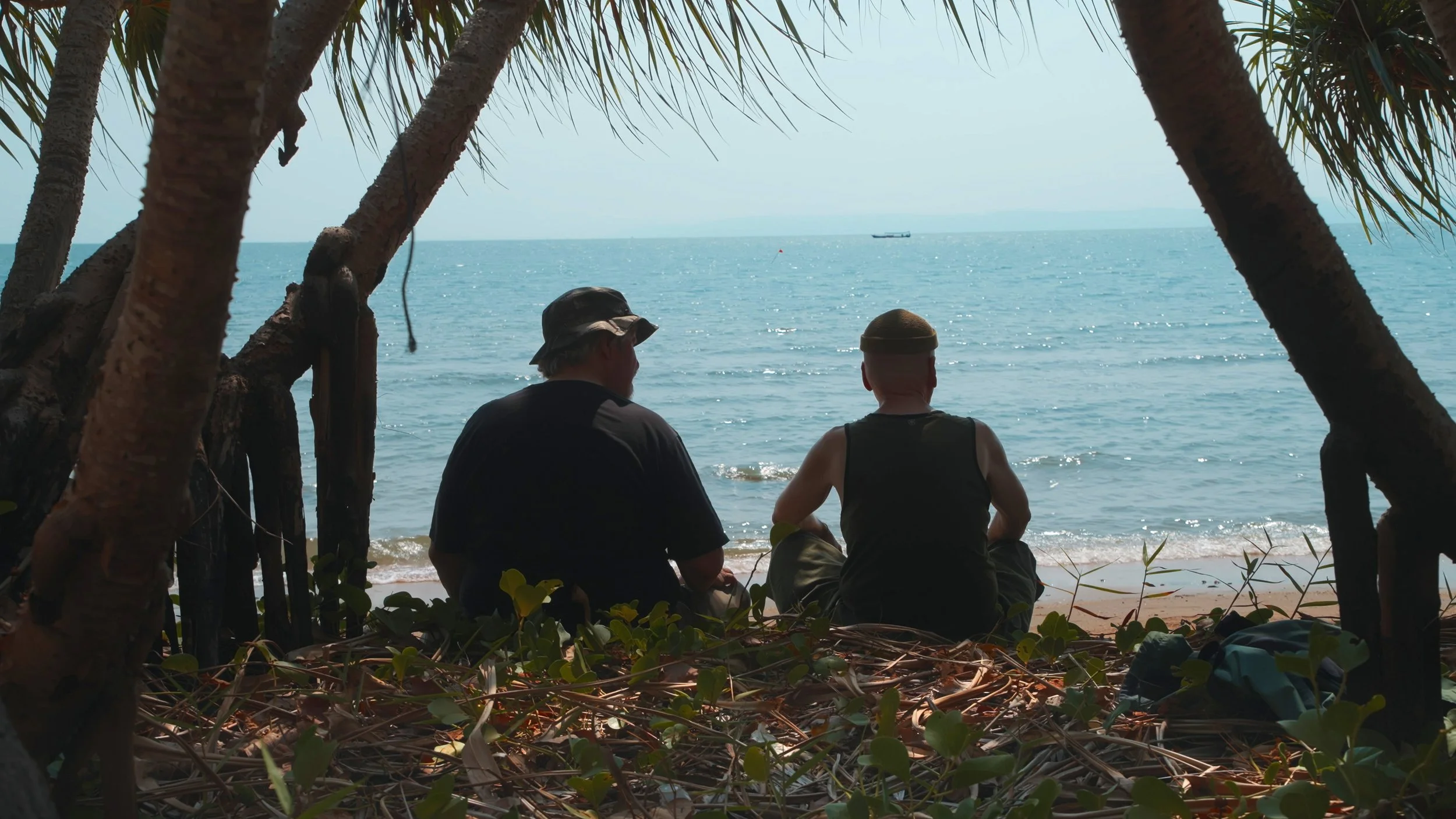
Director Zweig and mutual friend John at the scene of their friend’s suicide in Cambodia
Some guess at the whys: depression, substance abuse, mental illness, disappointment, ennui, age, shame, endless emotional pain of some kind.
Some of those who speak on-camera are angry. Many were completely surprised by the decision to die, but not all.
Most heart-rending: those who report thinking and re-thinking the moment of death and wishing their loved one had not been alone.

A mother grieves her 19-year old-daughter. A middle-aged man — sworn to secrecy by his mother — still weeps 40 years later when he speaks of his father’s death. Another mother calmly explains that suffering a heart attack the day after her son’s suicide is what kept her from killing herself in response to his death.
One woman believes she inadvertently contributed to her sister’s death. A calm young man reports on his own suicidal ideation earlier in life as he talks about his brother’s suicide, explaining how hard one works to stop the endless psychic pain.
“If I’m dead, I won’t feel this anymore,” is the logic.
Some of the people in Love, Harold express their guilt, regretting that they did not follow up, did not call sooner, did not understand the person’s frame of mind. Even the mother who knew her daughter was struggling held firm to the belief that the manic phases would be the young woman’s backstory one day, not her actual end of her life.

It was after the death of a friend that Zweig began thinking about a documentary on suicide, and how people are affected by another’s decision to die. He looked for subjects but conventional research didn’t work, because people didn’t want to participate — the experience was still too raw or it was a family secret — so in the end he worked with friends and acquaintances.
It is staggering to witness how uniformly and endlessly devastating it is to those left behind to cope with the aftermath of a suicide. This particular form of grief appears to have only four stages rather than the traditional five — there is no acceptance.
Could a documentary like this have the power to change someone’s mind about killing himself?
Zweig’s hope is that his film helps give people permission to talk. Participants describe the decision-making involved in whether or not to disclose a loved one’s suicide — they don’t mind talking about it, but it can make other people uncomfortable. As one man says about his loss, “As hard as it is, please ask me about it.”
Zweig asked. The result is a lean, unfussy, and very human documentary. May we all have Zweig’s courage.
CLICK HERE to read Jim Slotek’s interview with Alan Zweig about Love, Harold.
Love, Harold. Directed by Alan Zweig. Dedicated to the 16 people whose lives and deaths are the subject of the film. The film plays in Toronto on March 29 (Hot Docs Cinema, with a Q &A afterward with Alan Zweig, moderated by Don McKellar), Hamilton on March 30 (The Westdale, Q & A with Alan Zweig) and Victoria on April 7 (Cinecenta).
Starting April 13, the film will be available in a free national online launch on NFB.ca, YouTube and NFB apps